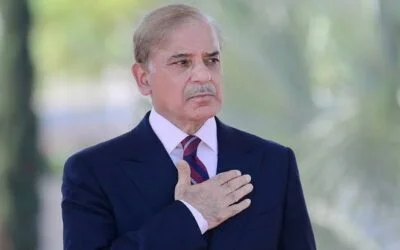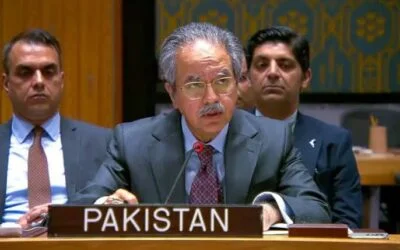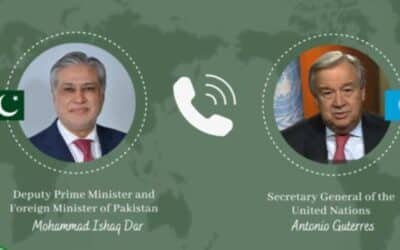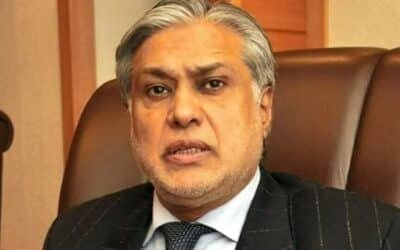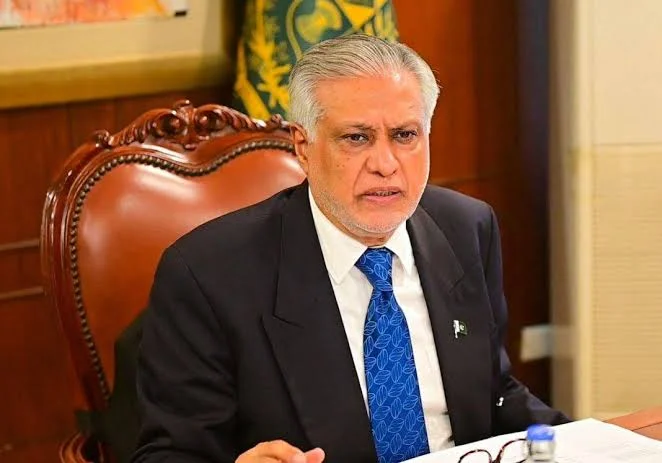



In a rapid-fire sequence of high-level diplomatic phone calls, Pakistan’s Deputy Prime Minister and Foreign Minister, Senator Mohammad Ishaq Dar, has engaged Egypt’s Foreign Minister Badr Abdelatty and the European Union’s High Representative for Foreign Affairs Kaja Kallas.
Deputy Prime Minister / Foreign Minister Senator Mohammad Ishaq Dar @MIshaqDar50 spoke late last night with the Foreign Minister of Egypt, Badr Abdelatty.
The two leaders discussed the latest developments in the regional situation and welcomed the positive momentum in ongoing… pic.twitter.com/x7oTEfWxRf
— Ministry of Foreign Affairs – Pakistan (@ForeignOfficePk) June 13, 2026
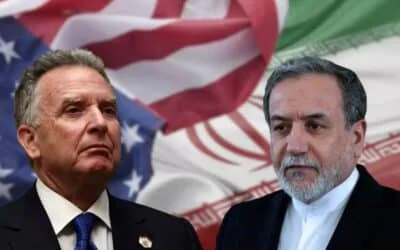
According to official statements released by the Ministry of Foreign Affairs (MoFA), the synchronized outreach is aimed at consolidating international consensus and building a diplomatic defensive shield around the freshly finalized “Islamabad Memorandum of Understanding (MoU)” designed to end the war between the United States and Iran.
The aggressive diplomatic messaging from Islamabad arrives just as negotiators prepare for a momentous, potentially historic weekend peace summit in Europe involving U.S. Vice President JD Vance and the top leadership of the Islamic Republic of Iran.
1. The Cairo-Islamabad Axis: Safeguarding Regional Shipping
Speaking late Friday night, DPM Ishaq Dar and Egyptian Foreign Minister Badr Abdelatty conducted a comprehensive review of the volatile security architecture in the Middle East and the Red Sea corridor.
-
Welcoming the Momentum: Both foreign ministers formally welcomed the positive momentum generated by the written breakthrough between Washington and Tehran, following a week of devastating kinetic exchanges in the Persian Gulf.
-
The Stability Mandate: Highlighting the extreme economic stakes for both nations—with Pakistan acting as an active co-mediator alongside Qatar and Egypt controlling the critical Suez Canal traffic—the two leaders expressed strong optimism that the current engagement would yield an “early and constructive outcome” to guarantee lasting maritime security.
-
Continuous Consultations: Recognizing the immense threat posed by extra-regional spoilers and active disinformation campaigns aimed at disrupting the peace track, Cairo and Islamabad officially agreed to maintain an unbroken channel of close, real-time consultations.
2. Anchoring the Western Front: The EU Endorsement
Earlier on Friday, DPM Dar initiated a vital strategic call with the newly appointed EU Foreign Policy Chief, Kaja Kallas, to anchor European regulatory and diplomatic backing for the nascent peace framework.
-
The Brussels Accordance: Dar and High Representative Kallas explicitly welcomed the concrete progress achieved through sustained backchannel engagement, validating the structural parameters of the Islamabad MoU.
-
The Diplomatic Ultimatum: In a joint declaration aimed at silencing hawkish factions in both Washington and Brussels, the two leaders officially reaffirmed that “dialogue and diplomacy remain the only viable means to resolve conflicts and advance lasting peace and stability.”
-
Shared Strategic Preferences: The Foreign Office noted that the intensive exchange reflected a calculated, shared commitment between Pakistan and the European Union to champion institutionalized diplomacy as the primary mechanism for resolving complex, international asymmetric disputes.
Deputy Prime Minister / Foreign Minister Senator Muhammad Ishaq Dar @MIshaqdar50 spoke today with EU High Representative/Vice President Kaja Kallas @kajakallas on recent developments regarding United States–Iran understanding.
Both sides welcomed the progress achieved through… pic.twitter.com/dzn4LW8sfX
— Ministry of Foreign Affairs – Pakistan (@ForeignOfficePk) June 12, 2026
CRITICAL ANALYSIS: THE MULTILATERAL SHIELD AND THE CANAL POSTURE
DPM Ishaq Dar’s frantic telephonic choreography with Cairo and Brussels is a textbook masterclass in diplomatic hedging, designed to insulate a highly volatile peace agreement before the ink is dried by the primary combatants.
Securing the Economic Lifelines: Why Egypt Matters
Analytically, the immediate outreach to Egypt is a calculated economic move. The maritime shutdown of the Strait of Hormuz by Iran’s Persian Gulf Strait Authority earlier this week sent shockwaves through global energy markets. However, for Egypt, a prolonged regional war introduces a secondary catastrophe: the total collapse of transit revenues through the Suez Canal due to shipping diversions around Africa.
By aligning directly with Cairo, DPM Dar is ensuring that the Arab world’s most populous military power stands squarely behind the Islamabad MoU. This strategic pairing creates a unified front of major regional stakeholders—encompassing Pakistan, Qatar, Saudi Arabia, and Egypt—leaving little room for smaller regional actors to disrupt the diplomatic transition.
The Kallas-EU Pivot: Pre-Empting the Sanctions Architecture
Simultaneously, securing a joint statement with EU High Representative Kaja Kallas is essential for the operational survival of the peace deal. As Vice President JD Vance explicitly noted, the deal is structured as a compliance-based transaction where “economic benefits will flow” to Iran if it meets its written obligations.
For those economic benefits to materialize, Western sanctions must be systematically unwound. By getting Kallas to publicly endorse the “progress achieved” and back the diplomatic track, Pakistan is pre-emptively smoothing the runway for the European Union to lift secondary trade restrictions the moment the White House gives the green light. This effectively neutralizes efforts by unilateral hardliners in Western capitals to sabotage the deal’s economic incentives.
Pakistan’s Transition from Border Manager to Global Anchor
For Pakistan’s foreign policy establishment, this diplomatic blitz marks a profound evolution. For decades, Islamabad’s foreign policy was largely reactive, defined by localized border management and regional balancing.
In June 2026, by simultaneously coordinating with the European Union, the Arab League’s heavyweight (Egypt), and the White House, Pakistan is operating as a true global anchor. It is actively managing the international architecture required to sustain a major global peace settlement, utilizing its unique status as a trusted, non-aligned mediator to bridge the gap between Western superpowers and the Iranian clerical establishment.
The Takeaway: The calls to Cairo and Brussels prove that the Islamabad MoU is no longer a localized bilateral truce; it has been elevated into a fully operational multilateral peace initiative. By building an international protective ring through Egypt and the EU, DPM Ishaq Dar has ensured that if the Vance-Tehran summit in Europe succeeds this weekend, the global community will be instantly ready to ratify, enforce, and economically underwrite the new Middle Eastern security architecture.