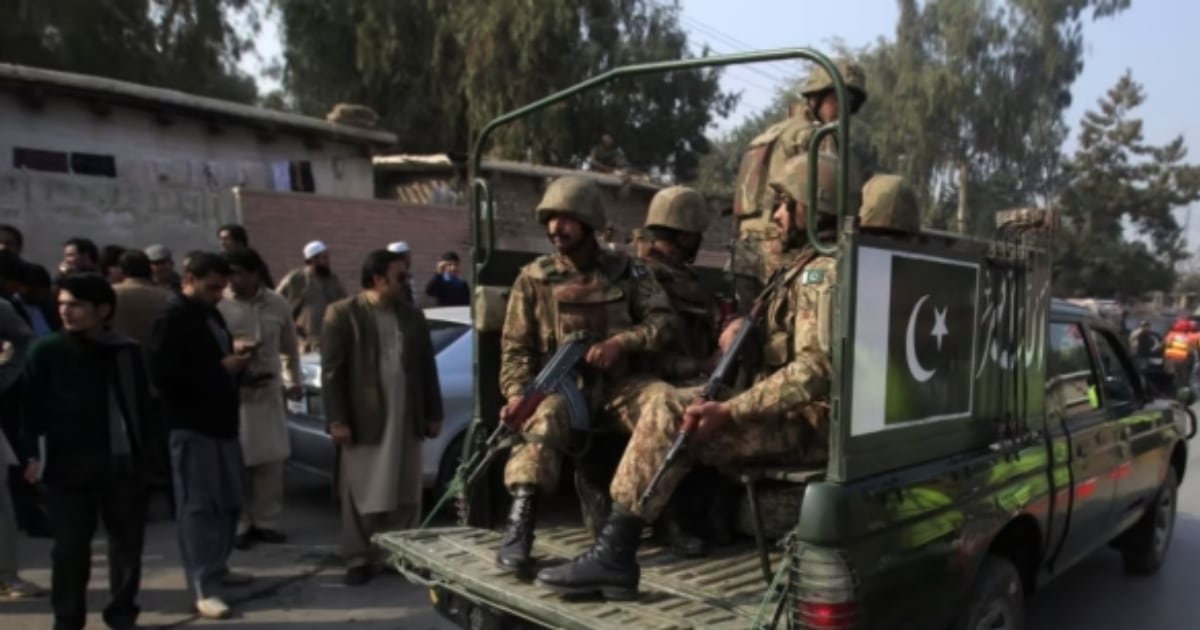




Executing a high-intensity kinetic offensive under the centralized mandate of the national counterterrorism framework, Pakistani security forces have eliminated 21 active terrorists, including four high-value ringleaders, in the general area of Miranshah and its surrounding peripheral belts in North Waziristan over the last 72 hours.
According to an official combat update released by the Inter-Services Public Relations (ISPR) on Saturday, the highly coordinated, intelligence-based operations (IBOs) have dealt a severe blow to the operational architecture of the banned Tehreek-e-Taliban Pakistan (TTP), formally designated by the state apparatus as Fitna-al-Khawarij.
This latest tactical sweep elevates the total insurgent body count to 48 neutralized operatives within a single week, signaling a sharp, aggressive escalation in the military’s localized counter-militancy campaign.
1. Eliminating the Miranshah Command Core
The ISPR confirmed that the fierce, close-quarter firefights resulted in the targeted elimination of four highly sought-after commander-level ringleaders who had long evaded capture:
-
Kharji Khalid Raza alias Salar (A top-tier field commander)
-
Kharji Muftoon
-
Kharji Musa
-
Kharji Imran alias Ayan
The military’s media wing stated that these specific ringleaders were atop the state’s high-priority target lists, heavily implicated in coordinating cross-border asymmetric strikes, planting improvised explosive devices (IEDs), targeting security personnel convoys, and orchestrating the targeted assassinations of local pro-state tribal elders and innocent civilians. Advanced military-grade weaponry, tactical gear, and a significant cache of ammunition were recovered from the dismantled hideouts.
2. Civil-Military Lockdown: The Miranshah Section 144 Matrix
The unprecedented battlefield success comes directly on the heels of stringent administrative maneuvers implemented on the ground to isolate the operational theater.
-
Indefinite Section 144: On June 2, the district administration pre-emptively slapped an indefinite enforcement of Section 144 across the entire Miranshah subdivision—completely freezing all unauthorized vehicular traffic and civilian movement.
-
Pre-empting Retaliation: The severe administrative freeze was deployed as an operational shield after security forces successfully intercepted and neutralized a vehicle-borne suicide bomber attempting to ram a critical military outpost near Miranshah. The measure has successfully blindfolded insurgent reconnaissance networks, preventing retaliatory urban blowback as sanitization operations push deeper into the rugged terrain.
CRITICAL ANALYSIS: THE KINETIC ACCELERATION OF “AZM-I-ISTEHKAM”
The sheer velocity and lethal accuracy of the latest operations in North Waziristan underscore a fundamental tactical shift by the military leadership to reclaim the security initiative following a troubling spike in cross-border violence.
Dismantling the Franchise Model
By systematically targeting “ringleaders” like Khalid Raza alias Salar and Commander Muftoon, the military is intentionally attacking the command-and-control apparatus of the Khwarij network. The TTP’s modern operational template relies heavily on a franchise model—decentralized cells that operate autonomously but depend entirely on localized charismatic commanders for logistics, funding, and tactical coordination.
Decapitating four major field leaders within a compressed 72-hour window induces instantaneous institutional paralysis within the rank-and-file, severely disrupting the group’s ability to plan complex ambush maneuvers or execute coordinated operations along the Durand Line.
The Strategic Imperative of Vision ‘Azm-i-Istehkam’
The explicit invocation of Vision Azm-i-Istehkam (Resolve for Stability) by the ISPR is a deliberate message aimed at both domestic and regional observers. Approved by the Federal Apex Committee under the National Action Plan, the framework represents a multi-pronged state doctrine.
Following a sharp, volatile deterioration in the security indexes of Khyber Pakhtunkhwa and Balochistan during May 2026—as meticulously documented by the Pakistan Institute for Conflict and Security Studies (PICSS)—the state needed a definitive show of force. The intense combat output in Miranshah serves as an active verification that the military will not content itself with a passive containment posture. Instead, it is actively transitioning to a strategy of high-frequency, precision-targeted attrition.
The Cross-Border Subtext
The military’s firm classification of the threat as “Indian-sponsored and supported foreign terrorism” further elevates the geopolitical stakes. This vocabulary serves as an explicit warning to the Afghan Taliban regime in Kabul.
By aggressively neutralizing 48 heavily armed operatives in the span of seven days directly on the border interface, Islamabad is signaling that its patience regarding cross-border sanctuaries has expired. If neighboring authorities refuse to actively police their side of the frontier, the Pakistani security apparatus is fully prepared to use maximum, unmitigated kinetic force to sanitize its internal sovereign territory.
The Takeaway: The precision of the Miranshah sweep proves that the intelligence loops feeding the security forces are highly functional. However, a purely kinetic victory on the battlefield is only half the battle. As heavy sanitization operations continue to scrub the remaining pockets of resistance, the true test for Azm-i-Istehkam will lie in its ability to translate these undeniable tactical milestones into permanent, institutionalized socio-economic stability once the smoke clears and Section 144 is lifted.