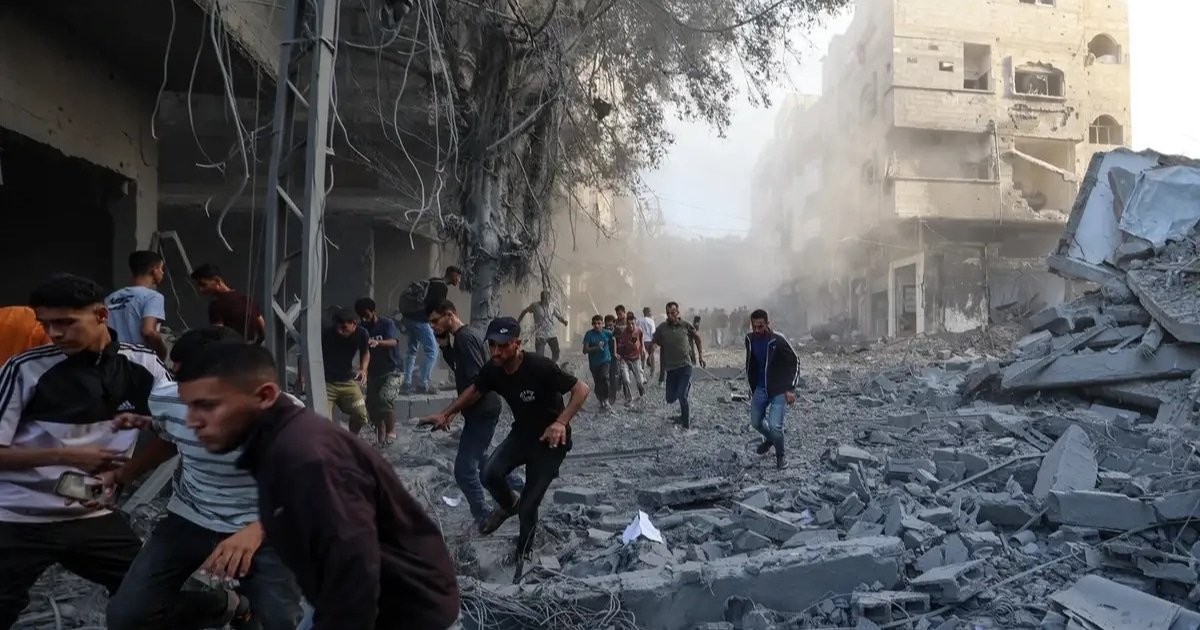





The US-sponsored ceasefire agreement, which halted the conflict between Israel and Hamas since October 10, is facing significant hurdles, with both sides accusing the other of daily violations and delaying the start of the second phase of the truce.
Hamas announced on Tuesday that it would not proceed with the agreement’s second phase as long as what it describes as Israeli “violations” of the initial terms persist, calling on mediators to apply pressure on Israel.
Hamas has said the ceasefire cannot move forward while Israel continues its violations of the agreement, with authorities saying the truce has been breached at least 738 times since taking effect in October https://t.co/q5Tj5vUZo6 pic.twitter.com/ri6YI4H79g
— Al Jazeera English (@AJEnglish) December 10, 2025
Core Dispute: Phase One Violations
Hamas political bureau member Hossam Badran pointed to critical failures in implementing the first phase of the deal. He specifically accused Israel of neglecting two key stipulations:
- Reopening the Rafah crossing with Egypt.
- Significantly increasing the volume of humanitarian aid entering the territory.
Badran urged the mediating nations—Egypt, Qatar, and the United States—to intervene and ensure Israel fulfills the initial commitments of the agreement. The reopening of the Israeli-controlled Allenby crossing (King Hussein Bridge) for aid trucks destined for Gaza, announced by an Israeli official on Tuesday, marks a partial easing of restrictions but comes months after the initial closure in late September.
Phase One: Exchanges Completed and Remaining
Despite the current standoff, significant actions were carried out under the first phase of the truce:
- Hostage/Prisoner Exchange: Palestinian militants were committed to releasing 48 captives (both living and dead). So far, all hostages have been released except for the body of one, Ran Gvili. In return, Israel has released nearly 2,000 Palestinian prisoners and returned the bodies of hundreds of dead Palestinians.
- Withdrawal Line: Under the initial steps, Israeli troops withdrew to positions behind a designated demarcation, often referred to as the “Yellow Line,” though they retain control over more than half of the Gaza Strip.
New Friction Point: The “Yellow Line”
A major point of recent contention is the interpretation of the troop withdrawal line. Hamas criticized remarks by Israeli military chief Lt. Gen. Eyal Zamir, who was quoted on Sunday as calling the demarcation line the “new border line.” Badran stated that these comments “clearly reveal the criminal occupation’s lack of commitment to the ceasefire agreement.”
Conditions for Phase Two
While Israeli Prime Minister Benjamin Netanyahu expressed expectations for an imminent start to the second phase, Hamas’s position remains firm: Phase Two cannot commence “as long as the occupation (Israel) continues its violations.”
The commencement of the second stage is contingent on several complex conditions, including:
- The handover of the body of the last Gaza captive, Ran Gvili (Israel’s demand).
- The disarming of Hamas.
- The further withdrawal of Israeli forces.
- The establishment of a transitional Palestinian authority.
- The deployment of an international stabilization force.
The final goal of the overall agreement is the phased withdrawal of all Israeli forces from Gaza, a condition under which Hamas has stated it is ready to hand over its weapons to the government of a future Palestinian state.
Casualties Since the Truce
Even under the ceasefire, violence and casualties have continued, underscoring the agreement’s fragility:
- The Gaza health ministry reports that 377 Palestinians have been killed by Israeli fire since the ceasefire began.
- The Israeli military has reported the deaths of three soldiers during the same period.
You May Like To Read: Microsoft Covers Co-Pilot Crash: Traffic Surge Sparks European Outage