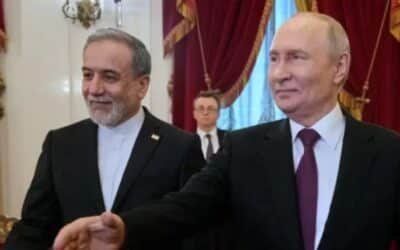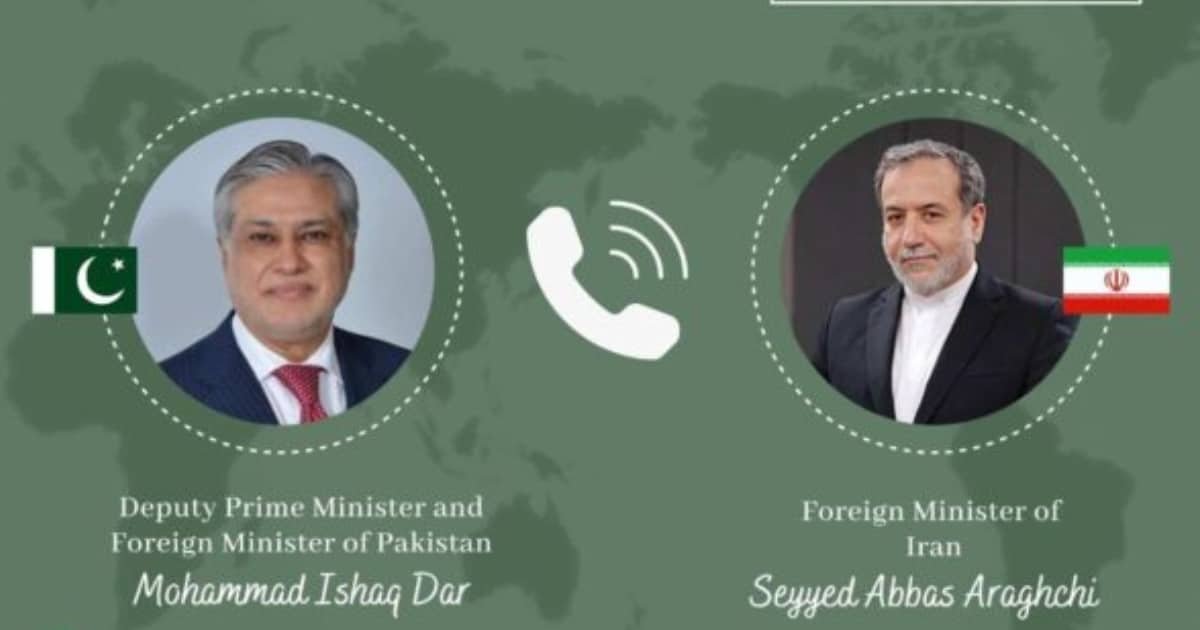





Deputy Prime Minister and Foreign Minister Ishaq Dar spoke with Iranian Foreign Minister Abbas Araghchi on Sunday night to discuss the regional situation and Pakistan’s ongoing diplomatic efforts to promote peace and stability.
Deputy Prime Minister / Foreign Minister Senator Mohammad Ishaq Dar @MIshaqDar50 held a telephonic conversation late last night with the Foreign Minister of Iran, Seyed Abbas Araqchi @Araghchi.
Discussion focused on regional situation and Pakistan’s ongoing diplomatic efforts… pic.twitter.com/B5PN7DhnEN
— Ministry of Foreign Affairs – Pakistan (@ForeignOfficePk) May 4, 2026
During the call, Foreign Minister Araghchi expressed his appreciation for Pakistan’s constructive role and sincere mediation efforts between all parties. Deputy Prime Minister Dar reaffirmed Pakistan’s commitment to constructive engagement, emphasizing that dialogue and diplomacy are the only viable path toward peaceful resolution and lasting peace in the region and beyond.
This development follows reports that the United States has responded to Iran’s new peace proposal, conveyed through Pakistan. President Trump has described the discussions as “very positive” and potentially leading to positive outcomes for all involved.
Negotiations between the US and Iran have been ongoing since a ceasefire brokered by Pakistan took effect on April 8th. A proposal is on the table with a one-month deadline for negotiations on a deal. The deal would aim to reopen the Strait of Hormuz, end the US naval blockade, and permanently end the war in Iran and Lebanon.
— Rapid Response 47 (@RapidResponse47) May 3, 2026
The proposal outlines three main stages, intending to transform the ceasefire into a complete end to the war within 30 days. It includes a pledge of non-aggression from all parties, including Israel, to prevent a return to conflict and end fighting throughout the Middle East. The plan suggests the gradual reopening of the Strait of Hormuz and the lifting of the US blockade of Iranian ports in the initial phase, with Iran taking responsibility for dealing with sea mines.
The second phase proposes Iran’s return to uranium enrichment at 3.6% after the agreed time limit, adhering to the “zero-storage principle.” This phase also includes the US and Israel refraining from attacks on Iran and its allies in exchange for Iran refraining from launching strikes. Iran has stated that it will not dismantle nuclear infrastructure or destroy its facilities.
The final phase involves Tehran entering into a strategic dialogue with Arab neighbors to build a security system encompassing the entire Middle East.
You May Like To Read: 22 Crew Members Evacuated to Pakistan After US Seizure of Iranian Ship
Check out our latest video: