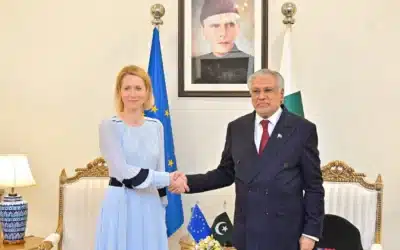



Islamabad | Kabul — Deputy Prime Minister and Foreign Minister Senator Mohammad Ishaq Dar has departed for Kabul to represent Pakistan at the sixth trilateral meeting of Foreign Ministers involving Pakistan, China, and Afghanistan. The visit underlines Islamabad’s commitment to enhancing regional cooperation in key domains such as regional connectivity, trade, and counter-terrorism.
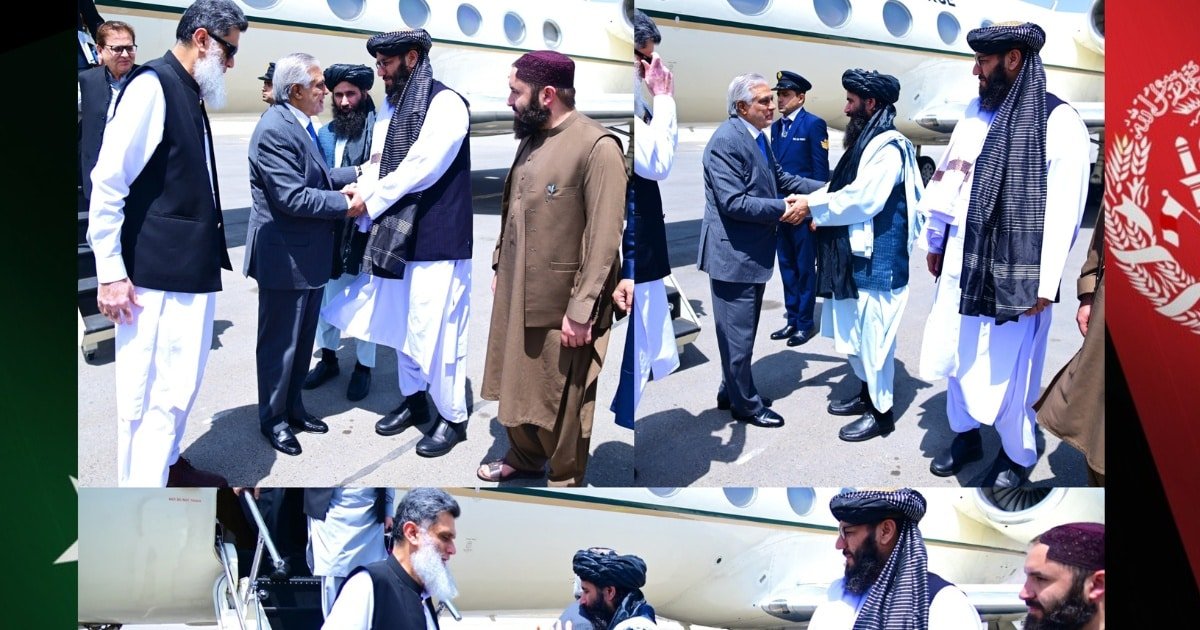
Deputy Prime Minister/Foreign Minister, Senator Mohammad Ishaq Dar @MIshaqDar50, has arrived in Kabul today for the 6th Trilateral Meeting of Foreign Ministers of Pakistan, China and Afghanistan.
The DPM/FM was received by Deputy Foreign Minister of Afghanistan, Dr.
Mohammad… pic.twitter.com/qpf42VV33X— Ministry of Foreign Affairs – Pakistan (@ForeignOfficePk) August 20, 2025
High-Level Diplomatic Engagement
The delegation, led by Senator Dar and accompanied by Ambassador Mohammad Sadiq, Special Representative to the Prime Minister on Afghanistan, and senior Foreign Ministry officials, will converge with counterparts from China and Afghanistan in Kabul today. Topics on the agenda include strengthening trade ties, exploring new corridors of connectivity, and reinforcing collaborative measures against transnational terror threats. Senator Dar is also scheduled to hold a bilateral meeting with Afghanistan’s Acting Foreign Minister to further deepen bilateral ties.
First Formal Trilateral Dialogue in Two Years
This meeting marks the first formal trilateral engagement since the Taliban’s return to power four years ago, and represents a diplomatically significant step forward. Notably, Chinese Foreign Minister Wang Yi—currently on an official visit—will join the discussions as co-chair.
Strategic Goals and Regional Outlook
The trilateral forum is expected to result in tangible outcomes related to regional cooperation:
- Economic and Connectivity Bridges: Focused dialogue on practical pathways to extend the China–Pakistan Economic Corridor (CPEC) into Afghanistan, bolstering cross-border infrastructure and increasing trade.
- Counter-Terrorism Coordination: Collective commitment to eradicate extremist threats, with China expressing support for joint measures against terrorism.
- Diplomatic Normalization: The gathering follows prior informal talks in Beijing, where all three nations agreed in principle to elevate diplomatic representation to the ambassadorial level, signaling renewed trust and institutional engagement.
You May Like To Read: August 19, 1919 vs. August 19, 2021: Turning Points in Afghanistan`s History
Broader Significance
The trilateral meeting comes ahead of Pakistan’s participation in the upcoming Shanghai Cooperation Organization (SCO) Summit in Tianjin. It reinforces Pakistan’s diplomatic posture within the region and showcases China’s role as a pivotal mediator.
These coordinated diplomatic initiatives reaffirm Pakistan’s strategy of active regional engagement—balancing political, economic, and security interests within South and Central Asia to foster peace, connectivity, and collective development.