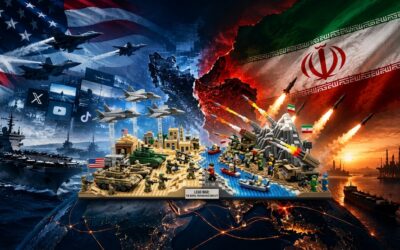





The Russian Federation today issued a series of statements regarding the escalating civil unrest in the Islamic Republic of Iran, marking a period of intense strategic observation as Moscow’s most critical Middle Eastern alliance faces an existential threat.
‘Aggression against Tehran would be Washington’s gravest mistake’
US military intervention in Iran risks destabilising entire region, says Leonid Slutsky, head of International Affairs Committee of Russia’s lower house of parliament.
🔴 LIVE updates: https://t.co/gZqHkyxsle pic.twitter.com/4e59TiiDKL
— Al Jazeera English (@AJEnglish) January 14, 2026
Warnings of Foreign Interference
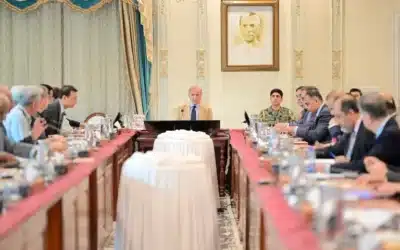
While President Vladimir Putin has remained officially silent, the Russian Foreign Ministry and the Security Council have moved to frame the current domestic uprising as a product of external provocation.
- Security Council Statement: Sergei Shoigu, Secretary of the Security Council, decried “attempts by foreign powers to interfere in Iran’s internal affairs,” mirroring rhetoric from Tehran.
- Foreign Ministry Warning: In a formal communiqué, the Foreign Ministry warned that the collapse of the current order in Tehran could lead to “disastrous consequences” for global international security and the broader Middle East.
Strategic Stakes for Moscow
Geopolitical analysts suggest that the potential fall of the Iranian regime represents a significantly higher risk to Russian interests than previous losses in Syria or Venezuela. Iran currently serves as:
- A Power Projector: A platform for Russia to build anti-Western alliances and expand its regional footprint.
- A Military Partner: A vital supplier of “Shahed” drones, missiles, and ammunition used in ongoing operations in Ukraine.
- A Buffer Zone: A critical layer of stability preventing unrest from reaching the sensitive Caucasus region on Russia’s southern border.
The Kremlin is confident that mass protests in Iran have peaked, and Tehran’s leadership has managed to squash domestic resistance to its rule, according to one of Russia’s pre-eminent experts on Iran https://t.co/KTgxSEa9XS pic.twitter.com/aH7qoL8i0w
— Al Jazeera English (@AJEnglish) January 15, 2026
The Impact of U.S. Pressure
The Kremlin’s “watch and wait” posture comes as U.S. President Donald Trump intensifies pressure on Tehran. The U.S. administration has signaled potential military strikes if the regime executes protestors and has threatened 25% tariffs on any nation continuing to conduct business with the Islamic Republic.
You May Like To Read: X Implements Global Restrictions on Grok AI to Prevent Generation of Nonconsensual Sexualized Imagery
Limits of the Alliance
Despite the deep military and ideological ties, experts note that Russia appears either unable or unwilling to intervene militarily to prop up the Iranian leadership. Following a pattern seen during last summer’s strikes on Iranian nuclear facilities, Moscow remains prioritized on its own territorial interests and is wary of a direct kinetic confrontation with the United States or Israel.
Future Outlook
Should a leadership vacuum emerge in Tehran, Russian state planners are expected to attempt a rapid re-engagement with any successor government. Failure to maintain a foothold in Iran would risk the total displacement of Russian influence in the Middle East by Western powers—a scenario the Kremlin views as “highly undesirable.”
Check out our latest video: