




In a major boost for the nation’s maritime economy, the Joint War Committee (JWC) of the Lloyd’s Market Association has officially removed Pakistan and its territorial waters from its global Listed Areas.
The decision, announced Thursday, ends a two-decade-long classification that subjected vessels calling at Pakistani ports to heavy war-risk insurance surcharges. The delisting is expected to significantly reduce freight costs, lower export overheads, and enhance the competitiveness of national ports.
Joint War Committee (JWC) of Lloyd’s, London has removed Pakistan from its Hull War, Piracy, Terrorism & Related Perils Listed Areas. The decision ends over a decade of war risk listing for Pakistani ports, reducing insurance costs & improving maritime trade competitiveness. 1/2 pic.twitter.com/26IXwzONo4
— DGPR (Navy) (@dgprPaknavy) July 30, 2026
The Path to Delisting: Data-Driven Maritime Diplomacy
The removal of Pakistan from the JWC high-risk zone follows an intensive, structured diplomatic and technical push led by the Ministry of Maritime Affairs:
-
Two-Decade Legacy: Pakistan’s maritime zones were initially added to the JWC Listed Areas in the aftermath of the September 11, 2001 attacks and the launch of the US War on Terror, saddling Pakistani trade with elevated war-risk insurance premiums for over twenty years.
-
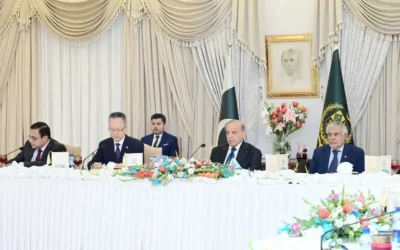
Special Task Force: On March 13, 2026, Prime Minister Shehbaz Sharif established a high-level committee chaired by Federal Minister for Maritime Affairs Muhammad Junaid Anwar Chaudhry to challenge the high-risk designation.
-
Technical Negotiations: The committee conducted extensive technical presentations with Lloyd’s Underwriting Association, presenting empirical security data and maritime safety metrics to prove that Pakistani waters no longer posed war-risk threats to international shipping.
-
Decisive Outcome: Sustained negotiations—including extended working sessions throughout Ramadan—culminated in the JWC officially delisting Pakistan’s maritime territory.
Economic and Operational Impact on Pakistani Ports
The removal of war-risk premiums delivers immediate operational and financial advantages across the country’s shipping and logistical sectors:
Direct Financial & Logistical Benefits:
- Cost Reduction: Eliminates extra war-risk insurance premiums & surcharges on ships
- Export Edge: Lowers overall freight rates, making Pakistani products price-competitive globally
- Port Attractiveness: Increases vessel calls at Karachi Port, Port Qasim, and Gwadar
- Logistics Expansion: Position Pakistan as a key transshipment hub for regional trade
Strategic Analysis: Lowering Trade Costs and Elevating Regional Hubs
The Joint War Committee’s decision represents a critical structural victory for Pakistan’s macro-economic and maritime outlook:
Slashing Freight Costs to Boost Export Competitiveness
War-risk insurance premiums have long acted as an invisible tax on Pakistan’s international trade, inflating import costs and making exports less competitive against regional rivals. By removing these surcharges, foreign shipping lines can reduce their base freight tariffs for Pakistani destinations. This cost reduction directly improves profit margins for textile and agricultural exporters while reducing the cost of importing essential industrial raw materials.
Elevating Gwadar, Karachi, and Port Qasim as Regional Transshipment Hubs
High insurance rates historically discouraged major international lines from utilizing Pakistani ports for transshipment or feeder networks. With the high-risk tag lifted, Karachi Port, Port Qasim, and Gwadar Port become economically attractive for global shipping lines. This shift allows Pakistan to better leverage its geographical position to serve landlocked Central Asian Republics (CARs) and facilitate regional cargo transit.
Validation of Maritime Security and Regional Stability
The JWC’s decision serves as an independent international endorsement of Pakistan’s maritime security environment. By convincing global maritime underwriters to revise their threat assessment, Pakistan has demonstrated the stability of its coastal waters, counter-piracy capabilities, and port defense protocols—building long-term confidence among foreign investors, port operators, and commercial shipping consortia.