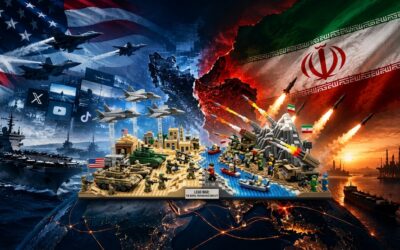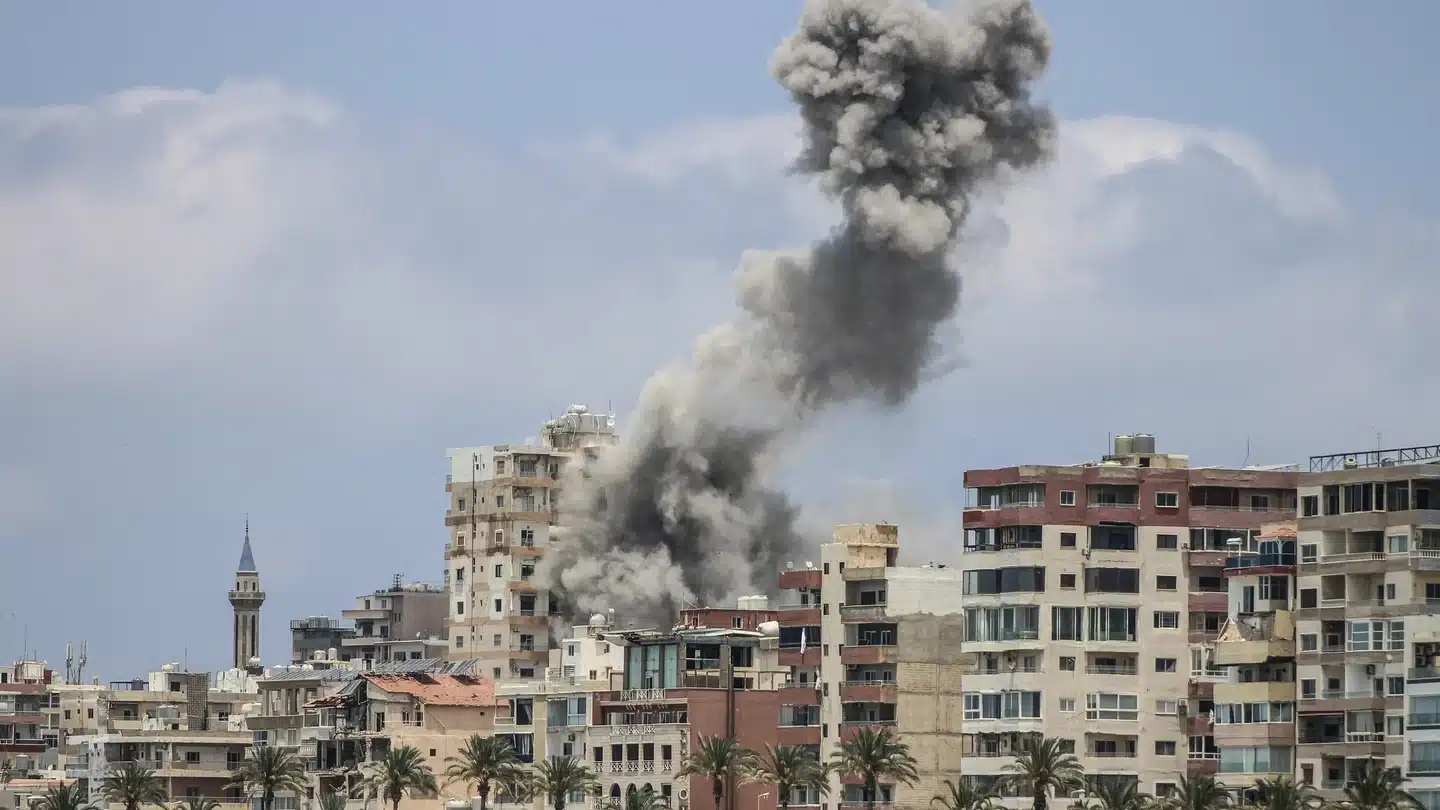





TEHRAN, IRAN — The Middle East has spiraled into an unrestricted military escalation after the United States launched a second, significantly larger wave of air strikes hitting the Iranian capital, Tehran, and several strategic coastal provinces. The massive bombardment, executing what U.S. Central Command (CENTCOM) described as strikes on roughly 90 military targets, comes as the fragile Pakistan-brokered peace agreement signed on June 17, 2026, teeters on the edge of total collapse.
In immediate retaliation, the Islamic Revolutionary Guard Corps (IRGC) launched a synchronized barrage of ballistic missiles, cruise missiles, and suicide drones targeting U.S. forward military bases across the Persian Gulf, triggering emergency air defense sirens in Bahrain, Kuwait, and Qatar. Over the past 48 hours of intense kinetic warfare, at least 14 people have been confirmed killed and 78 wounded across five Iranian provinces.
The Geography of the U.S. Air Campaign
Unlike the initial localized responses seen in late June, Thursday’s pre-dawn aerial assault targeted deep inside the Iranian mainland, hitting infrastructure nodes designed to cripple both military capacity and national logistics.
-
Capital and Port Bombardments: U.S. strike aircraft hit command facilities in the capital city of Tehran before executing heavy sweeps across the critical southern port infrastructure of Bandar Abbas, Sirik, Kuhestak, Chabahar, Jask, Konarak, and the strategic garrison on Abu Musa Island.
-
The Bushehr Explosions: High-intensity explosions were reported by local media within Bushehr province, the highly sensitive location housing Iran’s primary nuclear power generation plant, though no immediate damage to the reactor core has been verified.
-
Logistical Infrastructure Decapitation: The IRGC confirmed that U.S. precision-guided munitions successfully destroyed two critical concrete bridges on the main highway leading to the holy city of Mashhad. Concurrently, a strike destroyed the Aq Taqeh Khan railway bridge in the northern Golestan province. This vital rail link served as the primary terrestrial trade artery connecting Tehran to China via Turkmenistan and Kazakhstan, which Iran had actively utilized to bypass the ongoing U.S. naval blockade. Due to severe track damage, all passenger and cargo services along the Tehran-Mashhad corridor have been indefinitely suspended.
-
Civilian Casualties: Iranian health authorities reported that while military storage sites were the main targets, ordnance struck a fishing pier in the city of Sirik, killing three civilians and injuring 15 others. Another civilian casualty was recorded at airport facilities in Iranshahr, situated close to the Pakistani border.
Iran Strikes Back: Regional Base Infrastructure Targeted
As U.S. bombs fell on Iranian territory, the IRGC activated its regional counter-strike doctrine, explicitly warning Gulf cooperative states that allowing the U.S. military to utilize their airspace or installations makes them direct participants in the conflict.
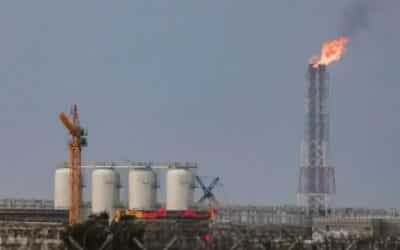
The IRGC targeted specialized American defensive and logistical infrastructure across the Gulf, claiming successful strikes against a Patriot missile battery at Camp Arifjan and Ali Al Salem Air Base in Kuwait, a high-frequency satellite communication array in Qatar, and forward fuel replenishment depots at NSA Juffair and Sheikh Isa Air Base in Bahrain.
In Kuwait, military authorities confirmed that air defense networks successfully intercepted one cruise missile, three ballistic missiles, and ten suicide drones, though falling debris wounded one person. To the west, the Jordanian Armed Forces confirmed their air defense units intercepted and destroyed eight Iranian missiles traversing Jordanian airspace before they could reach external targets.
Waterway Gridlock: The Battle Over Article 5 and the Strait of Hormuz
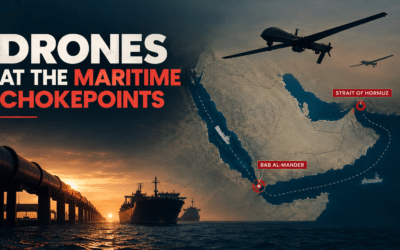
The immediate trigger for this week’s rapid unraveling was the Tuesday projectile attacks on three commercial energy tankers—the Marshall Islands-flagged M/T Al Rekayyat, the Saudi-flagged M/T Wedyan, and the Liberian-flagged M/T Cyprus Prosperity—within the Strait of Hormuz. While Western intelligence blamed Iranian hostile action, Tehran analysts counter-claimed that the vessels had unilaterally strayed into active naval mine-clearing sectors.
The core dispute stems from contradictory interpretations of Article 5 of the interim Memorandum of Understanding (MoU). Signed under Pakistani mediation to provide a 60-day negotiating window until August 21, Article 5 mandated that Iran reopen the Strait of Hormuz to clear hundreds of merchant ships stranded since the war erupted on February 28.
However, following the signing, Tehran rejected attempts by Oman and the United Nations to manage a safe southern shipping channel, asserting that the agreement recognizes exclusive Iranian administrative management over the waterway. Consequently, commercial traffic has slowed to a virtual standstill. Movement is currently restricted to a northern lane heavily monitored by Iranian coastal forces, leaving approximately 6,000 international mariners stranded aboard ships trapped within the volatile maritime combat zone.
Political Rhetoric: Trump Fumes, Tehran Defies
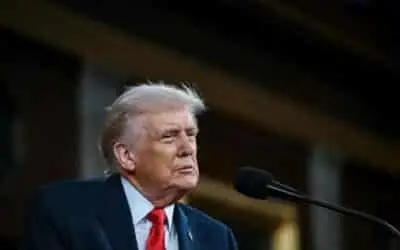
The political track has devolved into extreme uncertainty. Speaking at the NATO leaders’ summit in Ankara, Turkey, alongside Secretary of State Marco Rubio, U.S. President Donald Trump initially declared the MoU “over,” branding the Iranian leadership as highly volatile and untrustworthy.
However, while traveling aboard Air Force One on Thursday, President Trump appeared to slightly alter his stance. He noted that while full-scale military action remains a distinct option, his administration believes Iran remains desperate to secure a comprehensive diplomatic settlement. Trump added that any future kinetic actions would be executed “very quickly,” and explicitly threatened to expand targets to civilian infrastructure, including thermal electric grids, desalination plants, and a potential military seizure of Kharg Island—Iran’s premier crude oil export hub.
In response, Iranian Foreign Minister Abbas Araghchi stated that Tehran would refuse to engage with vulgar rhetoric, while Parliament Speaker Muhammad Ghalibaf warned via social media that the era of cost-free American bullying has permanently concluded. Ghalibaf stated plainly that any further Western strikes would be met with immediate reciprocal military force, adding that the security configuration of the Strait of Hormuz would be dictated solely by Iranian defensive arrangements, not American intimidation.
With the multi-day state funeral for late Supreme Leader Ayatollah Khamenei—who was assassinated in the opening hours of the war in February—concluding amid mass public protests chanting anti-American slogans, the political window for the scheduled Doha round of peace talks has effectively shut. Academic observers warn that by launching extensive domestic air strikes, Washington has exhausted its coercive utility, leaving Iran with few options but to use its chokehold over global energy lanes as an existential survival mechanism.