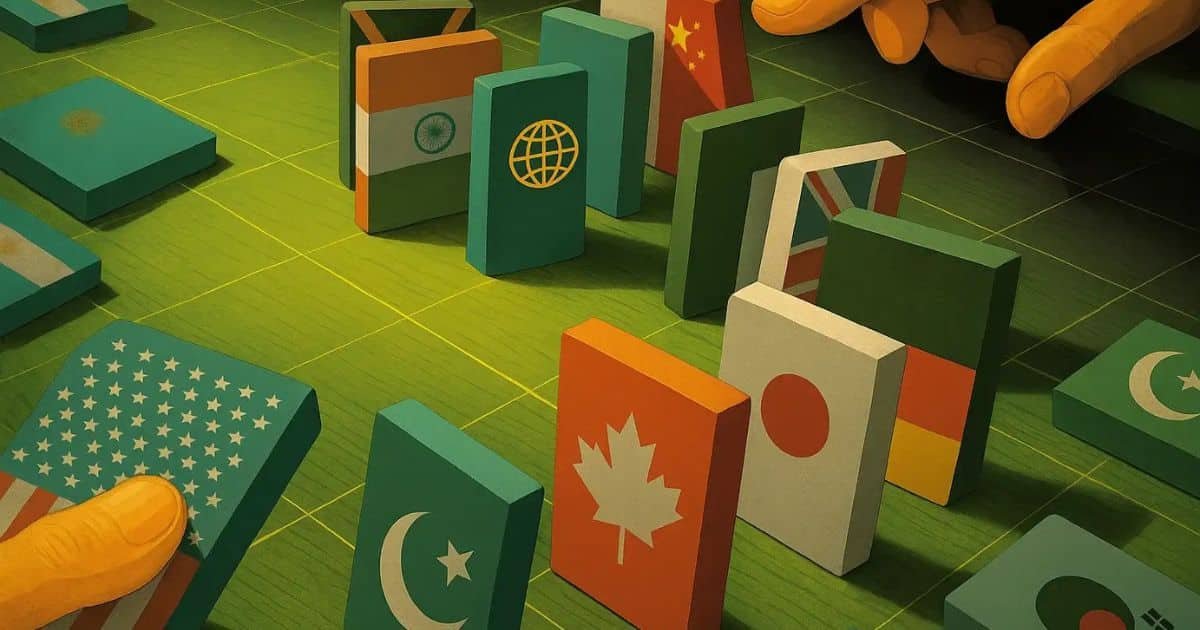


For decades the phrase “Global South” has been the shorthand for countries and peoples outside the wealthy industrialised world. Lately a different label, the “Global Majority,” has been gaining traction in academic, civil-society and diplomatic circles. The new phrasing is not just semantic; it signals a challenge to the old, Western-framed maps of power, identity and voice. For Pakistan, which has long tried to balance relations between the West, China and regional partners, the debate over terminology matters because language helps shape policy, alliances and who gets to set global agendas.
Re-Centring Perspective Through the “Global Majority”
The term “Global Majority” aims to re-centre perspective. Rather than describing billions of people as a residual “South,” the phrase foregrounds the simple demographic fact that people of African, Asian, Indigenous, Latin American and mixed-heritage backgrounds make up the vast majority of humanity. Advocates say the label resists the implicit normality of whiteness that sits behind terms such as “minority” in Western societies, and instead affirms political and moral legitimacy rooted in numbers and histories. This framing has moved beyond social-media slogan into organisational usage: universities, non-profits and some municipal bodies have experimented with the phrase to reframe diversity and representation conversations.
You May Like to Read: Trade Sanctions as a Tool of Hegemony: How the Global South Can Respond?
Shifting Geopolitical Language
There are also signs that the geopolitical language of the last decades is shifting. “Global South” itself has been evolving from a Cold War-era synonym for the “Third World” into a looser political category used in diplomatic forums and development cooperation. In 2024–25, state-level coalitions such as BRICS and South-South cooperation mechanisms emphasised collective bargaining on climate finance, trade and development, insisting that global governance should better reflect non-Western priorities. Major leaders and forums have repeatedly underlined the need to move away from paternalistic development prescriptions towards partnerships amongst developing countries. These moves have created space for newer language, including “Global Majority,” that locates authority outside Western vocabularies.
Limited Awareness and Uneven Adoption
Yet the rise of the term is uneven and contested. A recent YouGov study in the United Kingdom found limited public awareness of the phrase “Global Majority,” with only a third of ethnic-minority Britons saying they had heard of it. That underlines a recurring problem: terminology debates often circulate first among intellectuals, activists and institutions in the Anglophone world before reaching broader publics. In Pakistan, where political discourse remains dominated by security and economic narratives, such semantic shifts are likely to arrive filtered through diplomatic language, media framing, and elite debate rather than everyday conversation.
You May Like to Read: Pakistan and G77: Leadership Opportunity or Missed Platform for Global South Solidarity?
Why Words Matter in Global Negotiations
There are pragmatic reasons why language matters. Words structure perception. When international forums speak of the “Global Majority,” they implicitly challenge the moral monopoly long exercised by Western states and institutions. This has practical consequences in negotiations over debt relief, climate finance, trade rules and even votes in multilateral bodies. For countries like Pakistan, which face debt vulnerabilities and development pressures, a rhetorical landscape that highlights a larger coalition of low- and middle-income countries can strengthen bargaining leverage, at least politically. In short, language can be a small but real lever in altering diplomatic dynamics.
Risks of Symbolism Without Structural Reform
At the same time, critics warn that simply renaming groups does not solve underlying inequalities. Some analysts argue the switch from “Global South” to “Global Majority” risks flattening huge differences in history, development levels and political interests into a single banner. Others point out that geopolitical actors with their own agendas, notably China and Russia, are actively promoting alternatives to Western-led institutions while seeking influence across Asia, Africa and Latin America. Skeptics caution that new terms can be co-opted or hollowed out if not accompanied by institutional reform and genuine redistribution of decision-making power.
You May Like to Read: Food Security, and the Global South: Lessons Pakistan Must Learn from Global Grain Politics
Pakistan’s Opportunity and Responsibility
For Pakistan the debate offers both opportunity and caution. The opportunity lies in joining broader coalitions that insist on fairer development finance, technology transfer and trade terms. Language that reframes Pakistan as part of a demographic and geopolitical majority can be harnessed to build solidarity on issues where interests align. The caution is institutional: rhetorical change must be matched by concrete shifts in where and how choices are made at the IMF, World Bank, climate finance mechanisms and trade platforms.
You May Like to Read: Debt, Development, and Dependency: Is Pakistan Trapped in the Global South’s Financial Cycle?
Concluding: The Power Behind the Words
Ultimately, whether the West is “losing” a linguistic monopoly depends less on vocabulary and more on power. Words matter because they reflect power; but to translate words into influence requires resources, unity of purpose, and institutional change. The “Global Majority” as a phrase signals a mood, impatience with old hierarchies and a desire for new language to reflect new realities. For Pakistan and its peers, the phrase’s value will be judged by whether it helps secure tangible gains at the negotiating table, not merely by how often it appears in op-eds and conference statements. If the turn from “South” to “Majority” encourages more equitable policy making, then language will have done what language should: help reconfigure power, not just rename it.