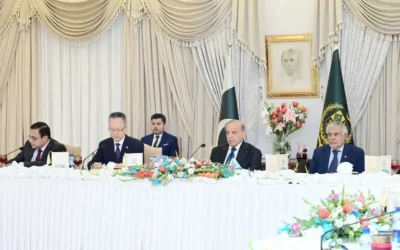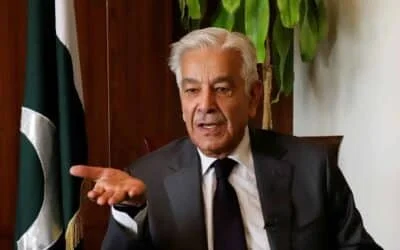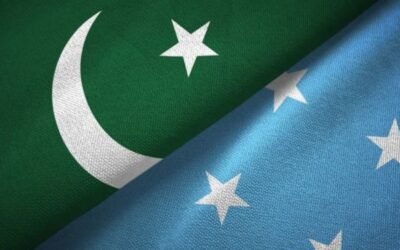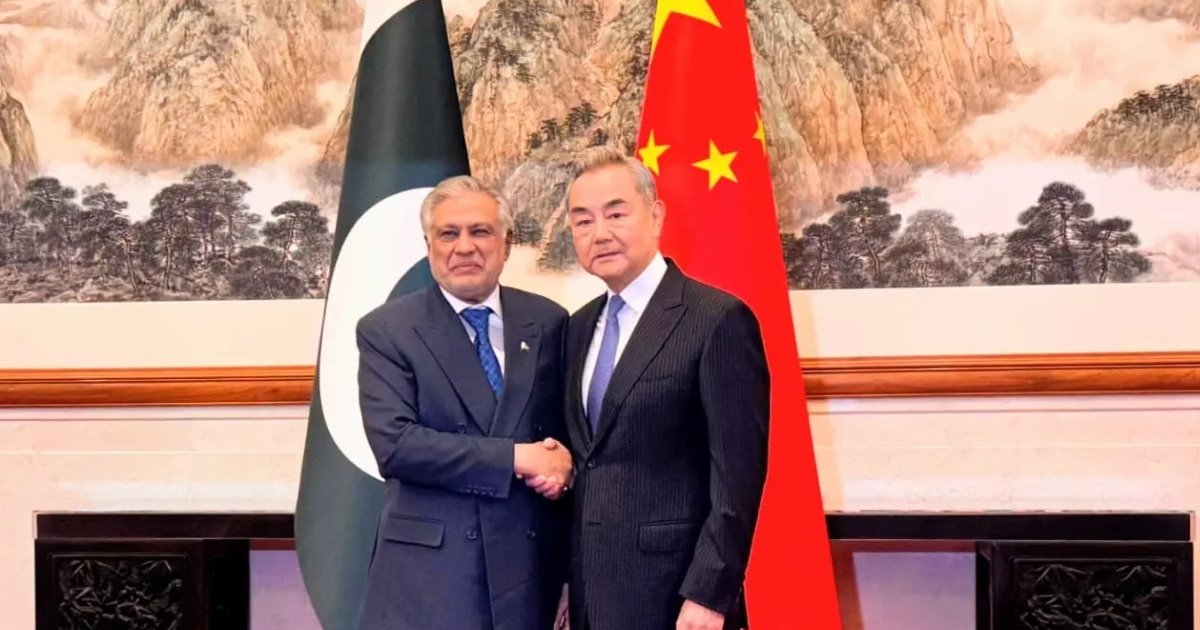



Against a backdrop of soaring energy prices and a rapidly expanding regional war, Pakistan’s Deputy Prime Minister and Foreign Minister Ishaq Dar arrived in Beijing today for a high-stakes meeting with Chinese Foreign Minister Wang Yi. The visit, undertaken despite Dar’s recent shoulder injury, has culminated in a joint “Five-Point Initiative” designed to de-escalate the US-Israel-Iran war and restore the “aortic valve” of global trade: the Strait of Hormuz.
The diplomatic push reflects a deepening sense of urgency as the conflict enters its second month, with Brent Crude surging past $100 per barrel and the Trump Administration deploying thousands of additional Marines and paratroopers to the Gulf.
The Five-Point Peace Framework
Building on the “Quadrilateral” consensus reached in Islamabad over the weekend with the foreign ministers of Türkiye, Egypt, and Saudi Arabia, Pakistan and China have codified a formal framework for de-escalation:
-
Immediate Cessation of Hostilities: An urgent call for a comprehensive ceasefire across all theaters.
-
Resumption of Dialogue: Establishing structured, direct, or indirect negotiations between Washington and Tehran.
-
Protection of Civilians & Infrastructure: A strict ban on targeting non-military sites, including energy grids and water filtration plants.
-
Maritime Security: Ensuring the “early and safe passage” of commercial vessels through the Strait of Hormuz.
-
Adherence to International Law: Rooting any final settlement in the UN Charter and established sovereignty.
Pakistan and China proposed a five-point initiative to review the situation in the Gulf and Middle East region as Foreign Ministers Wang Yi and Ishar Dar meet in Beijing. pic.twitter.com/2QFNQ2us4e
— Pakistan TV Digital (@PakistanTVcom) March 31, 2026
The “Guarantor” Question: Will Beijing Underwrite the Deal?
The most critical aspect of Dar’s visit is the potential for China to move beyond rhetoric and act as a consequential underwriter for a potential deal.
-
Iran’s Condition: Sources suggest that Tehran has demanded a major power act as a “guarantor” to ensure Washington adheres to any ceasefire terms. Given Iran’s deep economic ties with Beijing—including the 25-year strategic cooperation agreement—China is the only actor viewed as credible by the Iranian leadership.
-
The Intermediary Role: While Pakistan excels at “shuttle diplomacy” between Washington and Tehran, it lacks the financial and geopolitical weight to underwrite a peace treaty alone. “Beijing is now the front line in the diplomatic effort,” noted former State Department official Vali Nasr.
Strategic Imperatives: Why China Cannot Stay Neutral
While Beijing has historically preferred a low-profile role in Middle Eastern conflicts, the 2026 Iran war directly threatens its core interests:
-
Energy Security: China imports approximately 1.38 million barrels per day of crude from Iran (12% of its total). Furthermore, nearly 50% of China’s total crude imports transit the now-blockaded Strait of Hormuz.
-
CPEC & BRI Risks: A prolonged war destabilizes the China-Pakistan Economic Corridor (CPEC) and wider Belt and Road Initiative (BRI) investments across the region, valued at hundreds of billions of dollars.
-
Averting Recession: With global inflation spiking due to disrupted supply chains, a stabilized Iran-US track serves China’s primary goal of domestic economic stability.
Military Context: The Looming Ground War
Dar’s diplomatic mission is racing against a significant US military buildup.
-
Troop Surge: The USS Tripoli, carrying 3,500 Marines, has entered the Gulf, joined by 2,000 soldiers from the 82nd Airborne Division.
-
Target: Kharg Island: Reports suggest the Pentagon is preparing for “limited ground operations,” with Kharg Island—the hub for 90% of Iran’s oil exports—identified as a primary target.
-
The “Blind Spot”: The recent Iranian strike on the E-3 Sentry (AWACS) at Prince Sultan Air Base has created a temporary tactical gap, providing a narrow window for diplomacy before a potential American retaliatory escalation.
The Road to the May Summit
The Pakistan-China five-point plan is intended to bridge the gap until the planned Trump-Xi summit on May 14.
-
Classical Intermediary: Pakistan is utilizing its “all-weather” partnership with China to provide Washington with a low-risk, credible off-ramp.
-
The Islamabad Option: By aligning the “Four-Power” Sunni bloc (Pakistan, Saudi, Egypt, Türkiye) with China’s economic weight, Islamabad has created a formidable diplomatic front that President Trump—who has expressed a desire for a “deal”—may find difficult to ignore.
You May Like To Read: Iraq’s Diplomatic Crisis Deepens as Proxy Strikes Target Gulf Neighbors
Check out our latest video: