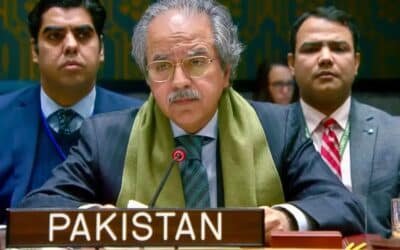





Finance Minister Muhammad Aurangzeb has said that while Pakistan has discussed the economic impact of the Iran conflict with the International Monetary Fund (IMF), the government’s immediate priority remains securing early approval for the next tranche of the IMF package.
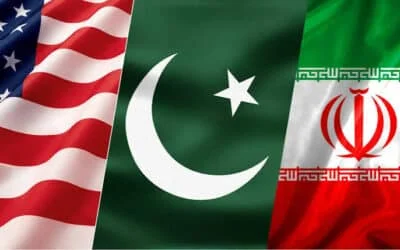
Pakistan’s army chief Asim Munir has completed a three-day visit to Tehran, during which he met with top Iranian leaders and negotiators as part of efforts to end the war with the US, the Pakistani military said in a statement.
🔴 LIVE updates: https://t.co/EKXptFHOIz pic.twitter.com/SAHmtyV43s
— Al Jazeera English (@AJEnglish) April 18, 2026
Talking to Dawn after a news conference at the Pakistan Embassy in Washington on Friday, Aurangzeb noted that the reopening of the Strait of Hormuz was “a very good development” that would ease pressure on global oil supplies, bring down prices, and benefit Pakistan.
He acknowledged that a prolonged conflict would have adversely affected economic growth and inflation but added that the government had prepared contingency plans. “We hope the situation will improve, but hope is not a strategy,” he remarked.
Aurangzeb said he had also briefed IMF officials on the possible consequences of the Iran crisis and welcomed the Fund’s facilities to support countries facing global economic shocks. However, he stressed that Pakistan’s focus is on completing the ongoing programme reviews and obtaining timely board approval.
During the World Bank-IMF Spring Meetings 2026, the minister held multiple engagements, including with counterparts from China, the US, and the UK. Discussions centred on expanding cooperation in trade, investment, and key sectors such as information technology, minerals, and energy.
On the external sector, Aurangzeb highlighted positive indicators: a current account surplus of over $1 billion in March, remittance inflows of $3.8 billion during the same month, and record inflows of $261 million under the Roshan Digital Account.
He also briefed global rating agency Moody’s on Pakistan’s external financing position and successful Eurobond repayments, while outlining plans to re-access international capital markets through new instruments, including a Eurobond and a dollar-settled rupee-linked bond.
Aurangzeb reaffirmed the government’s commitment to macroeconomic stability, structural reforms, and responsible borrowing. He stressed the importance of policy continuity, improving the ease of doing business, and shifting towards renewable energy while addressing structural issues in the power sector.
The minister is participating in over 50 high-level engagements during the Spring Meetings, which run from April 13 to 18.
You May Like To Read: UK and France to Lead Shipping Protection Mission in Strait of Hormuz
Check out our latest video: