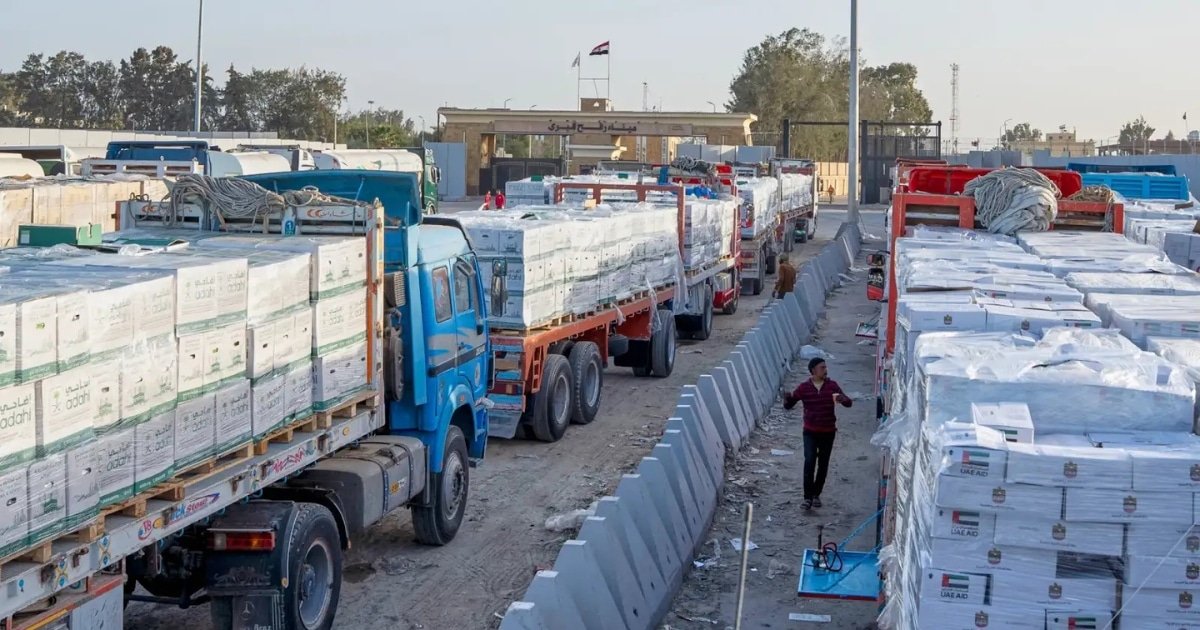





Gaza’s Rafah border crossing has reopened for limited movement after nearly two years of closure, marking a major moment for Palestinians as part of the US-brokered ceasefire agreement. While the reopening offers new hope for humanitarian access and medical evacuations, strict security controls and movement restrictions show that normal life is still far from returning to the besieged enclave.
Gaza’s main border crossing in Rafah will reopen for Palestinians on Monday, Israel said, with preparations underway at the war-ravaged enclave’s main gateway that has been largely shut for almost two years https://t.co/fwuDVsxQRM pic.twitter.com/CgPgCDo0Lv
— Reuters (@Reuters) February 1, 2026
A Long-Closed Lifeline Opens Again
The reopening of the Rafah crossing, Gaza’s only border point not connected to Israel, is a significant development for the people of the enclave. For almost two years, Gaza remained largely sealed off from the outside world, cutting off a vital route for humanitarian aid, medical evacuations, and civilian travel.
Officials confirmed that the crossing reopened on Monday under the second phase of the US-brokered ceasefire that ended the war between Israel and Hamas in October. For many Palestinians, Rafah represents more than a border; it is a lifeline to healthcare, education, family reunions, and survival beyond Gaza’s borders.
Strict Controls and Limited Movement
Despite the reopening, movement through the crossing remains tightly controlled. Israel and Egypt are imposing limits on the number of people allowed to cross each day, and strict security checks have been put in place. European Union monitoring teams are now present, with the EU Border Assistance Mission managing the Palestinian side of the crossing.
Names of travelers are being submitted in advance for security vetting, while Israel has established a military checkpoint near Rafah to screen those entering Gaza. On the first day, only around 50 Palestinians were allowed to cross in each direction, showing how restricted the process remains.
Fragile Hope for Gaza’s Future
For Palestinians, the reopening of Rafah brings cautious optimism rather than celebration. Families hoping for medical treatment, travel, or reunification now see a small opening after years of isolation. However, the heavy security presence and strict limits highlight that Gaza’s freedom of movement is still deeply constrained.
While Rafah’s reopening is a powerful symbol of progress, it also reflects how fragile peace remains, with hope slowly returning but under tight control and constant uncertainty.