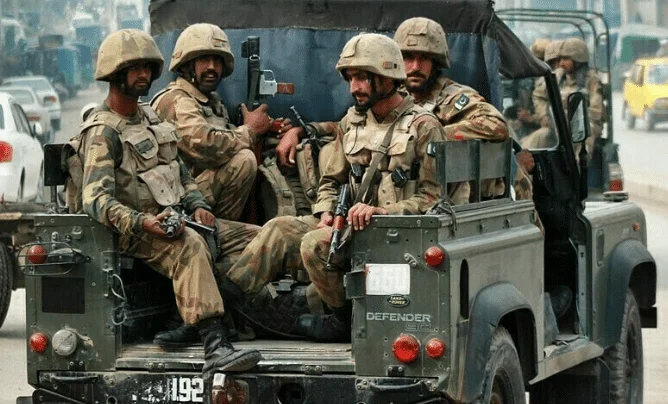





In a decisive deployment of intelligence-driven kinetic force, Pakistani security forces have successfully neutralized eight high-value terrorists during two separate, high-tempo tactical operations executed across the volatile Kharan and Mastung districts of Balochistan.
According to an official institutional brief released on Saturday by the Inter-Services Public Relations (ISPR), the back-to-back operations—conducted across June 25 and 26—form part of an accelerated, nationwide counter-terrorism campaign specifically designed to target, dismantle, and completely eliminate the operational networks of Fitna al Hindustan.
The operational term Fitna al Hindustan was formally integrated into the state’s security doctrine by the federal cabinet and military leadership following a wave of coordinated border insurgencies. The designation serves as a deliberate strategic narrative shift, explicitly branding Balochistan-based outlawed separatist factions and militant syndicates as foreign-backed proxies acting directly on the instructions and financial backing of external hostile intelligence agencies to destabilize Pakistan’s economic and territorial integrity.
Security forces have killed 8 terrorists belonging to #IndianProxy, #FitnaAlHindustan in two high-tempo intelligence-driven operations in #Kharan and #Mastung districts of #Balochistan@OfficialDGISPR #RadioPakistan #News https://t.co/ONVfhFqfTu pic.twitter.com/m8wPrqKf9g
— Radio Pakistan (@RadioPakistan) June 27, 2026
Direct Kinetic Engagements: Breakdown of the Dual Operations
The military’s media affairs wing detailed a highly synchronized timeline of the two distinct border operations, which combined advanced signal intelligence with pre-emptive field execution.
1. The Kharan District Interception (June 25, 2026)
-
The Intelligence Vector: Specialized surveillance assets successfully tracked and intercepted the coordinates of an armed militant cell moving through the rugged terrain of the Kharan district.
-
The Engagement: Armed frontier troops deployed a rapid block-and-engage maneuver, pinning down the hostile targets.
-
The Outcome: Through precise and highly skilled tactical engagement, three active terrorists belonging to the foreign-sponsored Fitna al Hindustan framework were killed on the spot, while several other cell members sustained severe injuries during the firefight.
2. The Mastung Suicide Cell Raid (June 26, 2026)
-
The Intelligence Vector: Less than 24 hours later, military intelligence units uncovered actionable, time-sensitive data indicating the imminent deployment of a suicide bomber from a hidden location within the Mastung district.
-
The Engagement: Security forces launched an aggressive, pre-emptive raid to neutralize the cell before it could execute its high-casualty mission. The raid quickly escalated into an intense, close-quarters exchange of automatic fire.
-
The Outcome: Five heavily armed terrorists, including the designated suicide bomber, were successfully neutralized. Law enforcement units recovered a significant cache of military-grade weapons, ammunition, improvised explosive devices (IEDs), and logistics assets, including motorbikes configured for urban guerrilla attacks.
Following both engagements, joint security teams initiated intensive sanitization and combing operations across the adjacent mountain gaps to locate and eliminate any remaining facilitators or secondary support cells associated with the cell.
State Leadership Reaffirms Unyielding Policy Directives
The high-tempo operations drew immediate, strong expressions of support from the highest echelons of Pakistan’s civilian leadership, signaling full institutional alignment behind the armed forces’ aggressive operational posture.
From the Presidency, President Asif Ali Zardari paid rich tribute to the operational troops, stating that the precision of the Kharan and Mastung raids demonstrated the world-class professionalism, alertness, and unyielding determination of the country’s defense apparatus. The President emphasized that state-backed kinetic operations must continue without pause until foreign-sponsored terrorism is entirely uprooted from Pakistani soil.
Concurrently, Prime Minister Shehbaz Sharif issued an executive statement via the Prime Minister’s Office (PMO), reinforcing the government’s stance against asymmetric warfare. “Our struggle will continue until the complete eradication of all forms of terrorism from Pakistan,” the Premier stated, warning that the “enemies of Pakistan’s peace will be given a crushing defeat on every front.”
Interior Minister Mohsin Naqvi also lauded the timely intelligence tracking that allowed the Frontier Corps and military units to completely intercept and foil the malicious designs of the planners, reiterating that the entire nation stands firmly shoulder-to-shoulder with its security forces in this existential security campaign.
Critical Analysis
The twin operations in Kharan and Mastung highlight a significant and ongoing transformation in Pakistan’s internal security strategy: the shift from a reactive border defense posture to an aggressive, intelligence-driven pre-emptive doctrine. The data released by the ISPR reveals a high operational tempo, with the military neutralizing 39 terrorists in June 2026 alone across major flashpoints like Basima, Mastung, and Quetta. This aggressive push reflects a calculated effort by the state to completely break the back of militant networks following the devastating coordinated attacks of earlier this year, which severely tested the regional security framework.
From a strategic communications perspective, the consistent and deliberate use of the term Fitna al Hindustan by both the military leadership and senior cabinet ministers represents an sophisticated narrative strategy. By explicitly linking Baloch separatist groups and local militant cells to a single, foreign-backed source, Islamabad is attempting to accomplish three key geopolitical objectives:
-
De-legitimization: It strips these insurgent movements of any claim to local nationalist legitimacy, reframing them in the public eye not as local dissidents, but as treasonous, sub-state actors working for a hostile neighbor.
-
National Unity: It unifies domestic public opinion behind the military by leveraging a familiar external threat, effectively shifting public attention away from long-standing socio-economic grievances in Balochistan.
-
International Diplomacy: It builds a formal diplomatic case before international bodies, directly connecting regional instability to cross-border sponsorship and interference.
However, this high-tempo kinetic strategy carries inherent, long-term operational challenges. While pre-empting a suicide bomber in Mastung is undeniably a major tactical success for military intelligence, relying solely on kinetic operations can treat the symptoms of instability rather than its root causes.
As security forces successfully secure urban centers and transport infrastructure like the Quetta shuttle train network, the state must quickly follow these military successes with sustained socio-economic integration. To permanently stabilize Balochistan, the neutralization of Fitna al Hindustan cells on the battlefield must be paired with massive development funding, political inclusion, and the formalization of border economies. This approach will ensure that foreign hostile actors lose the local socio-economic vulnerabilities they routinely exploit to recruit and disrupt regional peace.
Conclusion
The successful execution of the Kharan and Mastung operations confirms that Pakistan’s counter-terrorism apparatus maintains a high level of vigilance and rapid-response capability. By eliminating key operational actors and seizing critical weapon stockpiles before they could be deployed, the security forces have delivered another significant blow to the infrastructure of foreign-supported militancy in Balochistan.
As long as the political and military leadership maintain their current strategic focus, this aggressive operational stance will continue to protect critical state infrastructure, restore public confidence, and send a clear message to external adversaries that Pakistan will defend its internal peace and sovereign borders with absolute resolve.