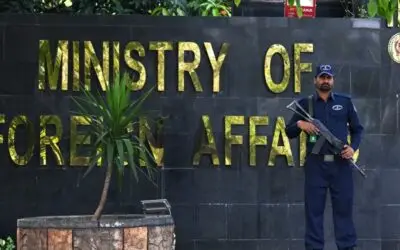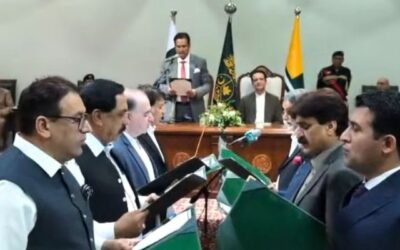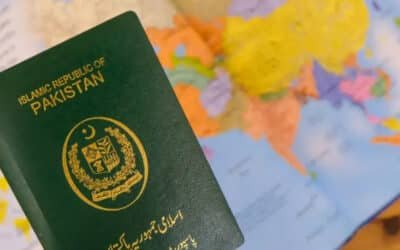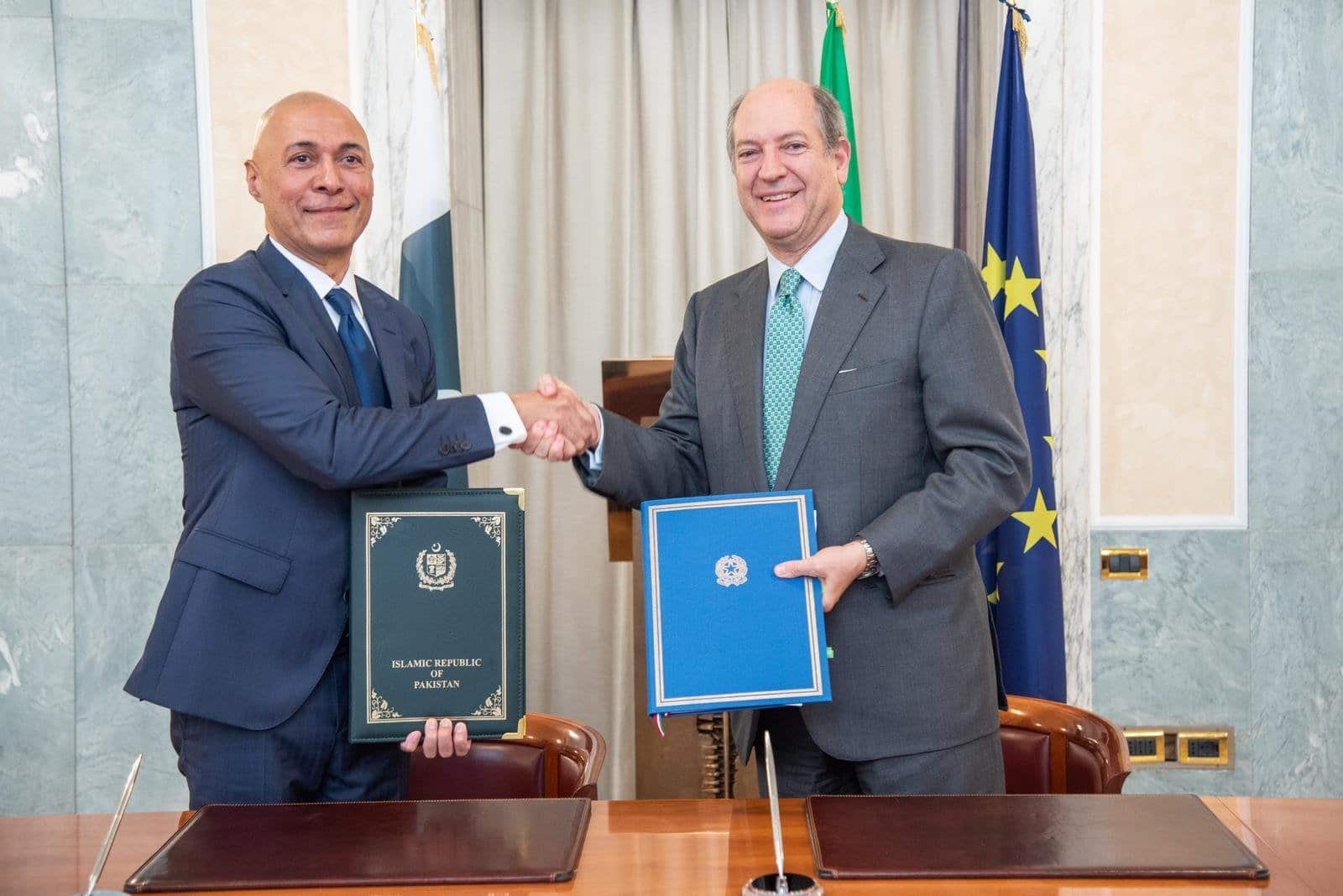





Pakistan and Italy have officially formalized an agreement to abolish visa requirements for holders of diplomatic passports. The accord was signed during an official ceremony hosted at the Italian Ministry of Foreign Affairs (Farnesina) in Rome by Pakistan’s Ambassador to Italy, Ali Javed, and the Italian Foreign Affairs Secretary General, Ambassador Riccardo Guariglia.
Prior to the signing ceremony, the two envoys held high-level, one-on-one talks to review the entire spectrum of bilateral relations, including mutual cooperation within multilateral forums such as the United Nations and the European Union. Both diplomats expressed deep satisfaction with the “substance, intensity, and soaring trajectory” of the Pakistan-Italy strategic partnership.
According to an official handout, the newly minted agreement is designed to streamline the exchange of official delegations and eliminate bureaucratic hurdles for state-level engagements. Officials from both nations hailed the pact as a tangible reflection of mutual trust, describing it as an excellent addition to an already robust bilateral architecture.
The meeting also set the stage for upcoming high-level engagements. Ambassador Javed reiterated an invitation to Secretary General Guariglia to visit Islamabad for the 7th Round of Bilateral Political Consultations, proposed for the final quarter of 2026. This visit is slated to coincide with the highly anticipated inauguration of the newly constructed Italian Embassy in Islamabad, which stands as Italy’s largest diplomatic mission anywhere in the world.
Pakistan and Italy have signed an agreement to abolish requirement of visas for diplomatic passports#RadioPakistan #News https://t.co/bcGalvZjOM pic.twitter.com/OTpbsm4Bw9
— Radio Pakistan (@RadioPakistan) June 2, 2026
Critical Analysis
The visa-abolition agreement for diplomats is a highly symbolic step that points to a much deeper, deliberate structural realignment between Islamabad and Rome. A critical analysis of the current bilateral trajectory yields several key insights:
Diplomatic Efficiency as a Catalyst for Institutional Ties
While the waiver applies strictly to diplomatic passport holders, its primary utility is operational rather than populist. It creates a frictionless corridor for high-level military, economic, and political delegations to travel between Islamabad and Rome on short notice. This is particularly vital given the sprawling network of existing bilateral treaties:
| Framework Category | Active Agreements & Key Milestones |
| Government-to-Government (G2G) | 15 active agreements covering Defence Studies, Anti-Narcotics, Tourism, and Science. |
| Academic & Think Tank Ties | 21 active Memorandums of Understanding (MoUs). |
| Historic Treaties | Extradition Treaty (1972), Dual Citizenship (1983), Investment Protection (1997). |
| Strategic Pillars | Joint Economic Commission (2005), Defence Cooperation Accord (2009). |
By removing visa friction for the officials managing these diverse portfolios, both states are optimizing their bureaucratic machinery to sustain a highly active bilateral agenda.
The Intersection of Strategic Trust and Demographic Realities
The upcoming inauguration of Italy’s largest embassy worldwide in Islamabad is an extraordinary geopolitical indicator. It underscores that Rome views Pakistan not merely as a standard diplomatic post, but as a primary anchor for its broader South Asian strategy.
This diplomatic investment aligns seamlessly with the milestone “Labour Mobility and Migration” MoU signed on May 7, 2025. As Pakistan’s first-ever labor accord with a European state, it explicitly earmarks 10,500 Pakistan-specific jobs in Italy. This creates a legal, structured, and mutually beneficial alternative to the irregular migration routes that have historically strained ties between South Asia and southern Europe, effectively transforming a potential flashpoint into an economic bridge.
The 2026 Timeline: Aligning Geopolitics and Infrastructure
The scheduling of the 7th Round of Bilateral Political Consultations for the final quarter of 2026 is a calculated move. By pairing these high-level talks with the physical opening of the mega-embassy complex, both nations are creating a powerful media and diplomatic moment. It signals to regional neighbors and European partners alike that Italy is heavily committed to deepening its footprint in Pakistan, particularly across trade, defense procurement, and institutional capacity building.