


In a high-stakes diplomatic visit validating Pakistan’s elevated standing in international conflict mediation, the United Kingdom has formally committed an additional £8 million to reinforce joint UK-Pakistan border security operations.
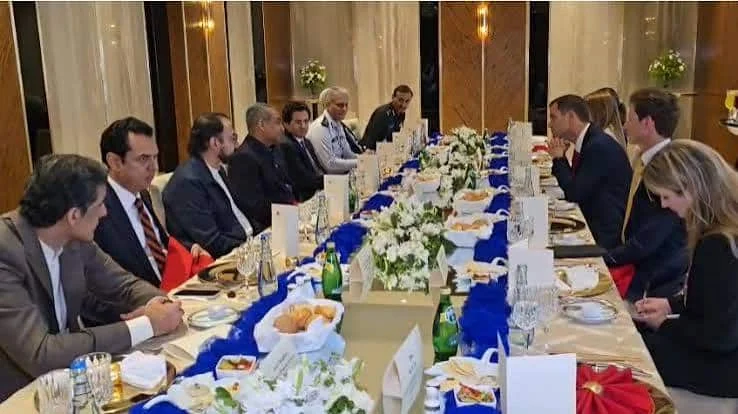
The security pack and institutional funding were solidified during a crucial bilateral session between Pakistan’s Interior Minister Mohsin Naqvi and the visiting British Minister of State for the Middle East, South Asia, and the UN, Hamish Falconer.
UK’s Minister for Middle East, Afghanistan and Pakistan Hamish Falconer has committed an additional £8 million to support joint Pakistan-UK efforts to combat illegal migration and crime, the British government said. https://t.co/Otw2a6t5mH
— Arab News Pakistan (@arabnewspk) June 16, 2026
Crucially, the British delegation used the ministerial summit to deliver an emphatic endorsement of Pakistan’s military and civilian leadership, praising the state’s strategic architecture in successfully brokering the historic US-Iran peace deal and stabilizing the critical trade lines of the Strait of Hormuz.
1. The US-Iran Mediation Validation: “Flag-Bearer of Global Peace”
The bilateral summit highlighted a dramatic shift in how Western powers view Pakistan’s diplomatic capabilities:
-
The Historic Brokerage: Minister Hamish Falconer explicitly stated that Prime Minister Shehbaz Sharif and Field Marshal Syed Asim Munir played a “historic role for peace,” utilizing Pakistan’s unique diplomatic networks to resolve the military conflict between Washington and Tehran.
-
Geopolitical Reset: The UK Foreign Office noted that the successful mediation has officially projected Pakistan onto the global stage as a “champion and flag-bearer of global peace,” heavily mitigating global energy market supply shocks and maritime disruptions.
2. The £8 Million Enforcement Package: Targeting Smuggling Networks
Turning to bilateral border security, Minister Falconer announced an immediate injection of £8 million in British funding to execute a comprehensive modernization of Pakistan’s anti-human smuggling frameworks:
-
The Institutional Influx: The funding will directly support the continuation of the UPSCALE Project, which Interior Minister Mohsin Naqvi confirmed has already significantly upgraded the operational capacity of the Federal Investigation Agency (FIA) and national police structures.
-
The Operational Target Area: The capital allocation is earmarked to strengthen border control points, enhance biometric identity-verification arrays, upgrade visa verification networks, and deploy specialized counter-smuggling law enforcement units to dismantle trafficking rings at their source.
3. The Student Visa Clampdown and the Afghan Counter-Terror Mandate
Beyond infrastructure funding, the ministers finalized binding policy agreements to eliminate immigration systemic abuse and address regional safe havens:
-
The Fake Student Visa Crackdown: A joint taskforce was established between the British High Commission, led by Jane Marriott, and Pakistan’s interior ministry to launch an aggressive, data-driven crackdown targeting the networks behind fraudulent student visas and predatory immigration agencies.
-
The Afghan Sovereignty Right: Addressing regional threats, Mohsin Naqvi emphasized that multiple hostile terrorist organizations continue to launch cross-border attacks from safe havens in Afghanistan, demanding that the interim administration in Kabul enforce international boundary compliance.
-
The Legal Right to Self-Defense: This followed Minister Falconer’s critical statement earlier in the week during meetings with Deputy PM Ishaq Dar, where the UK formally acknowledged that Pakistan maintains an absolute right under international law to defend its territory and launch counter-strikes against militant launchpads operating inside Afghanistan.
Critical Analysis
The high-profile meeting between Mohsin Naqvi and Hamish Falconer marks a carefully negotiated trade-off. It balances Pakistan’s newly earned diplomatic capital as a major Middle East mediator against the UK’s pressing domestic need to secure its external borders and curb irregular migration.
Monetizing Peace Brokerage Into Security Sovereignty
By securing an explicit, public statement from the UK government recognizing the “historic role” of Field Marshal Asim Munir and Prime Minister Shehbaz Sharif, Islamabad has successfully translated its backchannel diplomatic success with Washington and Tehran into tangible regional leverage.
The UK’s formal acknowledgment that Pakistan has the legal right under international law to defend itself against cross-border attacks originating from Afghanistan is a major win for the Foreign Office. This statement effectively provides international diplomatic cover for Pakistan’s kinetic counter-terrorism operations along its western border. It changes the conversation from local border skirmishes to a globally recognized exercise in sovereign self-defense against non-state actors.
The Targeted Logistics of the £8 Million Migration Firewall
The UK’s allocation of £8 million is a highly calculated investment designed to disrupt irregular migration corridors long before they reach the English Channel. For the Ministry of Interior, using these funds to scale up the UPSCALE Project allows the FIA to aggressively target the financial and logistical backbones of human smuggling syndicates operating within Pakistan.
The joint agreement to eliminate fake student visa networks is a timely intervention. By cleaning up the student visa stream, both capitals are closing a regulatory loophole that has frequently been exploited by unauthorized recruitment networks. This move preserves the integrity of legitimate academic mobility for thousands of genuine Pakistani scholars heading to British universities.
The Inter-Agency Coordination Grid
The presence of top-tier officials at the meeting—including the Director General of the FIA, the Commandant of the National Police Academy, and the head of the National Cyber Crime Investigation Agency (NCCIA)—underscores that this agreement is focused on immediate, practical execution.
The combination of British funding and enhanced data-sharing protocols ensures that Pakistani law enforcement will have the specialized tools needed to conduct complex, multi-jurisdictional financial investigations. This capability is critical for tracking and freezing the illicit wealth generated by human trafficking networks.
The Takeaway: The Naqvi-Falconer summit successfully aligns Pakistan’s strategic geopolitical successes with the UK’s regional security interests. By positioning itself as an indispensable broker of global peace while simultaneously tightening its domestic enforcement against illegal migration and cross-border terrorism, Islamabad is building a modern, multifaceted partnership with London. Moving forward, the key to success will lie in maintaining this balanced momentum: using British institutional support to secure the country’s borders, while firmly holding neighboring states accountable to global counter-terrorism standards.