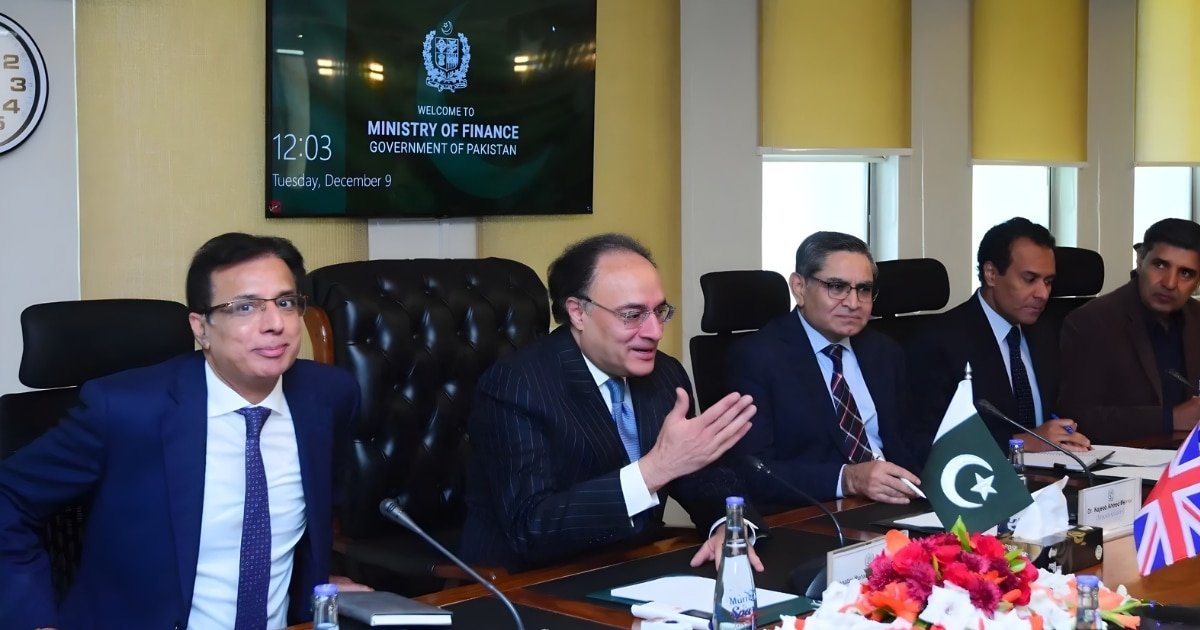




Pakistan’s Finance Minister, Muhammad Aurangzeb, and the United Kingdom’s Minister for Development, Baroness Chapman, met today to reaffirm their commitment to cooperation on critical economic reforms and the advancement of digital governance in Pakistan.
Minister Aurangzeb briefed Baroness Chapman on Pakistan’s stabilization strategy, which is now focused on deepening structural reforms to ensure fiscal sustainability and create space for essential social spending.
Federal Minister for Finance and Revenue, Senator Muhammad Aurangzeb, met with the United Kingdom’s Minister for Development, Baroness Chapman, at the Finance Division, where she was accompanied by the British High Commissioner to Pakistan, Ms. Jane Marriott, and senior British… pic.twitter.com/v3oqtVhwIw
— Ministry of Finance, Government of Pakistan (@Financegovpk) December 9, 2025
Key Areas of Pakistan’s Reform Agenda:
The Finance Minister highlighted the ongoing efforts aimed at restoring fiscal health, including:
- Tax Expansion and Leakage Reduction: Widening the tax base and leveraging digital systems to reduce leakages and enhance compliance transparency.
- Debt Control and Public Sector Reform: Active management of debt, public-sector right-sizing, and significant pension reform.
- Energy Sector Efficiency: Overhauling and addressing losses within the energy sector.
- State-Owned Enterprise (SOE) Restructuring: Pursuing privatization and reform of state-owned enterprises.
UK Commitment to Technical Support
Baroness Chapman expressed the United Kingdom’s strong readiness to support Pakistan’s reform journey. The UK pledged to provide targeted technical assistance, regulatory cooperation, and capacity-building, particularly focusing on:
- Digital transition tools aimed at simplifying compliance and improving transparency.
- Governance reforms.
- Improvement of the investment climate and ease of doing business.
The ministers also discussed the need for coordinated policy planning in areas such as demographic pressures, provincial governance, climate resilience, and enhancing women’s economic participation. They further agreed on aligning development spending with World Bank-supported programs to maximize impact and encourage private-sector participation in the reforms.
You May Like To Read: Microsoft Covers Co-Pilot Crash: Traffic Surge Sparks European Outage