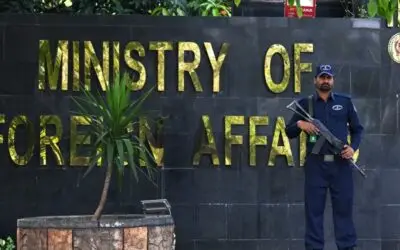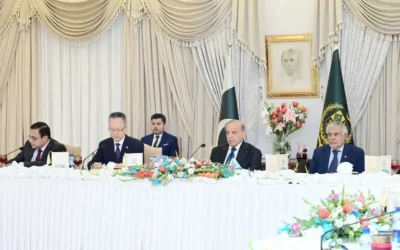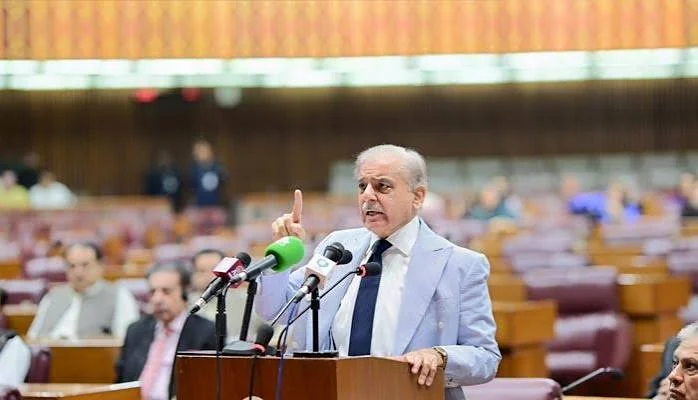



In an extraordinary announcement that marks the zenith of modern Pakistani statecraft, Prime Minister Shehbaz Sharif confirmed before a packed National Assembly session on Monday that Pakistan will formally host the historic signing ceremony of the comprehensive US-Iran peace accord.
While the physical venue for the landmark diplomatic event is set for Friday, June 19, in Geneva, Switzerland, the entire diplomatic choreography, protocol, and institutional oversight of the summit will belong exclusively to Islamabad.
The announcement, delivered past midnight following a grueling three-month and 16-day diplomatic marathon, finalizes a comprehensive written framework between Washington and Tehran to permanently end the war, dismantle the choking U.S. naval blockade of Iranian ports, and restore immediate, unfettered transit through the hyper-strategic Strait of Hormuz.
1. The Geneva Matrix: Demanding Maritime Tonnage Fees
The formal declaration of the text—colloquially recognized as the “Islamabad Memorandum of Understanding (MoU)”—came alongside seismic, last-minute amendments to the technical draft.
-
The Sovereignty Clause: Intelligence sources confirm that shortly before the midnight announcement, Tehran successfully inserted a high-stakes amendment explicitly re-emphasizing joint Iranian-Omani joint sovereignty over the Strait of Hormuz.
-
The “Maritime Services” Tax: The modified draft requires the United States to formally accept the imposition of structured “maritime service fees” paid directly to Iranian port authorities. This clause allows Tehran to frame the agreement domestically as an economic extraction of war damages, bypassing the strict “zero upfront cash” red line established by U.S. Vice President JD Vance.
-
The Verification Countdown: Iran’s Deputy Foreign Minister Kazem Gharibabadi confirmed that following Friday’s formal signature in Geneva, Tehran will enter a strict 60-day testing phase, conditioning any long-term nuclear negotiations entirely on the verifiable rollback of primary and secondary U.S. sanctions.
2. The Rawalpindi-Islamabad Congruence: The Rise of the Field Marshal
During his address to the Parliament, PM Shehbaz Sharif directed intense public praise toward the defense establishment, exposing the raw engineering behind the diplomatic breakthrough.
-
The Night Watch of the CDF: The Prime Minister paid glowing tribute to the Chief of Defence Forces (CDF) and Chief of Army Staff (COAS), Field Marshal Asim Munir, labeling him the “great son of the soil” who sacrificed day and night to extinguish the flames of a global energy war. The premier revealed that when backchannel negotiations frequently threatened to fracture over Lebanese theater conditions, the CDF personally executed high-frequency interventions to sustain the communication loops.
-
A New Civil-Military Paradigm: Defence Minister Khawaja Asif echoed this sentiment with striking institutional candor, noting that Pakistan would have achieved countless milestones over the past 75 years if this level of seamless, organic cooperation had historically existed between the power centers of Rawalpindi and Islamabad.
3. The Multipolar Consensus: Building the Guarantor Network
While Pakistan serves as the primary mediator and institutional host in Geneva, the final text relies on a complex, multipolar web of external guarantors:
-
The Middle East Track: The premier extended deep gratitude to Qatar’s Emir Sheikh Tamim bin Hamad Al-Thani for providing the financial and logistical backchannels that smoothed the transactional architecture, alongside critical structural cooperation from Saudi Crown Prince Mohammed bin Salman and Turkish President Tayyip Erdogan.
-
The P5+1 Axis: Absolute credit was afforded to Chinese President Xi Jinping, alongside senior leadership from the United Kingdom and European Union member states, establishing a multi-layered international vanguard to underwrite the treaty’s compliance metrics.
CRITICAL ANALYSIS: THE TRIUMPH OF THE MUNIR DOCTRINE
The confirmation that Pakistan will host the June 19 signing ceremony in Geneva represents the most significant diplomatic validation in the country’s modern history, fundamentally reshaping the global perception of Pakistani leverage.
The Institutional Calculus of the Dual Command
The effusive praise showered upon Field Marshal Asim Munir by the civilian leadership is not merely routine political rhetoric; it is a public validation of the structural changes codified under the 27th Constitutional Amendment. By creating the position of Chief of Defence Forces (CDF), the state consolidated the entire military, naval, and strategic planning apparatus under a single, unified five-star command.
The “Munir Doctrine”—which explicitly sought to transition Pakistan from a passive regional buffer state into an active, independent middle power—has found its ultimate justification. By utilizing his direct personal channel to Donald Trump (forged during his exclusive White House Oval Office engagement) and his trusted defense links to Tehran’s security council, the Field Marshal bypassed traditional bureaucratic roadblocks, positioning the military command as the only entity capable of bridging the trust deficit between the IRGC and the Pentagon.
The Last-Minute Hormuz Fee Gambit
The revelation by Iran’s Fars news agency that a “maritime services fee” clause was rammed into the text at the eleventh hour is a brilliant piece of diplomatic asymmetry. By forcing the United States to sign a text that implicitly recognizes Iranian-Omani financial jurisdiction over the Strait of Hormuz, Tehran has locked in a permanent, sovereign revenue stream under the guise of commercial transit management.
For President Trump, this is an acceptable concession because it satisfies his core requirement: “Let the oil flow.” By unblocking the transit lane, global oil prices dropped by over 4% instantly, providing a massive macroeconomic boost to Western markets ahead of the U.S. midterm elections. It allows Washington to claim it lifted a blockade for free, while allowing Tehran to pocket billions in transit fees—a masterclass in structural ambiguity.
The Gap Between the Lip and the Cup
Despite the euphoria in the National Assembly, the warning issued by PTI leader Sardar Latif Khosa regarding the volatile gap “between the lip and the cup” until Friday remains a sobering reality. The total exclusion of Israel from the direct text of these negotiations introduces an immediate, unpredictable risk factor.
While Iran’s Supreme National Security Council has declared a permanent end to military operations on all fronts—including Lebanon—the silence from Tel Aviv is deafening. With Israeli strikes continuing in southern Lebanon up until the midnight declaration, the potential for a localized, non-state actor provocation to trigger a retaliatory cycle before Friday’s Geneva summit remains the primary threat to Pakistan’s hosted triumph.
The Takeaway: On June 19, when the eyes of the entire global community turn to Geneva, the green-and-white flag flying over the signing table will symbolize a profound geopolitical shift. Pakistan has successfully leveraged its strategic geography and civil-military unity to pull the world back from the edge of a catastrophic resource war. The framework is locked, the tranches are moving, and the ships have started their engines. Now, the state apparatus must maintain absolute vigilance to ensure that no regional spoiler shatters the delicate peace before the pens touch the paper in Switzerland.