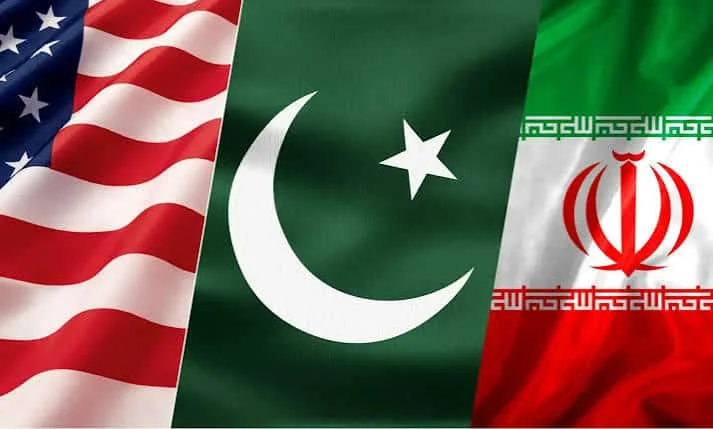


In a historic, simultaneous display of multilateral alignment, the world’s primary economic and security superpowers have officially ratified the preliminary US-Iran peace accord, elevating Pakistan’s role from a regional intermediary to an indispensable global diplomatic anchor.
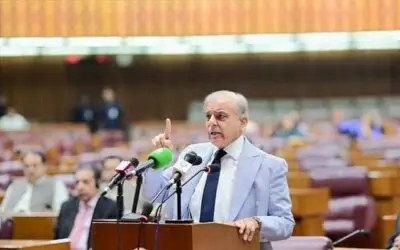
Following the midnight announcement by Prime Minister Shehbaz Sharif that Islamabad will solely host the formal June 19 signing ceremony in Geneva, heads of state from the G7, the European Union, the UN Security Council, and the Global South issued sweeping validations of the framework.
The universal consensus hails the draft—the “Islamabad Memorandum of Understanding (MoU)”—as a monumental triumph of statecraft that successfully delivers an immediate, permanent ceasefire, the full opening of the war-crippled Strait of Hormuz, and a structured, 60-day countdown to comprehensive nuclear and regional stabilization talks.
1. The Security Council and Asian Heavyweights Line Up
The diplomatic momentum received immediate institutional backing from the highest tiers of global governance, prioritizing maritime liberation and economic recovery:
-
The UN Commendation: United Nations Secretary-General Antonio Guterres led the global response, formally congratulating Washington and Tehran while placing “deep appreciation” on Pakistan, Qatar, and Egypt for engineering the core framework under extreme kinetic stress.
I warmly congratulate the US & Iran for having reached a peace deal that provides for an immediate & permanent ceasefire, the reopening of the Strait of Hormuz, as well as a framework for further negotiations. This represents a critical step towards the peaceful settlement of the…
— António Guterres (@antonioguterres) June 14, 2026
-
The Beijing Blueprint: In a high-profile media briefing, Chinese Foreign Ministry spokesperson Lin Jian confirmed Beijing’s total endorsement of the text, explicitly praising Pakistan’s mediation while demanding the immediate, unhindered resumption of shipping through Hormuz to relieve choked global supply chains.
-
The New Tokyo Doctrine: Breaking with traditional diplomatic caution, Japan’s newly elected Prime Minister Sanae Takaichi highly commended the persistent negotiations overseen by the mediators, explicitly framing the MoU as the vital baseline needed to realize a permanent resolution to the Iranian nuclear impasse.
2. The Western Front: Berlin, London, and Paris Validate the Core
Europe’s top leadership—heavily affected by the devastating three-month global energy crisis triggered by the blockade—moved in lockstep to embrace the breakthrough:
-
The Merz Validation: German Chancellor Friedrich Merz extended direct congratulations to U.S. President Donald Trump and the Iranian leadership, declaring that the precision of the deal clears the runway for a “reinvigorated global economy and a more secure Middle East.”
I welcome the agreement between the U.S. and Iran and congratulate President Trump and the Iranian side on this diplomatic breakthrough. This can pave the way towards a reinvigorated global economy and a more secure Middle East. It is crucial to implement it with determination.
— Bundeskanzler Friedrich Merz (@bundeskanzler) June 14, 2026
-
The British Endorsement: British Prime Minister Keir Starmer warmly embraced the text as a “hugely important step forward,” with UK High Commissioner Jane Marriott issuing a distinct, direct tribute to Pakistan’s “consistent, patient, and impressive role” in managing the backchannels.
My statement on today’s agreement between the United States and Iran. pic.twitter.com/taQZufv7ij
— Keir Starmer (@Keir_Starmer) June 14, 2026
-
The G7 Consensus: French President Emmanuel Macron and Italian Prime Minister Giorgia Meloni issued parallel decrees, with Meloni thanking Pakistan and Qatar for providing an “opportunity for peace that must be seized,” while Canadian Prime Minister Mark Carney labeled Pakistan’s facilitating role as “indispensable.”
Nella notte abbiamo già espresso, insieme a Francia, Germania e Regno Unito, il nostro forte apprezzamento per il memorandum d’intesa siglato da Stati Uniti e Iran nelle scorse ore.
Un grazie sentito va a tutti i mediatori, e in particolare al Qatar e al Pakistan, che hanno reso…
— Giorgia Meloni (@GiorgiaMeloni) June 15, 2026
3. The Regional Landscape: Sticking to the 60-Day Mandate
Crucially, the immediate neighbors and direct stakeholders of the Persian Gulf security matrix have anchored their compliance demands to the timeline managed by Islamabad:
-
The Riyadh Directive: Saudi Arabia officially welcomed the accord but introduced an aggressive strategic benchmark, urging both Washington and Tehran to utilize the upcoming 60-day testing window to establish a permanent treaty that restores Hormuz navigation to pre-February 28 security baselines.
-
The New Delhi Pivot: Acknowledging the severe macro-disruptions wrought by the conflict, Indian Prime Minister Narendra Modi welcomed the text on X, validating the focus on freedom of navigation and commerce while expressing anticipation for sustainable final agreements on outstanding issues.
Critical Analysis
The global chorus of praise welcoming the Islamabad MoU represents a profound geopolitical reality: the world economy was suffocating under the weight of the US-Iran war, and the international community has collectively rushed to underwrite Pakistan’s mediation to ensure the deal becomes permanent.
The Validation of the Strategic Middle Power
Analytically, the explicit, named praise from leaders like Friedrich Merz, Keir Starmer, Sanae Takaichi, and Narendra Modi marks a permanent shift in Pakistan’s sovereign status. For decades, Western capitals viewed Islamabad through a narrow security lens. By successfully managing a negotiation that eluded the world’s traditional diplomatic hubs, Pakistan has transformed its soft-power capital.
The fact that the UN, the EU, and the G7 have publicly signed off on Pakistan hosting the Geneva summit proves that the international system recognizes the “Munir-Shehbaz Matrix” as a trusted, uniquely capable bridge between the Western security architecture and the Iranian state.
The Structural Transition: From Ceasefire to Nuclear Verification
The statements from EU Foreign Policy Chief Kaja Kallas and Canadian PM Mark Carney reveal the hidden architecture of the June 19 Geneva summit. The opening of the Strait of Hormuz and the cessation of strikes in Lebanon are merely the immediate, tactical maneuvers. The real significance of the Islamabad MoU is that it serves as an institutional docking bay for the resumption of comprehensive nuclear talks.
By hardwiring a 60-day compliance window—as explicitly demanded by Saudi Arabia—the mediators have created a structured, step-by-step transition. Iran obtains immediate local economic relief via regional channels (such as the UAE financial workaround), while the West secures verified enrichment caps before deploying permanent sanctions rollbacks.
The Containment of the Energy Crisis
Kaja Kallas’s direct admission that the implementation of the deal will instantly “ease the global energy crisis” explains the unprecedented speed of the European endorsements. The closure of the Strait has cost global commerce hundreds of billions of dollars over the last 100 days.
By securing a written commitment from Iran to restore freedom of navigation, Pakistan has effectively saved the Eurozone from a catastrophic winter energy rationing cycle. This economic reality gives the treaty immense structural stability; any spoiler attempting to disrupt the Geneva signing on Friday will face the unified diplomatic and economic wrath of both the G7 and the Beijing-led SCO bloc.
The Takeaway: The world has spoken, and the consensus is absolute. The Islamabad MoU is no longer a fragile bilateral truce; it has been adopted as the official roadmap for global economic and maritime stabilization. As Friday, June 19 approaches, the civilian and military leadership of Pakistan are not just preparing a green room in Geneva—they are executing the opening act of a new, multipolar era of international diplomacy.