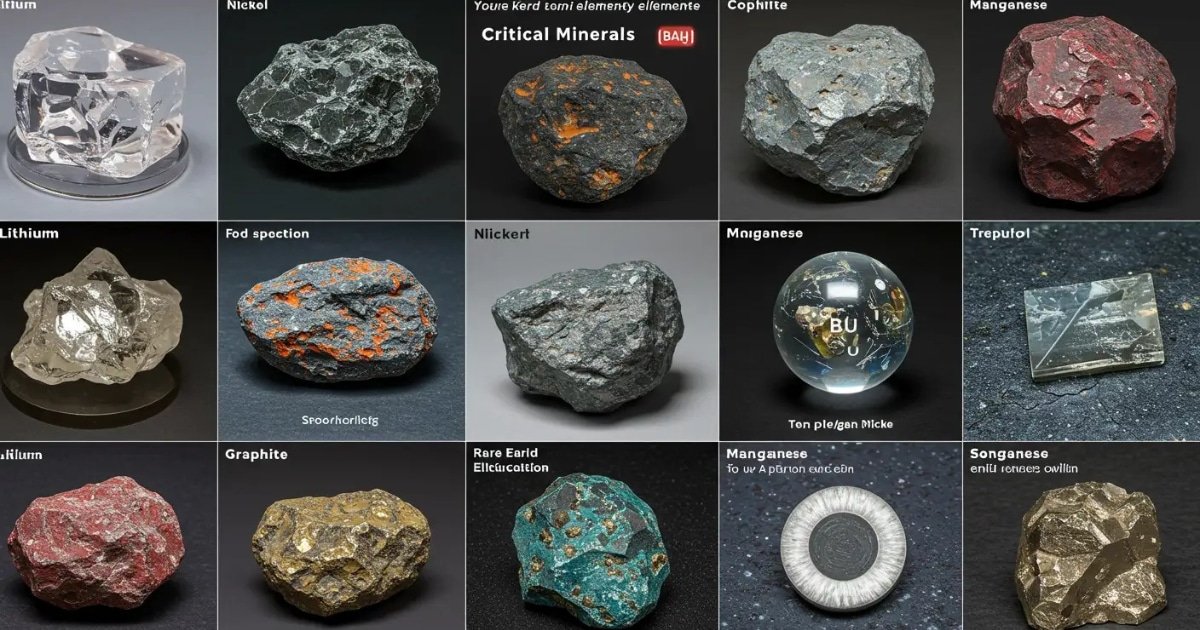




Pakistan is rapidly becoming a strategic focal point in the global competition for critical minerals, as United States defense-linked companies look to diversify their supply chains away from Chinese dominance. Although Pakistan currently holds only 1% of global antimony reserves, the mineral has gained immense strategic value due to its essential role in manufacturing missiles, batteries, and flame retardants. With China implementing stricter export controls, the price of antimony trioxide has surged to approximately $40,000 per tonne, prompting American firms to seek alternative sources.
You May Like To Read: China Imposes Sanctions on US Defense Firms, and Executives over Taiwan Arms Sales
Reflecting this shift, the Pakistani firm Himalayan Earth Exploration recently signed a strategic partnership with US-based Nova Minerals. Under this agreement, Nova Minerals plans to purchase over 100 tonnes of Pakistani antimony next year for testing in Alaska, with long-term goals of establishing local downstream processing. This follows a broader $500 million memorandum of understanding signed earlier this year between Pakistan’s Frontier Works Organisation and US Strategic Metals. Additionally, the US Exim Bank recently approved $1.25 billion in financing for the Riko Diq mine in Balochistan.
Pakistan is emerging as an unexpected player on the United States’ radar for the critical mineral antimony, which is used in missiles, batteries and flame
Read More: https://t.co/3ogclUYWa1 pic.twitter.com/Ne76gyGRIc
— ProPakistani (@ProPakistaniPK) December 29, 2025
Despite this rising interest, local mining experts caution that Pakistan remains at the lower end of the value chain. Most ore is currently exported to China in its raw form at low prices. However, government officials and Western executives view the current interest as a “game-changer” that could transition Pakistan from raw extraction toward high-value refining and industrial processing.
Check out our latest video: