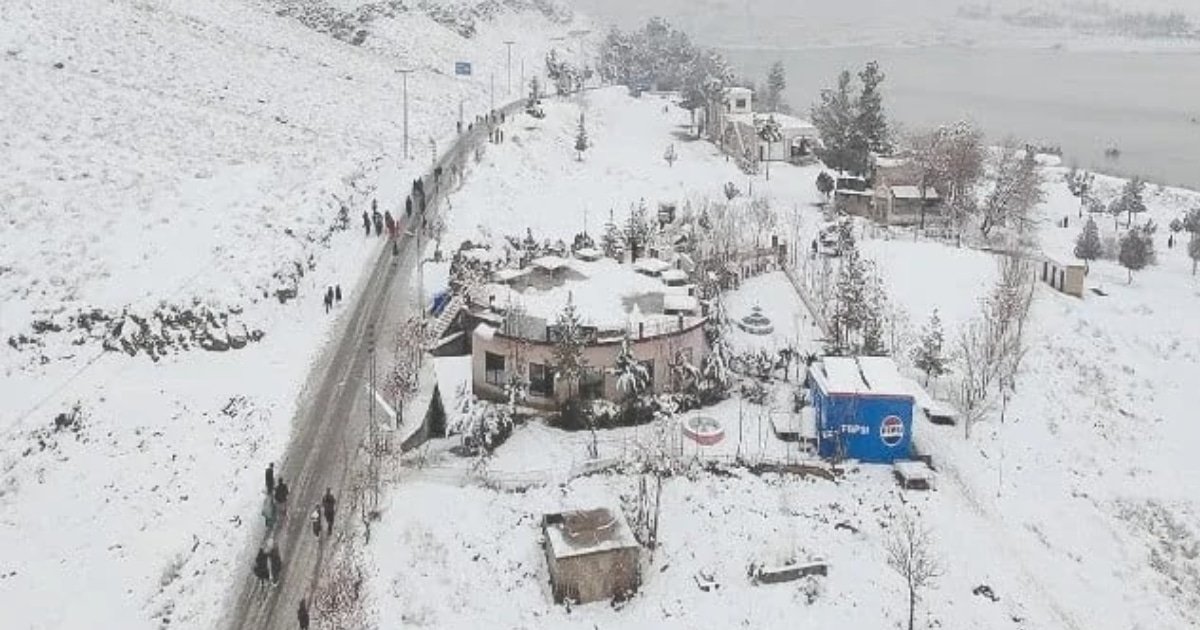




A powerful westerly weather system tightened its chokehold on Pakistan, plunging temperatures well below freezing and triggering a wave of heavy snowfall and landslides. The National Weather Forecasting Centre recorded temperatures as low as -7°C in Malam Jabba and Parachinar, while Quetta shivered at -1°C. The “White Blanket” has turned scenic regions into logistical nightmares; in Naran and Kaghan, snow accumulation has reached a staggering seven feet, cutting off electricity and blocking roads for five consecutive days.
Rain and heavy snow paralyse life in AJK as key mountain roads shuthttps://t.co/LFKWNXQ1OZ
— The_Nation (@The_Nation) January 27, 2026
The situation remains “critical” in the Galiyat region, particularly in Nathiagali and Ayubia, where snow continues to fall at a rate of 0.8 cm per hour. In Gilgit-Baltistan, the Karakoram Highway (KKH) and Baltistan Road are currently blocked, leaving hundreds of passengers stranded. Meanwhile, in Balochistan, the Quetta-Ziarat and Quetta-Zhob highways have been hit hard, with authorities mandating the use of tire chains for any essential travel. Despite the chaos, farmers in South Waziristan have welcomed the moisture as “natural irrigation” for their critical wheat crops.
You May Like To Read: LHC Calls for Policy Review on Social Media Ban for Under-16s
The National Highways and Motorways Police have deployed heavy machinery on the E-35 Hazara Expressway and Murree Expressway to maintain traffic flow. While the entry routes to Murree were reopened for tourists yesterday, officials urge extreme caution due to “black ice” and landslide risks in upper Khyber Pakhtunkhwa. This icy spell is expected to persist through the end of the week, with Karachi also bracing for chilly, dry winds until January 30.
Check out our latest video: