



Islamabad – Pakistan has raised alarm over India’s unilateral suspension of the Indus Waters Treaty (IWT), warning that New Delhi’s withholding of vital flood data has worsened the scale of destruction caused by this year’s monsoon floods.
Signed in 1960, the IWT has long been regarded as a rare success in India-Pakistan relations, ensuring the exchange of detailed, real-time flood information through the Permanent Indus Commission (PIC). The system, however, collapsed earlier this year when India declared the treaty in “abeyance” after the Pahalgam terrorist attack – the first such suspension in its history.
Since then, India has issued only limited and vague flood alerts, bypassing the PIC and sending skeletal notifications through diplomatic channels instead. These alerts, covering the Tawi and Sutlej rivers, often contained nothing more than generic “high flood” classifications, leaving Pakistani authorities without critical data such as discharge volumes, timings, and inundation forecasts.
Former Federal Flood Commissioner Ahmed Kamal expressed frustration over the lack of detail, stressing that advance, site-specific data was essential to protect downstream communities. Experts also warned that India’s actions risk turning flood management into a “political weapon”.
Former Pakistani High Commissioner to India Abdul Basit said the move carried three messages: an assertion of inflexibility to India’s domestic audience, a dismissal of Pakistan’s calls to revive the treaty, and a portrayal to the international community of India acting on “humanitarian grounds.”
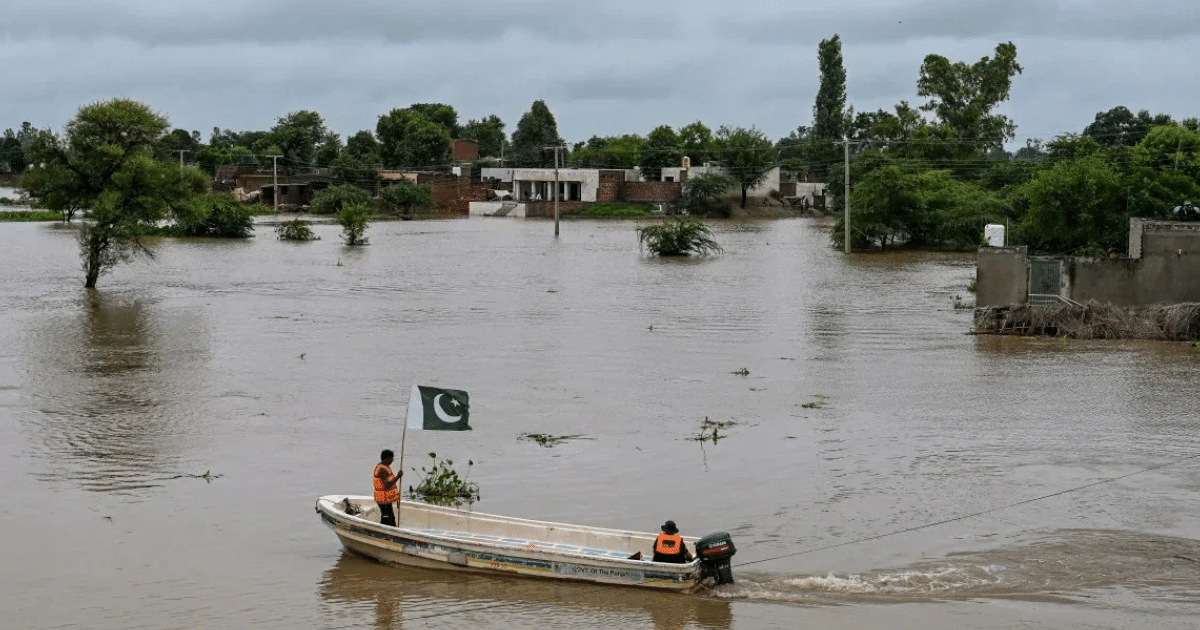
The human toll has been heavy. Punjab’s Narowal district has suffered extensive displacement, loss of crops, and damage to homes. Visiting his constituency, Planning Minister Ahsan Iqbal accused India of aggravating the crisis. “It appears India had deliberately accumulated water and released it in massive volumes to inflict severe damage on Pakistan. The weaponisation of water must be condemned,” he said, while noting that climate change had also intensified the floods.
Pakistan, for its part, has continued to honour treaty mechanisms, issuing flood alerts for the Ravi, Sutlej, and Chenab rivers through its Commissioner for Indus Waters. Officials emphasized that Article IV (8) and Annexure F of the IWT, which mandate advance notification and data sharing, are critical safeguards that should not be abandoned, especially amid worsening climate change.
“Floods know no borders,” one official remarked. “When politics dilutes cooperation, it is farmers, villagers, and urban dwellers downstream who pay the price.”
You May Like To Read: