


The Aurat March started in 2018 on International Women’s Day. It was partly inspired by global movements, such as #MeToo. The march has become a popular way to demand fair pay, rights for home workers, value for unpaid care work, and safety from abuse. These demands follow global feminist ideas but focus on local issues.
Instead of copying Western feminism, people in the Aurat March talk about women’s rights using ideas from Islam and Pakistani culture. Their signs often use local languages, familiar images, and modern ideas. This helps them show a type of feminism that fits life in Pakistan today.
Tensions Over Slogans and Symbolism
Some slogans, like “Mera Jism, Meri Marzi” (“My body, my choice”), often face intense criticism from conservative groups. They say the phrase sounds too Western and doesn’t match local values or religion. Older feminists, such as Kishwar Naheed, worry that such words might deter everyday women from participating in the movement. They ask for language that better suits the local culture.
Younger activists say the slogan shows the right to control one’s own body. But the government prefers messages that respect cultural and religious values. Officials say talks about women’s rights should also include ideas from religion and local traditions.
Backlash: Nationalism, Religion, and Public Order
Pakistan’s government, like many people, has sometimes supported rules to stop activists who break social rules. Some strong religious groups have asked courts to ban the Aurat March, claiming its slogans harm religion and peace. However, courts in Karachi and Islamabad ruled otherwise. They said people have the right to protest peacefully.
Before the Aurat March, there were many false stories and fake pictures shared online. People used hashtags like #ForeignFundedAuratMarch to spread lies about the march. These stories angered many people and led some to want to halt the march. Many women who took part got threats and were called bad names. Some were even blamed for not respecting Islam.
From the government’s point of view, the main goal is to keep public order while letting people protest peacefully. They try to stop things like lying about others, hate speech, and false information. By doing this, the government aims to ensure that protests adhere to the law and do not escalate into violence or other issues.
Does Western Influence Undermine Pakistani Feminism?
Some people dislike the Aurat March. They say it copies ideas from Western feminism, like talking about body freedom and different identities. These ideas feel strange to people in villages and traditional places. They think the march is about foreign ideas. Others say the march mostly listens to city people, so it does not include everyone.
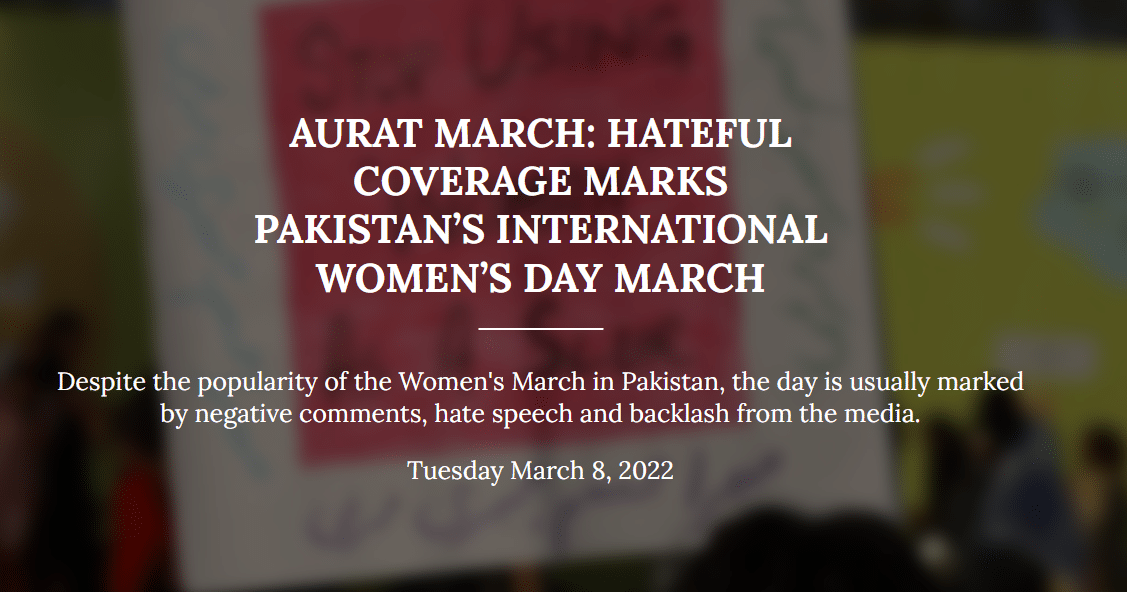
Source: Media Diversity
In Pakistan, specific government organizations support women, such as the Punjab Commission on the Status of Women (PCSW). They also respect religion and culture. They talk about ideas from Islam. These ideas include saying yes, sharing things fairly, and being kind. They want to blend global women’s rights with local traditions. They try to make both work together.
State-Supported Progress on Gender Rights
Pakistan’s lawmakers made a significant change. The Islamabad Senate passed a law to stop child marriage. Now, people must be at least 18 years old to get married. There are punishments for those who break the law, even religious leaders. Some religious leaders disagreed, but the government argued that the law helps protect health, schools, and rights. The United Nations said this law is a sign of hope for women’s rights. This shows the government wants to help women while respecting culture and religion.
Receptive Convergence: Co‑creating Gender Discourse
In Pakistan, women’s groups work to mix local culture, Islamic values, and ideas about women’s rights from the world. After some people did not like the slogans, many changed their words to be easier for all. They send slogans to the courts before the march to avoid trouble.
Groups like the Punjab Commission on the Status of Women work with others to help change rules. They want mothers to have time off, safety for transgender people, and to allow for all women.
The State’s Balanced Role
From the government’s view, Pakistan should not entirely reject ideas about women’s rights from around the world. Nor should it accept them without thinking. Instead, it should create its own kind of feminism that fits local culture and religion. This needs to be worked with local groups, watching what is said, and making laws that follow Islamic and national rules.
The government supports significant changes like banning child marriage. It also encourages women’s groups to work in ways that respect culture. This helps keep the country united and respects religion.
The mix of Western feminism and Pakistan’s women’s movements, like the Aurat March, is not a fight. It is a process of talking, changing, and growing. When activists use words from global feminism, they change them to fit religious rules and social feelings. When people complain about foreign ideas, the organizers change to include more voices.
Government groups like the Punjab Commission on the Status of Women work to make laws that protect women. They also guide protests to maintain a strong culture. This careful approach supports a new feminism while also preserving traditions. It respects Pakistan’s culture and also promotes fair treatment for women everywhere.
In the end, the government, people, and activists can work together to create a truly Pakistani feminism. It respects faith, protects rights, and welcomes good ideas from around the world. This way, culture remains intact and the country remains stable.