



The New Battleground: Partial Truths in Geopolitics
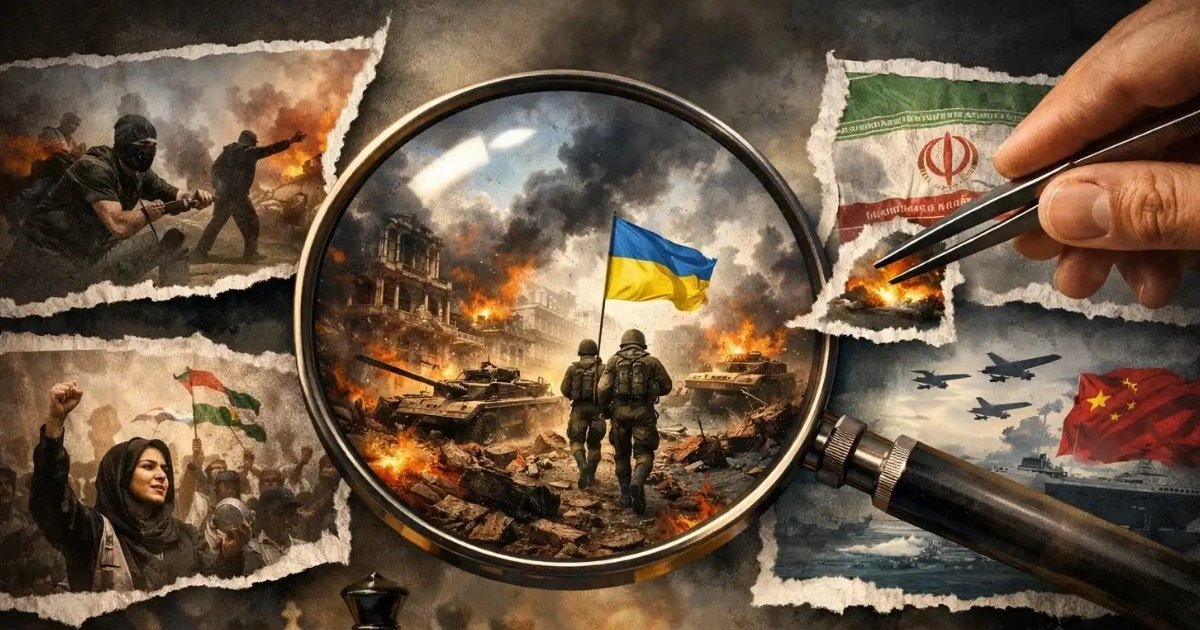
In the first quarter of the 21st century’s third decade, global power contests increasingly unfold not only on physical battlefields or economic arenas, but in the cognitive space where narratives shape public understanding of events. Unlike the blatant “fake news” that dominated headlines in the early 2010s, contemporary information warfare often relies on partial truths, real facts presented selectively or without context to shape perception, justify policy, or weaken rivals. This subtle manipulation has become a central tool of geopolitical contestation among major powers such as Russia, China, Iran, and the United States and intersects with regional crises from Ukraine to Latin America.
Selective Narratives in the Ukraine Conflict
The Russia-Ukraine war remains one of the starkest examples of how partial truths are weaponised. Moscow’s messaging draws from a mix of true events, such as real historical grievances in Russian-speaking regions, like Donbas with omissions about Russia’s 2014 annexation of Crimea and 2022 invasion, which violated Ukraine’s sovereignty under international law such as the UN Charter. Moscow portrays Western military aid to Ukraine, totaling over $100 billion by 2025, as proxy aggression destabilizing Europe, despite NATO’s defensive posture. This approach aligns with Russia’s long-standing “firehose of falsehood” strategy, a term, coined by RAND in 2016, describes Russia’s high-volume propaganda mixing facts, distortions, and lies across channels to overwhelm audiences and undermine trust without needing consistency.
Great Power Competition and Framing Wars
In the wider great-power rivalry, especially between the United States and China, narratives about economic strength, military capability, and geopolitical intent are carefully curated. During 2025, for instance, China’s state media highlighted export figures as proof of economic resilience while omitting broader challenges such as slowing domestic demand and reliance on state-subsidised industries, narratives that critics argue obscure deeper structural issues. Analysts note that this selective framing serves to reinforce Beijing’s image abroad and domestically, even as global audiences question the accuracy of official data. This kind of partial truth reflects how states use real statistics stripped of context to sustain political objectives.
Iran’s Digital Authoritarianism and External Messaging
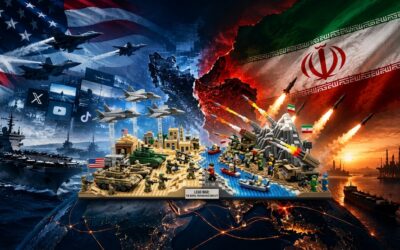
In Iran, the interplay between internal repression and external messaging illustrates the use of partial truths on multiple fronts. Domestically, state authorities have tightened digital controls and censored dissenting voices under broad national security laws, a trend scholars describe as part of “digital authoritarianism.” This includes suppressing information about protests or economic hardship while amplifying government narratives. Internationally, Tehran’s outlets promote narratives of Western hostility and conspiratorial explanations for regional events, relying on true grievances, such as historical intervention, but often omitting internal factors like economic mismanagement or political repression.
Information Warfare and Latin America’s Geopolitical Significance
Latin America has become another theatre where partial truths are deployed to influence global opinion. Venezuela, long a flashpoint in geopolitical competition due to its vast oil reserves, exemplifies this. Narratives circulated by various state and non-state media about Venezuela’s crisis often stress U.S. “interventionism” or portray regime change efforts as imperialistic without acknowledging the country’s internal governance failures and economic collapse over decades. These narratives, while rooted in legitimate concerns about sovereignty and external pressure, omit key internal dynamics and thus shape external audiences in ways that align with specific geopolitical blocs.
Selective Coverage in Middle Eastern Flashpoints
Official Israeli messaging and allied media have repeatedly portrayed the conflict through a lens that emphasizes Israeli victimhood, security threats from Hamas, and the need to protect civilians, framing Gaza predominantly as a hostile space from which terrorism emanates. This approach positions Israel as the “lawful victim” responding to aggression and casts Palestinian armed groups and Gaza’s civilian population as threats needing containment, a tactic designed to elicit international sympathy and political support for military measures. Research into contemporary media narratives shows that such framing often emphasizes Hamas attacks and Downplays or contextualizes civilian casualties by echoing military claims and operational complexity rather than exploring violations of humanitarian law, for example in coverage of strikes that killed medical personnel, where headlines cited Israeli military targeting claims without clearly labelling potential civilian harm or breaches of international law. This pattern aligns with deliberate use of imagery and language that privileges the Israeli security narrative while marginalizing alternative perspectives on the genocide in Gaza.
The Multipolar Digital Battleground
Digital platforms, from social networks to messaging apps, have become instrumental in spreading these partial truths. Analysts mapping social media trends during 2025 identified thematic clusters that reflect competing geopolitical narratives, from discussions around “multipolar world” framing to hashtags emphasizing national resilience or opposition to Western influence. These patterns show how digital audiences themselves become vectors for geopolitical narratives that mix fact and interpretation, shaping global perceptions of power relations.
Coordination and Inter-State Influence Operations
Modern influence campaigns are often coordinated across states. Research has shown evidence of strategic interaction among state-backed information operations, including coordination between Russia, Iran, Venezuela, and other actors. Such cooperation aims not simply to broadcast messages but to amplify tailored narratives in target regions, blending local grievances with global geopolitical themes. This inter-state coordination can enhance engagement but also deepens the complexity of identifying which narratives reflect authentic local concerns and which are shaped by external strategic interests.
Hybrid Warfare: Beyond Media to Cyber and AI
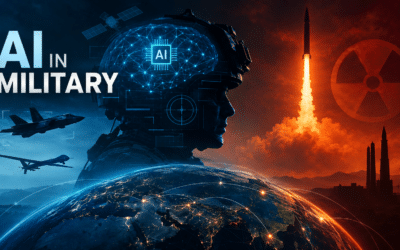
Information warfare today extends beyond traditional media into cyber operations and AI-enabled content generation. Reports indicate that Russian cyber units have leveraged generative AI to produce content at scale, creating tailored narratives and amplifying them across languages and regions. This use of AI to generate partial truths and manipulate sentiment demonstrates that emerging technologies magnify the ‘reach and sophistication’ of information operations without needing to fabricate outright falsehoods. Meanwhile, Iran’s cyber operations targeting foreign institutions further blur the lines between digital sabotage and narrative influence, contributing to geopolitical tension without transparent attribution.
You May Like To Read: Secretary-General Warns Security Council: “Rule of Law is Being Replaced by the Law of the Jungle”
Impact on Global Perceptions and Policy Making
The cumulative effect of these partial truths is a more fragmented and mistrustful international information environment. Citizens and policymakers alike struggle to parse fact from narrative framing, while states leverage this ambiguity to push strategic goals. For example, framing geopolitical competition as a clash between democracy and autocracy simplifies complex strategic interactions into narratives that serve influential states’ own positioning, even when that framing ignores historical and structural nuances. Critics argue that such narratives risk entrenching polarisation and reducing opportunities for nuanced diplomacy.
Conclusion: Towards a More Informed Public Sphere
Confronting the weaponisation of partial truths requires more than fact-checking or censorship. It demands media literacy, transparency in data reporting, and robust independent journalism that contextualises facts rather than presenting them in isolation. In a world where geopolitical competition increasingly plays out through narratives as much as through diplomacy or military posturing, understanding the mechanisms that turn truth into a weapon is critical for citizens and states alike. Strengthening international cooperation on digital norms and promoting open information ecosystems may help create resilience against manipulative narratives, but only if global audiences and institutions commit to a more nuanced engagement with information, rather than consuming the simplified truths crafted by powerful actors.
Check out our latest video: