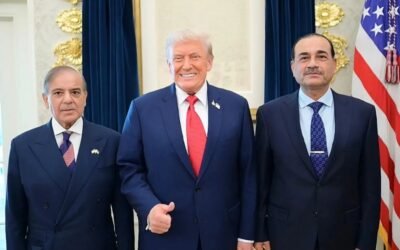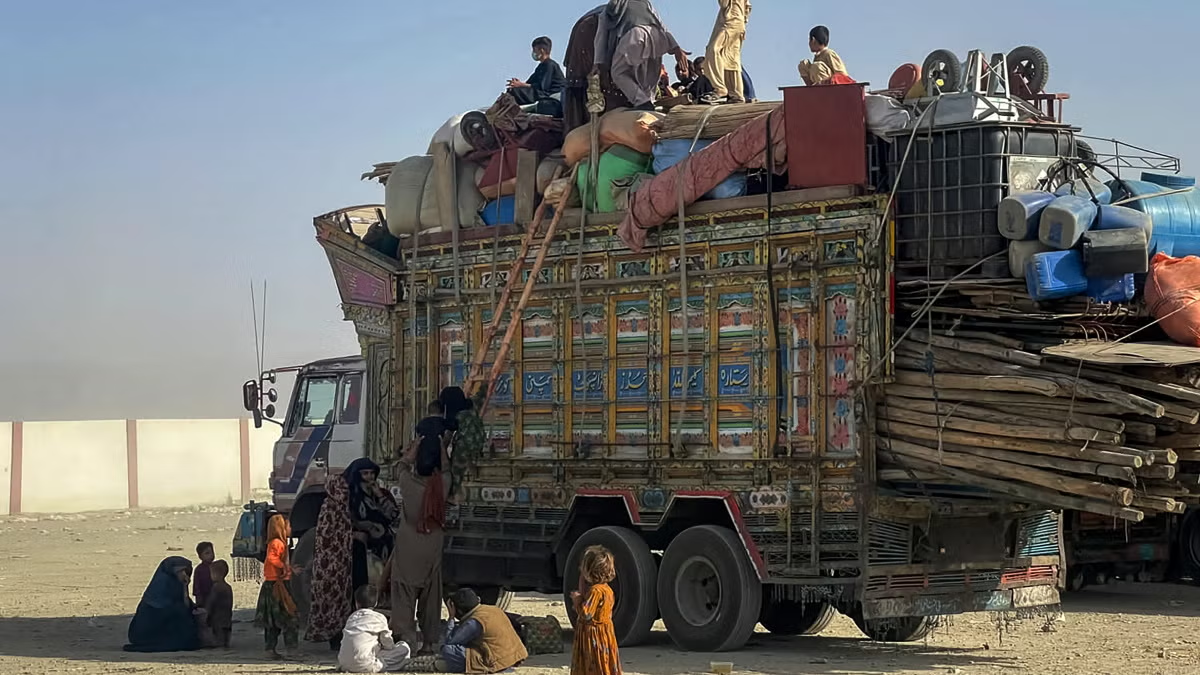





In a major push to institutionalize border security and advance its standing with European allies, Pakistan’s State Minister for Interior Tallal Chaudhry called for a unified global strategy backed by advanced technology to dismantle transnational human smuggling networks.
Speaking at the Vienna forum of the Global Alliance to Counter Migrant Smuggling—an international cooperation framework launched by the European Union—Chaudhry emphasized that irregular migration cannot be treated as a localized border problem, but must be tackled through automated intelligence sharing, digital document security, and expanded pathways for legal migration.
The ministerial address comes on the heels of a successful domestic enforcement campaign. Enhanced operational actions by the Federal Investigation Agency (FIA) and regional law enforcement have yielded a 47 percent reduction in irregular migration attempts from Pakistan to Europe, backed by the arrest of over 1,700 human smugglers and agents under a zero-tolerance state mandate.
Pakistan’s state minister for interior calls for a joint global strategy and technology-driven solutions to tackle illegal immigration at a forum in Vienna. https://t.co/oijZuyZAie
— Arab News Pakistan (@arabnewspk) July 4, 2026
The AI Integration: Upgrading Border Architecture
To maintain the downward trend in irregular migration via illegal overland and maritime paths—frequently referred to as “dunki” routes—the Ministry of Interior is executing a comprehensive technical modernization of the country’s main entry and exit points.
A central pillar of this defense strategy is the deployment of an Artificial Intelligence-based immigration screening system at Islamabad International Airport, with plans for a phased rollout to remaining major international gateways. This software-driven screening architecture mitigates human error by cross-referencing biometric indicators and automatically detecting sophisticated, high-end document fraud and forged travel credentials.
By upgrading from manual verification to algorithmic detection, the state aims to choke off the localized logistics hubs used by transnational criminal syndicates before individuals can board international flights.
Geopolitical Alignment and International Funding
The enforcement results achieved by the Ministry of Interior have significantly strengthened Pakistan’s bilateral leverage and partnership frameworks with European governments.
-
The United Kingdom Funding Line: Acknowldging the strategic value of Pakistan’s internal crackdowns, the United Kingdom’s Minister for Middle East, Afghanistan, and Pakistan, Hamish Falconer, committed an additional 2.9 billion PKR (£8 million) in direct financial assistance. This targeted funding is explicitly structured to support joint Pakistan-UK law enforcement operations, provide equipment upgrades, and finance advanced anti-smuggling investigations.
-
The European Union Endorsement: The Vienna engagement builds directly upon deep inter-ministerial talks held in Brussels between Interior Minister Mohsin Naqvi and European Union Commissioner for Home Affairs and Migration Magnus Brunner. The EU leadership formally praised Pakistan’s measures as exemplary, confirming that the reduction in irregular flows has successfully positioned Islamabad as a reliable, stable partner in regional migration management.
-
Mediterranean Alignment: Building out its diplomatic framework, Pakistan has also entered coordinated border security strategies with key European transit states—specifically Italy, Spain, and Greece. The objective is to pair strict interception mechanisms with newly negotiated quotas for safe, orderly, and documented labor migration.
The Humanitarian Catalyst
The state’s aggressive shift toward total enforcement and automated border management was catalyzed by a series of high-profile humanitarian tragedies over the past few years, including the catastrophic boat capsizes in the Mediterranean—such as the Pylos disaster off the coast of Greece—which resulted in the deaths of hundreds of Pakistani nationals.
Driven by economic hardships, vulnerable individuals are frequently exploited by transnational criminal organizations that operate complex networks spanning multiple borders. These groups often display a deep nexus with documentary fraud ringleaders, drug trafficking cartels, and regional security threats.
By combining cutting-edge technical checks at domestic airports with active international agreements, Pakistan is working to permanently disrupt the financial incentives of these smuggling syndicates, protecting its citizens while reinforcing its commitment to global security.