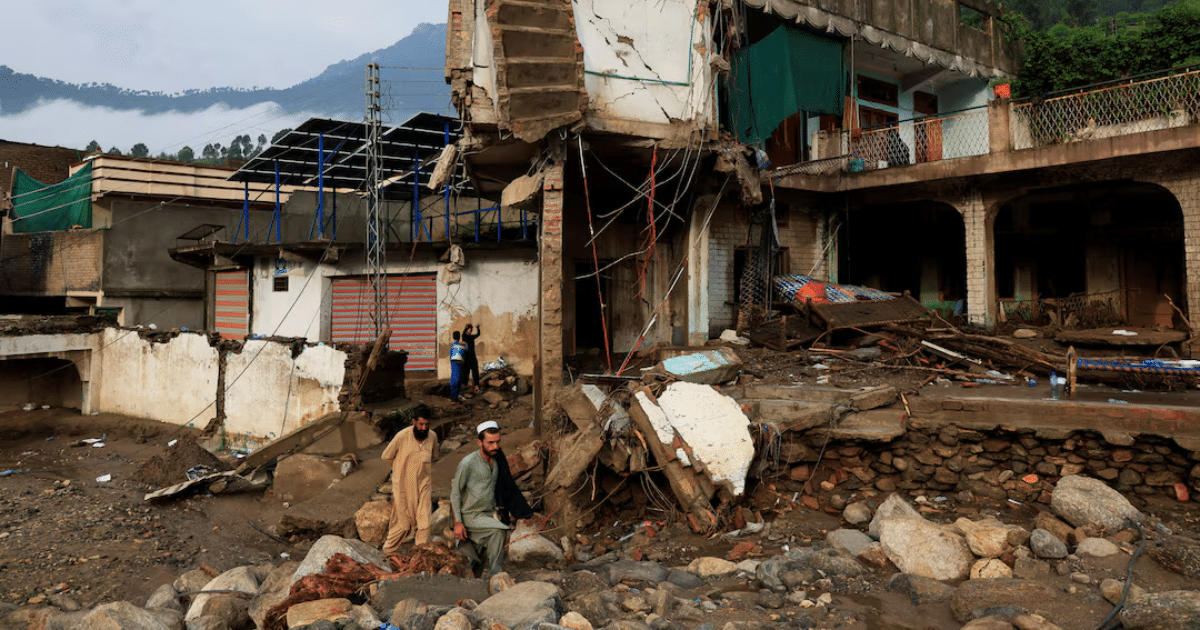





Buner, Khyber Pakhtunkhwa, Pakistan — August 17, 2025 — A rare and extremely powerful cloudburst struck Buner District in northwestern Pakistan, unleashing more than 150 mm of rain in just one hour and triggering catastrophic flash flooding that has claimed at least 207 lives in Buner alone, with hundreds more still missing.
Beshonai village #Buner stands devastated
homes buried under mud and rocks after flash floods. People are helpless, stranded with nothing but ruins, waiting desperately for relief, safety, and humanity’s response.#bunerfloods #KPKFloods #AJKFloods #GBFloods#SwatFloods pic.twitter.com/DesAlQHsR3
— Shani (@FearlessWolfess) August 17, 2025
The torrential rainfall, an anomalous burst of precipitation concentrated in a small area, unleashed torrents of water, rocks, and debris rushing down mountainsides and obliterating entire villages. In the remote settlement of Bayshonai Kalay, survivors described harrowing scenes of destruction, as “rotting corpses” lay amid collapsed homes, and fractured families await rescue in the debris-strewn ruins.
Across the broader area, total fatalities have climbed to 337 across the region, underscoring the severity of the disaster and its widespread impact.
In response, Khyber Pakhtunkhwa Chief Minister Ali Amin Gandapur vowed a comprehensive redemption plan: “We can’t bring back the dead,” he said during a site visit, “but what we can do, I pledge, will be carried out.” This includes rebuilding devastated infrastructure, compensating victims’ families, and relocating residents living in high-risk zones to safer areas.
The National Disaster Management Authority (NDMA) has resumed critical rescue, relief, and recovery operations that were previously paused due to ongoing rain. Efforts are now focused on clearing roads, erecting temporary bridges, and delivering urgently needed assistance including food, medicine, shelter, and lifesaving equipment.
Authorities warn that more severe weather remains imminent. With heavy rains expected to continue through early September, the risk of additional flooding looms large, placing even more urgency on relief operations and long-term resilience planning.
This tragic event highlights both the immediate threats of extreme weather and the critical need for climate-resilient infrastructure and preparedness in vulnerable regions.
You May Like To Read: