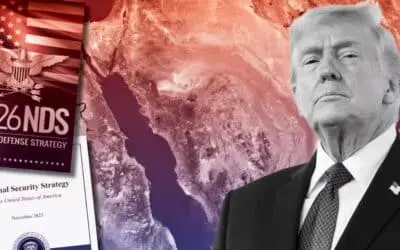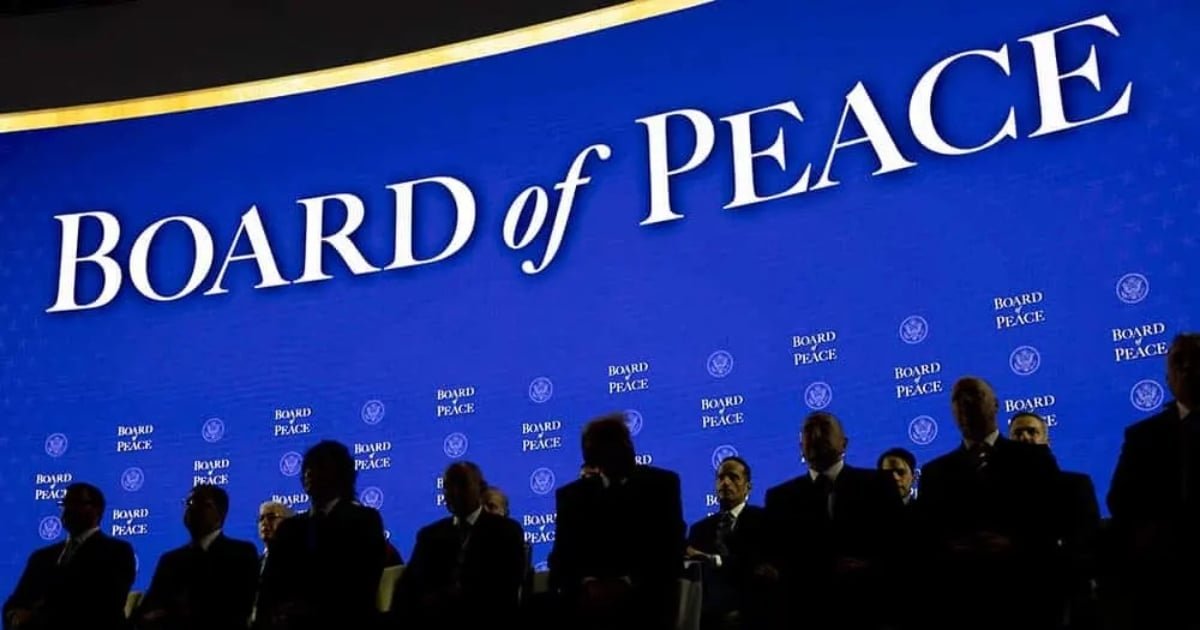



On January 22, 2026, against the backdrop of the snow-capped Alps in Davos, Switzerland, a new chapter in global governance was written. Surrounded by leaders from 19 nations, Donald J. Trump signed the Charter of the Board of Peace (BoP). This move, described as a “nimble and effective” alternative to existing institutions, has sparked an intense global debate: Is the Board of Peace a vital support system for the United Nations, or a strategic effort to supplant it?
The Board of Peace represents a fundamental shift in international diplomacy, moving away from the broad, often stalled consensus of the UN toward a “coalition of the willing” model focused on rapid, executive action.
BREAKING | Davos 2026
On January 22, 2026, at the World Economic Forum in Davos, US President Donald Trump signed the founding charter of the “Board of Peace”, a new international body that he will chair for life.
The Board of Peace was initially created to focus on ending the… pic.twitter.com/h2MUtBWfL2
— History & Stats Daily (@HistoryNStats) January 22, 2026
What is the Board of Peace?
The Board of Peace is an international organization endowed with its own legal personality, designed to promote stability and secure peace in conflict-affected regions. Unlike traditional bodies, it operates under a “Trump-centric” governance model.
- The Chairman’s Absolute Authority: As the inaugural Chairman, Donald J. Trump holds “exclusive authority” over the organization. This includes the power to invite new members, interpret the Charter, and create, modify, or dissolve any subsidiary entity at his discretion.
- Structural Layers:
- The Main Board: Comprised of voting Member States invited by the Chairman.
- The Executive Board: A seven-member leadership team managing daily operations. Key figures include Marco Rubio, Jared Kushner, Steve Witkoff, and former UK Prime Minister Tony Blair.
- Subsidiary Entities: Specialized bodies such as the Gaza Executive Board, which includes international representatives from Turkey, Qatar, and the UAE to manage specific regional portfolios.
Here’s a recap of US President Trump’s son-in-law Jared Kushner’s Board of Peace presentation on Gaza’s future. pic.twitter.com/sytHAShwci
— Al Jazeera English (@AJEnglish) January 22, 2026
When and Why it was Created
Proposed in late 2025 and formally ratified in January 2026, the Board was born out of a desire for “common-sense solutions” in the face of what the Charter describes as “failed approaches” by older institutions.
The immediate catalyst for its formation was the Comprehensive Plan to End the Gaza Conflict, a 20-point roadmap for post-war governance and reconstruction. While its first mission is to oversee the demilitarization and rebuilding of Gaza, the Board’s mandate is not geographically limited; it is designed to address global flashpoints as they arise.
Jurisdiction, and Scope
The Board’s scope extends far beyond the Mediterranean coast. The Charter grants it a global mandate to intervene in any area “affected or threatened by conflict”.
- Functional Mandate: Its tasks include restoration of core public services, large-scale infrastructure rebuilding, and “law and order” through the International Stabilization Force (ISF).
- A “New Gaza”: In Davos, the Board unveiled plans for a “New Gaza” featuring coastal tourism, skyscrapers, and industrial parks, aiming to transform the territory into an “opportunity-defined” region.
The Member States, and the “Billion-Dollar Club”
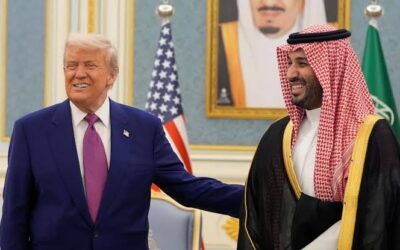
The “Coalition of 19” includes key regional players like Saudi Arabia, the UAE, Qatar, Egypt, Turkey, and Pakistan, alongside others like Argentina and Hungary.
- The Admission Fee: Membership is typically for a three-year renewable term. However, a unique “permanent seat” can be secured by states that contribute at least $1 billion in cash during their first year.
- The Holdouts: Major Western powers, including France, the UK, and Italy, have remained non-committal or declined invitations, expressing concerns that the Board could undermine the UN’s authority.
Decisions, and Governance: Corporate Agility
The Board operates with a level of agility that contrasts sharply with the UN Security Council. While the Main Board follows a “one state, one vote” rule, this is largely declarative; all decisions are subject to the Chairman’s approval or veto. The Executive Board meets frequently to ensure that funding and strategic goals are translated into immediate action on the ground.
Spotlight: The Role of Pakistan
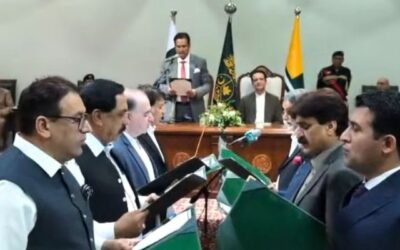
Pakistan has emerged as a critical pillar of the Board, joining as one of eight prominent Muslim nations.
- The “Gaza Conundrum”: Pakistan must balance its participation with its historic refusal to recognize the State of Israel. By joining a collective of Muslim nations, Islamabad reduces its individual political risk.
- Military Contribution: As a leading security provider in the region, Pakistan has signaled a willingness to deploy approximately 3,500 troops to the International Stabilization Force (ISF) to help secure Gaza.
- Economic Motives: For Islamabad, the Board offers a vital bridge to the Trump administration, potentially easing its path to further investment and support from international financial institutions.
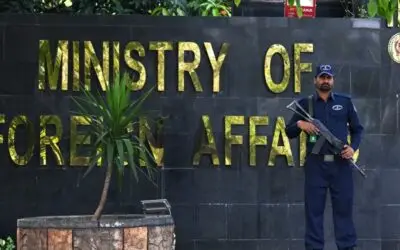
🔊PR No.2️⃣2️⃣/2️⃣0️⃣2️⃣6️⃣
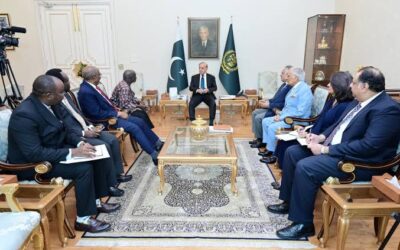
Pakistan Accepts Invitation for Joining the Board of Peace BoP with the View to Achieving Lasting Peace in Gaza https://t.co/BX4ufJoPRW
🔗⬇️ pic.twitter.com/9JfOoyyfsC— Ministry of Foreign Affairs – Pakistan (@ForeignOfficePk) January 21, 2026
Creative Perspective: The Global Boardroom
Critics and supporters alike have noted that the Board of Peace resembles a corporate entity more than a traditional diplomatic body—what some call “The Apprentice: Global Edition”. With its “pay-to-play” permanent seats and the Chairman’s power to “remove” members, it treats international peace as a transactional enterprise.
Whether Gaza serves as the “Beta Test” for a new world order or remains a unique experiment, the Board of Peace has already fundamentally challenged the 80-year-old status quo of global diplomacy.
To further understand the Board of Peace’s (BoP) regional and ethical implications, it is necessary to examine the participation of key Muslim nations and the resulting diplomatic tensions.
The Recognition Question: Does Pakistan’s Membership Imply Acceptance of Israel?
A central question surrounding Pakistan’s entry into the Board of Peace is whether signing a charter alongside Israel constitutes a de facto recognition of the Jewish state.
- Official Non-Recognition Stance: The Government of Pakistan has explicitly stated that its decision to join the BoP does not change its long-standing policy of non-recognition of Israel. Islamabad maintains that it remains committed to a “lasting solution to the Palestine issue” in line with United Nations resolutions.
- A “Multilateral Umbrella”: Foreign policy experts note that Pakistan is utilizing the Board of Peace as a multilateral framework. By joining a collective that includes eight prominent Muslim nations—such as Saudi Arabia, Qatar, and Turkey—Pakistan can engage in regional stabilization efforts without establishing direct bilateral ties with Israel.
- Israeli Opposition: Despite Pakistan’s participation in the BoP, Israel has formally and categorically rejected any role for Pakistan in the International Stabilization Force (ISF). Israeli officials cite a “trust deficit” and Pakistan’s lack of diplomatic ties as reasons to exclude their troops from the ground in Gaza.
- Domestic Realpolitik: Within Pakistan, the move is seen as a pragmatic effort to secure strategic and economic interests, such as U.S. investment and IMF support, while navigating deep domestic pro-Palestinian sentiment.
The Leverage of Muslim Nations: Advancing the Palestinian Cause
The inclusion of eight major Muslim powers—Saudi Arabia, Turkey, Egypt, Jordan, Indonesia, Pakistan, Qatar, and the UAE—creates a significant power bloc within the Board of Peace.
- United Front for Statehood: In a joint statement, these eight nations reiterated that their participation is grounded in the Palestinian right to self-determination and statehood based on pre-1967 borders. They view the BoP as a mechanism to pressure the international community toward a credible, time-bound political process.
- Economic and Material Leverage: These nations provide the primary financial and logistical support for Gaza’s reconstruction. By controlling a large portion of the $1 billion membership fees and reconstruction funds, they hold significant influence over the Board’s priorities.
- Preventing Future Conflict: The BoP Charter and the associated Resolution 2803 authorize the Board to manage humanitarian aid and oversee demilitarization. Proponents argue that the presence of Muslim-majority states on the Gaza Executive Board (such as Qatar and the UAE) provides a safeguard to ensure that “security” measures do not devolve into further oppression or genocide.
- Accountability Concerns: Conversely, UN experts have warned that because the BoP operates outside of direct UN authority and is chaired by a “deeply partisan” U.S. leadership, there are few formal mechanisms to ensure accountability for international crimes. Critics argue that the collective leverage of Muslim nations must be used to demand clear pathways for Palestinian consent, rather than merely facilitating a new form of international oversight.
Conclusion, and Analysis
The establishment of the Board of Peace (BoP) in January 2026 marks a watershed moment in international relations, signifying a move away from the post-WWII multilateral order toward a results-oriented, executive-led diplomacy. While its initial focus is the stabilization and reconstruction of Gaza, its broader mandate and the “Trump-centric” governance model suggest an ambition to become the primary vehicle for resolving global flashpoints.
Pakistan’s Role: Between Strategic Necessity and Moral Responsibility
Pakistan’s decision to join the Board of Peace (BoP) as a founding member is one of the most complex balancing acts in its diplomatic history. While critics view it as a high-stakes gamble, the state’s narrative frames this participation as a calculated strategic maneuver to protect both its national interests and the Palestinian cause.
- Strategic Opportunity and the Nuclear Equalizer: By aligning with the Board, Pakistan has repositioned itself as an indispensable “security partner” to the United States and a key regional actor. As the only Islamic nuclear power, Pakistan enters this framework not as a junior partner, but as a strategic equalizer. This status provides a unique form of deterrence, signaling that Pakistan possesses the military capability to defend Muslim interests and confront any state—regardless of size, be it Israel or India—should the need for defensive action or regional stabilization arise.
- The Recognition Redline: It is critical to note that joining the Board does not signify a change in Pakistan’s long-standing policy toward Israel. Pakistan does not recognize Israel as a legitimate state, and its inclusion in the BoP does not legitimize Israel’s status. Instead, Islamabad utilizes the “Multilateral Umbrella” of the Board—alongside seven other major Muslim powers—to engage in regional stabilization without establishing any direct bilateral ties or diplomatic recognition.
- The Military Dilemma as a Diplomatic Exit: Pakistan has signaled a willingness to contribute 3,500 troops to the International Stabilization Force (ISF) to secure Gaza and facilitate aid. However, Israel’s categorical rejection of Pakistani peacekeepers due to a “trust deficit” may provide Islamabad with a diplomatic exit from a potential political minefield. This allows the government to demonstrate its commitment to help the Palestinian people while avoiding the risk of its soldiers being drawn into “peace enforcement” duties or clashing with Palestinians on the ground.
- Economic Imperatives: For the current administration, participation is a pragmatic tool for economic stabilization. Aligning with this Trump-led initiative is seen as a way to secure U.S. investment, defense cooperation, and favorable treatment from international financial institutions like the IMF during a period of domestic economic crisis.
Final Analysis: A New Model of Leverage?
The “Coalition of 19” and specifically the bloc of eight Muslim nations now hold a unique form of leverage. For the first time, these nations are not just “observers” but active “shareholders” in a transitional administration.
- Safeguarding Palestine: Through their presence on the Gaza Executive Board, countries like Qatar, Turkey, and the UAE act as “guarantors” of the peace process. Their collective leverage is rooted in their control over reconstruction funding and their ability to withhold legitimacy if the Board’s actions veer toward further oppression.
- Preventing Future Conflict: While the Board lacks the universal consensus of the UN, its “billion-dollar” permanent membership model ensures that those with the greatest stake in regional stability are the ones making the decisions. The success of this model will depend on whether this “Global Boardroom” can prioritize human rights and Palestinian statehood over purely transactional or economic interests.
In Conclusion, the Board of Peace represents a high-stakes shift toward transactional diplomacy. For the world, it remains to be seen if this “nimble” body, driven by the Chairman’s “exclusive authority,” can deliver a lasting peace. For Pakistan, however, the Board serves as a platform to project its nuclear-backed strength, ensuring that as a “coalition of willing States,” the Muslim world’s most powerful military remains a primary check and balance in this new era of global power.
You May Like To Read: Secretary-General Warns Security Council: “Rule of Law is Being Replaced by the Law of the Jungle”
Check out our latest video: