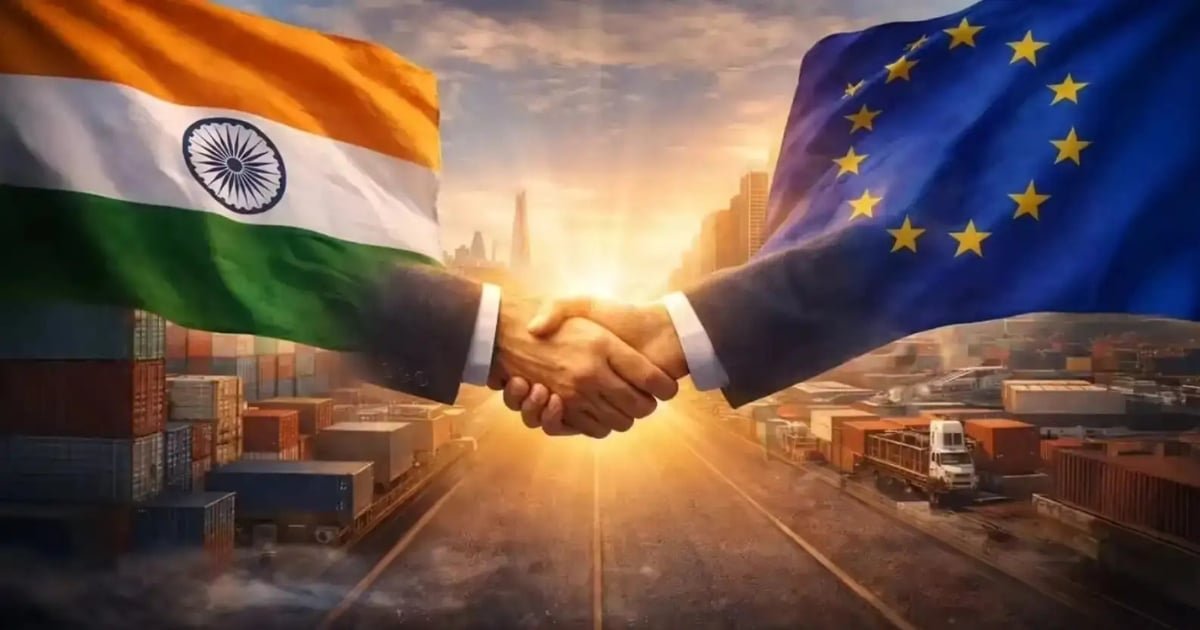





European Council President António Costa and European Commission President Ursula von der Leyen arrived in New Delhi this week to finalize a landmark Free Trade Agreement (FTA), potentially concluding nearly two decades of intensive negotiations.
The European leaders are attending as chief guests for India’s Republic Day celebrations, a gesture symbolizing the deepening bond between the two economic behemoths. The visit will culminate in the 16th EU-India Summit on Tuesday, where leaders expect to sign what has been described as the “mother of all deals.”
President Costa is in New Delhi for the 16th #EUIndia summit taking place on Tuesday.
The summit will be an opportunity to build on the EU-India strategic partnership and further strengthen collaboration across key policy areas.
Read the agenda → https://t.co/0wl24sWN9X pic.twitter.com/Nu21CUMWYp
— EU Council (@EUCouncil) January 25, 2026
A Strategic Economic Pivot
As India prepares to become the world’s fourth-largest economy this year, the proposed pact represents a strategic shift for both regions. For the European Union, India offers a vital, expanding market; for New Delhi, the EU serves as a primary source of technology and investment essential for infrastructure development and job creation.
“We are on the cusp of a historic trade agreement,” stated President von der Leyen. The deal arrives as bilateral trade in goods has already surged by nearly 90% over the last decade, reaching €120 billion in 2024.
Defending the Rules-Based Order
The summit occurs against a backdrop of global economic fragmentation. EU High Representative Kaja Kallas emphasized that the pact is a necessary response to “unprecedented pressure” on the international order, providing both parties with a robust alternative to shifting U.S. tariff policies and Chinese export controls.
Key Objectives of the Agreement:
- Market Access: Opening new avenues for goods and services, building on the existing €180 billion total trade volume.
- Technological Exchange: Facilitating the transfer of high-end technology to support India’s domestic manufacturing.
- Strategic Autonomy: Reducing dependence on traditional military and economic partners—such as India’s shift away from Russian hardware—by diversifying global supply chains.
Final Deliberations
While the outlook is overwhelmingly positive, negotiators are working through final technicalities. These include the implementation of the EU’s carbon border tax on steel and aligning safety and quality standards in the pharmaceutical and automotive sectors.
The EU-India strategic partnership represents a commitment to a stable, prosperous, and rules-based global economy, ensuring that bilateral engagement remains a cornerstone of international trade in the 21st century.
You May Like To Read: Small Business & Export Linkages: MSMEs’ Role in Pakistan’s Global Trade