MSMEs: Cornerstone Yet Constrained
Micro, Small and Medium Enterprises (MSMEs) are widely recognised in Pakistan as essential engines of employment and industrial activity. Together they account for a significant portion of non‑agricultural jobs, support local supply chains, and underpin key export industries like textiles, sports goods, leather and light manufacturing. Yet their role in global value chains, the interconnected international production networks that determine how goods and services are made and traded, remains limited by structural constraints. While government rhetoric highlights MSMEs as the backbone of the economy, recent export figures and external assessments paint a picture of stagnation and missed potential.
Data shows Pakistan’s exports overall have struggled in the global trading environment. The share of exports in GDP has fallen steadily from historic averages of around 16% to approximately 10.4% by 2024, significantly below peer countries in the low‑ and middle‑income bracket. The World Bank’s “Pakistan Development Update” notes this decline reflects deep underlying weaknesses in export diversification, quality, regulatory friction and global market access, all areas where MSMEs feel the impact most acutely.
https://youtu.be/jU-fADS-iao?si=fbqQCd4JJ9XizO0s
Export Performance: Modest Gains but Persistent Weakness
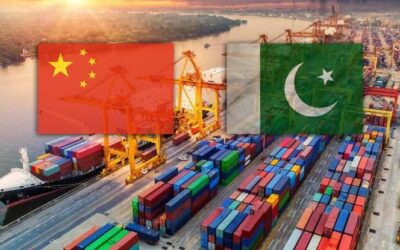
Official figures for the fiscal year 2024‑25 reported a modest rise in Pakistan’s exports to USD 31.75 billion, driven largely by traditional sectors such as textiles and apparel as well as emerging non‑traditional categories like plastics, cement and pharmaceuticals. Despite this, exports remain concentrated in low‑value goods, leaving little room for scaling into sophisticated global value chains.
More recent trade data for late 2025 reveals troubling trends: merchandise exports declined sharply by around 20% in December 2025, continuing a multi‑month drop for FY2025‑26. Exports for July–December 2025 were down about 8.7 percent year‑on‑year while imports climbed, widening the trade deficit considerably. Textile exporters, where MSMEs are heavily represented, reported acute pressures from weak global demand and high operating costs.
Structural and Market Constraints for MSMEs
MSMEs face a cluster of constraints that undermine their ability to integrate into global value chains:
1. Cost Pressures and Investment Challenges
High input costs, especially energy and logistics, continue to drive up production expenses, making it harder for MSMEs to be price‑competitive internationally. Energy remains one of the most significant cost components for manufacturers, and frequent shortages or expensive fuel further squeeze small businesses’ margins.
2. Limited Diversification and Quality Upgrading
Pakistan’s export base remains anchored in a “low‑value trap,” where much of the export volume consists of straightforward, labour‑intensive goods. Without sustained quality upgrading and movement up the value chain, MSMEs struggle to offer differentiated products that global buyers demand, a factor anchoring them to commodity markets rather than complex supply networks.
3. Weak Global Demand and Market Access
External markets themselves are unstable. Global economic headwinds have depressed demand in key destinations, while tariff barriers and certification requirements pose further hurdles. For smaller exporters, compliance with international standards (such as SPS for food products or environmental benchmarks for apparel) often involves costs they cannot easily shoulder.
4. Informality and Limited Financial Access
A large segment of MSMEs operates informally. Without formal business registration and financial documentation, these enterprises cannot leverage official export incentives or access institutional credit. The banking sector’s credit allocation to MSMEs remains low relative to their economic contribution, stunting growth and investment capacity.
ICCI Stresses MSMEs as Key to Pakistan’s Sustainable Growth
The Islamabad Chamber of Commerce and Industry (ICCI) President, Sardar Tahir Mehmood, highlighted that MSMEs are the backbone of Pakistan’s economy, crucial for employment, poverty reduction, innovation, and export growth. Speaking to an industrial delegation on January 24, 2026, he emphasized that achieving sustainable GDP growth of 6–7% depends on localisation and export-driven industries powered by MSMEs. He called for targeted policy support, affordable financing, technology upgrades, skill development, simplified taxes, energy affordability, and stronger public-private collaboration to integrate MSMEs into local and global value chains. ICCI also promotes entrepreneurship and start-ups through training and industry-academia linkages.
https://youtu.be/9VqxwNqnY4I?si=Dptx6QiQ3LBVd22a
Government and Institutional Responses
The government acknowledges these challenges and has initiated multiple measures aimed at supporting MSMEs and expanding export capacity.
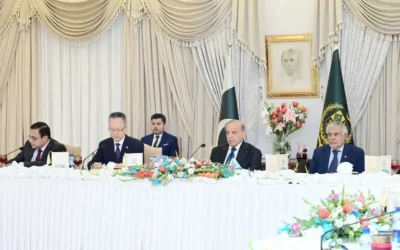
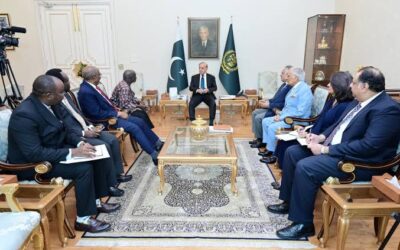
Leaders in Islamabad, and the Prime Minister Shahbaz Sharif, have repeatedly stressed MSMEs’ importance to the economy and their potential role within global value chains. Official statements emphasise that both “every possible step” and targeted reforms are being pursued to enable small and medium firms to scale and access international markets.
Government plans have set ambitious export targets, with public discourse aiming to lift Pakistan’s exports to USD 60 billion within the coming years under initiatives like Uraan Pakistan. The emphasis here is on building SME capacity, strengthening export infrastructure, improving trade diplomacy, and enabling better use of e‑commerce channels.
High‑profile events such as the Pakistan Global Business Summit 2025 have sought to connect local MSMEs with international buyers, disseminate knowledge on quality compliance and global standards, and forge partnerships for market penetration. These events signal a willingness to diversify beyond traditional markets and products, especially into European and other emerging economies.
Frequent meetings of trade review committees and commerce ministry policy reviews underscore ongoing efforts to sustain export momentum even amid global headwinds. These forums attempt to track export performance closely and propose responsive strategies to supply chain disruptions and shifting trade patterns.
Critical Gaps in Policy Implementation
While the policy framework acknowledges MSMEs’ role, implementation remains uneven. Regulatory bottlenecks persist, particularly around customs procedures and compliance standards that many small exporters find opaque and burdensome. MSMEs also lack reliable access to advanced digital infrastructure that larger exporters use for global marketing, financing and logistics optimisation.
Financing continues to be a major gap. Although institutions like SMEDA (Small and Medium Enterprises Development Authority) and commercial banks have launched MSME‑focused products, financial inclusion remains limited for smaller firms that lack credit histories or sufficient collateral.
Opportunities for Integration and Growth
Despite constraints, pathways exist for Pakistan’s MSMEs to deepen their involvement in global trade. The gradual rationalisation of tariffs under the long‑term National Tariff Plan promises to lower some cost barriers for exporters if fully implemented. Reducing the simple average tariff from around 20% to under 10% by 2030 could make Pakistani products more competitive in price‑sensitive export markets.
Emerging digital exports, although still a small share, grew to around 10% of total exports, signalling untapped potential for service‑oriented MSMEs engaged in software, IT services and digitally delivered products.
Strategic emphasis on quality infrastructure and certification, supported by targeted training and technology adoption, can help elevate MSMEs from low‑value outputs into specialised niches such as medical equipment components, specialised textiles and agro‑processed goods.
You May Like To Read: Karachi’s Gul Plaza Death Toll Hits 71; Search Operation Nears Completion
Conclusion: A Long Road Ahead
Pakistan’s MSMEs remain indispensable to national economic stability and export growth. Yet their integration into global value chains is constrained by a mix of structural impediments, from high costs and procedural complexity to limited diversification and financial barriers. The latest export data from 2025 underlines that overall export performance is fragile, despite pockets of resilience.
Meaningful progress will require deepened policy implementation, strengthened institutional support, and sustained attention to quality and global standards. MSMEs can only become robust participants in global production networks if policy commitments translate into tangible improvements in competitiveness, finance access and market linkages. There is potential for growth, but this hinges on closing the gap between policy promise and practical support, a task that policymakers, industry leaders and MSME stakeholders must pursue with urgency.