



In a major development concerning Israel’s nearly two-year genocidal war on Gaza, Hamas has confirmed it accepts several parts of United States President Donald Trump’s plan for a ceasefire, but explicitly stated that some elements of the proposal require further negotiations.
President Trump responded early Saturday morning by telling Israel to “immediately stop bombing Gaza”, adding that Hamas was “ready for a lasting peace.” This pivotal moment followed the expiry of a deadline set by Trump for the group to respond to his comprehensive 20-point plan for the war-torn territory.
Hamas has responded to US President Donald Trump’s ceasefire plan to end Israel’s war on Gaza, agreeing to several parts of the proposal but saying that some aspects require further negotiations.
🔴 Follow our LIVE coverage: https://t.co/91RLMHlNvn pic.twitter.com/JWjnsgg8Ar
— Al Jazeera English (@AJEnglish) October 4, 2025
Hamas Agrees to Captive Exchange and Transitional Government
Hamas handed over its official response to Trump’s 20-point plan on Friday. The plan included demands for an immediate ceasefire, an exchange of all remaining 48 Israeli captives—of which 20 are believed to be alive—for Palestinian prisoners, the introduction of a transitional government led by an international body, and the disarmament of Hamas.
The group’s formal statement confirmed its readiness to agree to the central humanitarian component of the proposal: it had agreed “to release all occupation captives – both living and the remains – according to the exchange formula outlined in President Trump’s proposal, with the provision of field conditions necessary for the exchange.”
Furthermore, the group signaled its willingness to immediately proceed, stating it was ready to “immediately enter negotiations through mediators to discuss the details” of the exchange.
On future governance, Hamas signaled a key concession while laying out a significant reservation. It stated it was ready to “hand over the administration of the Gaza Strip to a Palestinian body of independents [technocrats] based on Palestinian national consensus and with Arab and Islamic support.”
You May Like To Read: Pakistan’s BRICS Opportunity: Diplomacy, Trade, and Realignment
Reservations Over Governance and Future Rights
While Hamas showed “a lot of positivity here by accepting the spirit of the paper and praising President Trump’s initiative,” key elements remain subject to necessary renegotiation.
The group’s counter-proposal on governance appeared to indicate that Hamas wants Gaza to be administered by Palestinians rather than Trump’s proposed “Board of Peace.” This international transitional governance body would be overseen by President Trump himself and the highly divisive figure Tony Blair, who is regarded by many in the Arab world as a “war criminal” for his role during the 2003 United States-led invasion and occupation of Iraq.
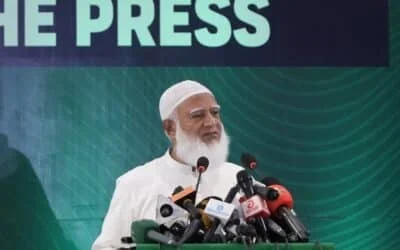
Senior Hamas official Mousa Abu Marzouk later confirmed this rejection outright, stating: “We will never accept anyone who is not Palestinian to control the Palestinians,” and specifically noted that Blair would be particularly unwelcome.
Hamas signalled that further negotiations would be required for aspects of the proposal touching on “the future of the Gaza Strip and the legitimate rights of the Palestinian people.” These, the group insisted, should be decided on the basis of a “unanimous national position and relevant international laws and resolutions.” The Trump plan, as presented, provides no specific path for eventual reunification with the Israeli-occupied West Bank in a future Palestinian state.
You May Like To Read: Taiwan Defence Minister Confirms Tracking Chinese Activities for ‘Early Warning Intelligence’
De-escalation and Tragic Setbacks
Following President Trump’s instruction, Israel says it is preparing to implement the “first stage of Trump’s plan to end the war in Gaza.” Israeli media reported that the government has instructed the military to reduce offensive activity in Gaza after it said it was preparing for an “immediate implementation” of the first stage of the plan.
On the ground, reports from the central Gaza Strip indicated a clear shift. The enclave had experienced an unusual quietness around midnight as the news broke. Al Jazeera’s Hani Mahmoud noted that compared to the past few days, the intensity of the bombardment and the use of extreme firepower is definitely less this morning and could be the beginning of a complete halt. He added there was a “clear de-escalation,” and the distinct sound of Israeli drones – ever present in the sky over Gaza – could not be heard this morning.
However, the relative easing of the overall relentless Israeli bombardment was tragically punctuated by an isolated incident. The military carried out a drone strike on a tent in al-Mawasi, southern Gaza, killing two children and injuring several other people. These deaths represent the first confirmed Palestinian casualties in Gaza since Trump instructed Israel to “immediately” halt its bombing of the enclave after Hamas responded positively to his plan.
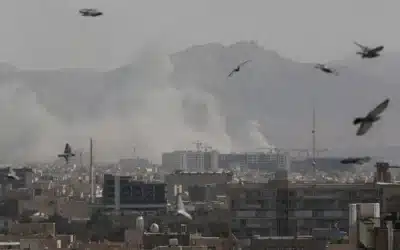
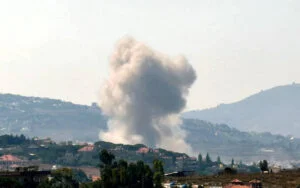
Meanwhile, the Israeli military continued its offensive on Gaza City, with reports it was using remote-controlled vehicles packed with explosives to demolish entire neighbourhoods. More than 66,200 people, mostly women and children, have been killed in Israel’s assault on Gaza since October 2023, according to Palestinian health authorities.
International Encouragement and Domestic Pressure
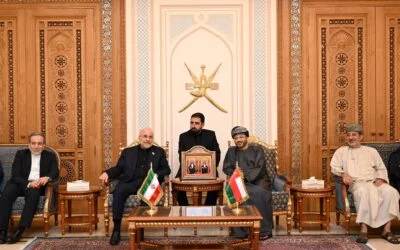
Mediator Qatar’s Ministry of Foreign Affairs said it welcomed the group’s response to Trump’s plan, confirming it had begun working with fellow mediator Egypt and the United States to continue talks. Egypt said it hoped for a “positive development” and would work with Arab states, the US, and European countries to reach a permanent ceasefire.
United Nations Secretary-General Antonio Guterres was encouraged by the Hamas statement and urged parties to “seize the opportunity to bring the tragic conflict in Gaza to an end.”
In Israel, Prime Minister Benjamin Netanyahu is reportedly “shocked” and surprised by the US President’s positive assessment of Hamas’s response, as well as the call for Israel to stop the bombing of Gaza. Netanyahu reportedly wanted to coordinate a joint Israeli-American response “so that it wouldn’t actually be seen as positive.”
However, domestic pressure is mounting. Family members of Israeli captives have stated they completely support what the US president is saying, including the stopping of bombardment, fearing further bombing may harm or kill captives still being held. Opposition leaders have indicated that Netanyahu will have a political safety net if members of his right-wing coalition don’t want to be involved in this deal. Protests are expected to take place on the streets of Israel calling for this deal.
Analyst Ali Hashem concluded that the Hamas statement has opened “a window for negotiations,” with the ball now in President Trump’s court to address the reservations and facilitate the next stage of dialogue.
You May Like To Read: India Has No Proof of Pahalgam Incident, Admits Former RAW Chief Amarjeet Singh