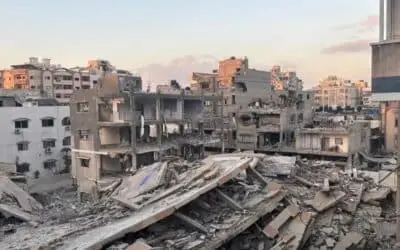
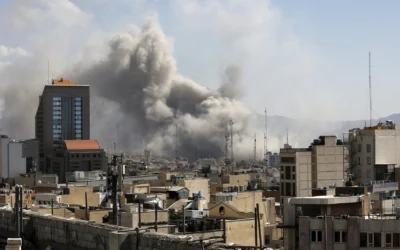
Throughout 2024, Pakistan witnessed several brutal mob lynchings and vigilante killings in the name of alleged “blasphemy.” At least four individuals lost their lives—including a tourist and minority community members—with suspects and perpetrators routinely escaping justice. This pattern underscores a deeply troubling nexus of religious intolerance and systemic impunity.
Key Fatal Incidents in 2024
- Tourist Lynched in Swat (June 20, 2024)
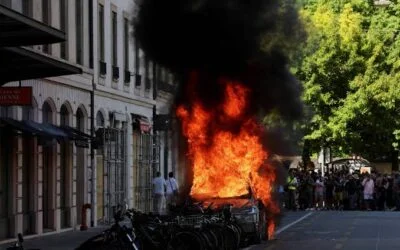
A visiting Muslim from Sialkot was beaten and set on fire by a vigilante mob in Madyan, Swat District—after being accused of Quran desecration. The mob overran the local police station, dragged the man out, and publicly executed him. Police later registered cases, but arrests and convictions remain minimal.

Source: The News
- Christian Victim Set Ablaze in Sargodha (May 2024)
A Christian man, Nazir Masih, suffered fatal injuries after being assaulted by a mob in Sargodha. His shop and home were also burnt. Though police rescued him, he died days later. Formal probes are still pending.
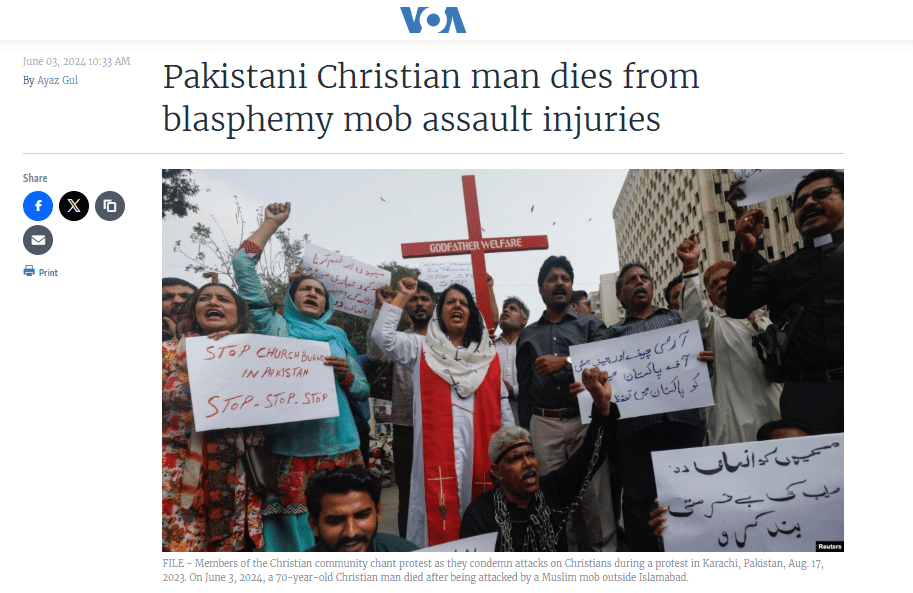
Source: VOA
- Jaranwala Attacks on Churches (August 2023; after-effects into 2024)
While this pre-dates 2024, the aftermath carried into the next year. Thousands of protesters torched four churches and dozens of Christian homes. Over 5,000 suspects were identified; however, only 380 arrests were made, with even fewer prosecutions. The majority of perpetrators remain free.
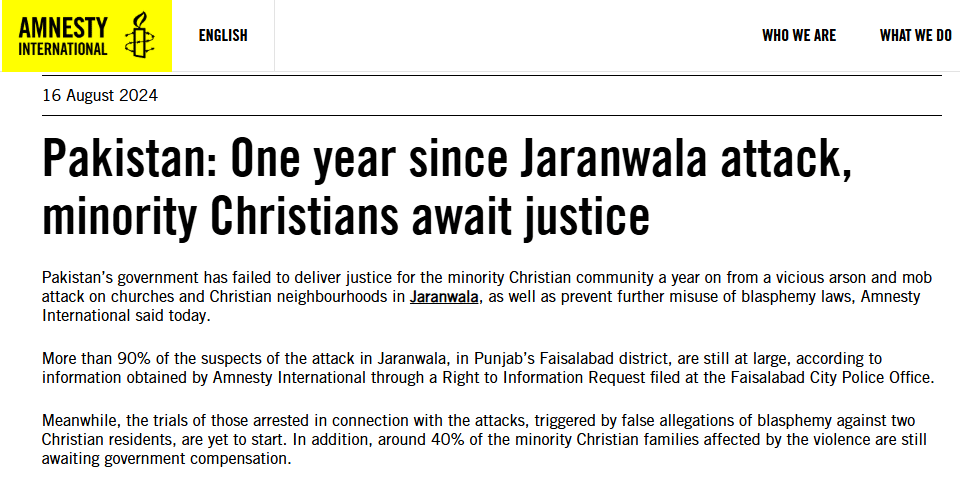
Source: Amnesty International
- Killing of Dr Shah Nawaz in Custody (September 2024)
In Umerkot (later reported in 2024), a doctor accused of blasphemy surrendered to police but died in a “fake encounter”—an extrajudicial execution. Despite an official inquiry, no senior officer has yet been convicted.
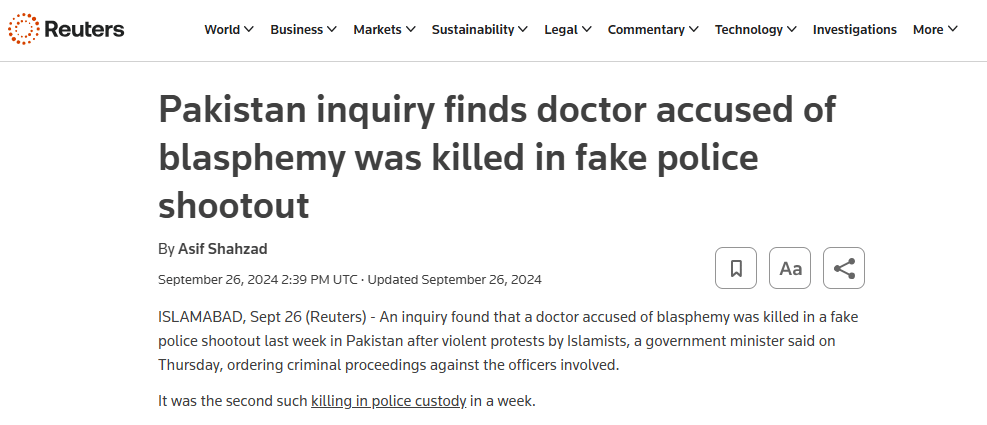
Source: Reuters
Patterns of Impunity
- Mob overrun of police stations. Police have been overwhelmed or intimidated, allowing violence to proceed with impunity.
- Selective arrests and token prosecutions. Hundreds implicated, but few prosecuted; most suspects released on bail or never charged.
- Victims were often persecuted further. In many cases, survivors or their families face further legal harassment, including blasphemy charges..
Structural and Legal Flaws
- Vague blasphemy laws, and their blatant misuse. Section 295‑C carries a mandatory death penalty and is frequently weaponised for personal vendettas or land grabs. These laws are to ensure the sanctity of religious sentiments, nevertheless, they are weaponised to persecute individuals and groups, mostly minorities.
- Social media incitement. Online rumours and disinformation spark rapid mob mobilisation. Numerous cases of mob violence reveal a common pattern of mobilising religious bigot masses through dissemination of disinformation on social media.
- Weak legal protections. Courts have passed resolutions against mob violence, but lack of enforcement frameworks undermines their impact. Penalties are not awarded to the perpetrators, instead they roam free, which reinforces the religious bigots and their heinous actions.
Voices from Civil Society
Human Rights Watch recently highlighted how blasphemy accusations are often used to “grab land and settle scores,” noting that almost no perpetrators are brought to trial.
The HRCP report “Under Siege” revealed that over 750 people were imprisoned on blasphemy charges by late 2024. At least four faith‑based killings occurred, yet impunity prevails.
According to Amnesty International, over 90% of suspects in the Jaranwala attacks are at large. “A year on, the minority Christian community are being forced to reconcile with the fact that their aggressors continue to live amongst them without repercussions.”
Towards Effective Accountability
Experts emphasise several reforms to eradicate the recurrent cases of mob violence, and weaponisation of blasphemy laws:
- Repeal or amend blasphemy laws. Human Rights Watch and HRCP call for removal of Section 295‑C and tightening of legal definitions. Repealing this law will create another internal crisis, orchestrated by religious mobs–false guardians and upholders of religion–therefore, tightening the definitions and amendments therein would be the best suited course of action.
- Strengthen law enforcement. Ensure police are empowered and protected to act decisively, particularly against local clerical pressure. Police in certain cases have sided with the perpetrators—a wholly illegal action therefore, measures to eradicate this behaviour are imperative.
- Social-media monitoring. Curb incitement and disinformation to prevent violence before it begins. Moreover, strict punishments should be dealt to individuals and masses responsible for disseminating provoking-false information.
- Swift prosecution of mob violence. Declare mob lynching and vigilante killings non-bailable offences, and hold perpetrators accountable.
The four deaths in 2024, and countless deaths from previous years, resulting from blasphemy accusations represent more than isolated tragedies—they highlight a systemic failure of the state to protect its citizens and enforce the rule of law. Vague legislation, politicised enforcement, and judicial neglect enable cycles of violence and fear.
True accountability demands structural reform: legal clarity, social awareness campaigns, empowered policing, and judicial will. Without them, vulnerable minorities remain at constant risk, and Pakistan’s justice system stands compromised—unable to assure safety or equality under the law.
You May like to Read: