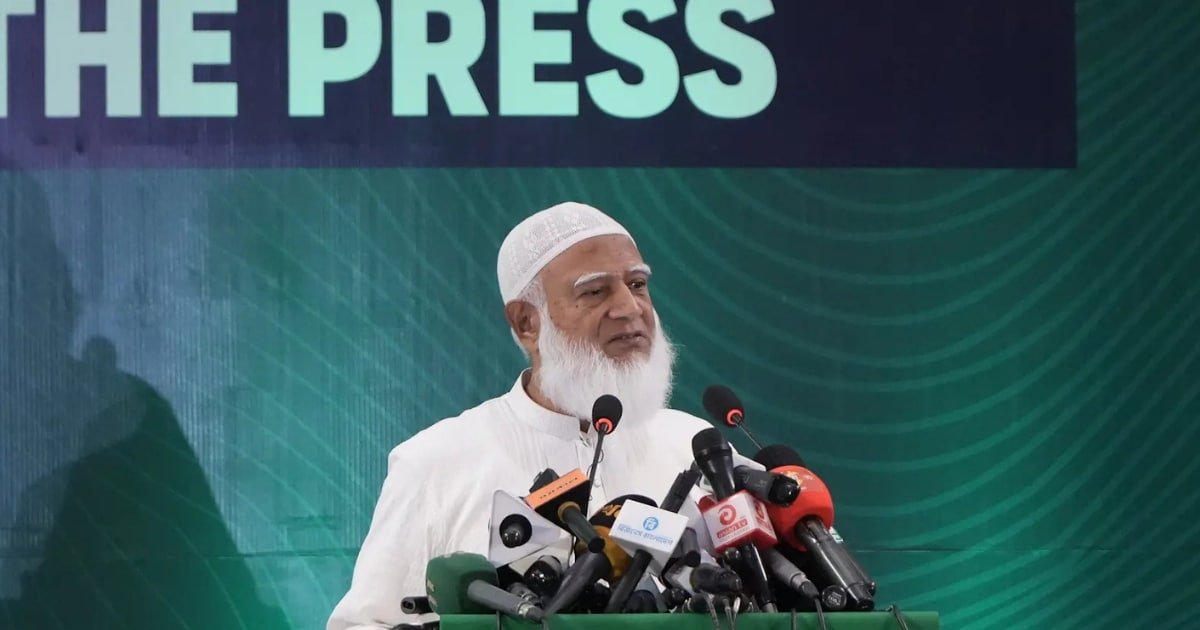





As Bangladesh prepares for its first national election since the 2024 uprising that ended the 15-year tenure of Sheikh Hasina, Dr. Shafiqur Rahman, leader of the nation’s largest religious party, has emerged as a central and polarizing contender for the Prime Ministry.
Voters are set to head to the polls on Thursday, February 12, in an election that could fundamentally shift the constitutional identity of the nation. Rahman, a 67-year-old physician and veteran political leader, is leading an 11-party alliance with a platform centered on “moral renewal” and “good governance.”
A Government That Answers to the People
For decades, power in Bangladesh has existed without accountability. Decisions were made behind closed doors and corruption was protected by silence. Under our government, Ministers, MPs and senior officials will publicly declare their… pic.twitter.com/4PVbwNvRGS
— Dr. Shafiqur Rahman (@Drsr_Official) February 5, 2026
A Vision for “Moral Renewal”
After three unsuccessful bids for parliament in 1996, 2001, and 2018, Rahman believes the current political vacuum offers his best chance at victory. Running on a campaign of transparency, he has vowed to establish a rule-based, corruption-free administration.
“Good governance is the foundation of stability, peace, and prosperity,” Rahman stated at a recent rally. “I stand for moral renewal in society.”
Ideological Shift and Secular Concerns
The potential for a Jamaat-led government has sparked significant debate within Bangladesh and across its borders. For over a decade, the previous administration suppressed religious parties under a policy of constitutional secularism. Since the 2024 transition, many formerly imprisoned religious leaders have returned to the political fold.
Critics and minority groups have expressed concern regarding the alliance’s exclusively male candidate list and its implications for Bangladesh’s secular traditions.
Controversies Surrounding Gender and Modernity
Rahman’s campaign has faced intense scrutiny over his stance on women’s roles in the workforce. Recent remarks regarding stay-at-home mothers and social media posts criticizing modern employment trends for women as “another form of prostitution” have ignited nationwide protests.
In Dhaka, demonstrations featured “broom-waving” marches by women’s rights activists seeking to symbolically sweep the alliance’s influence from the capital. Rahman has dismissed these concerns, stating, “We don’t want to lock women at home—we don’t have enough money to buy the locks.”
You May Like To Read: Pakistan Shortlists Two Candidates for Tiangong Space Station Mission
About Shafiqur Rahman
Born in 1958 in Moulvibazar, Dr. Shafiqur Rahman is a medical doctor by profession. His family is deeply rooted in the medical field; his wife, Ameena Shafiq, a former Member of Parliament, and their three children are all doctors. After decades of activism and multiple terms as a political prisoner, Rahman now seeks to lead the first religious-leaning government in Bangladesh’s history.
Check out our latest video: