



The volatile, multi-theater conflict between Israel and Iran entered a tense, highly unstable pause today following a weekend of direct territorial missile and air strikes. While both capitals have temporarily halted direct tit-for-tat operations, the underlying April 8 ceasefire framework remains under extreme systemic pressure due to an widening strategic division between the United States and Israel.
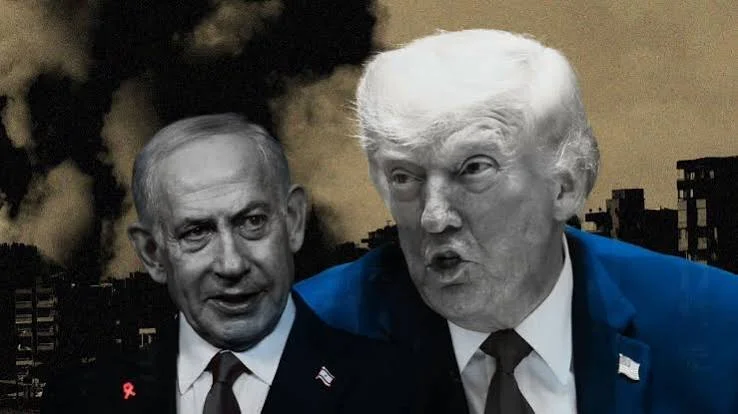
High-stakes diplomatic reporting from Axios revealed that U.S. President Donald Trump has issued a blunt warning to Israeli Prime Minister Benjamin Netanyahu. Trump explicitly demanded that Israel stop its retaliatory cycle after Tehran signaled a conditional halt to its missile salvos.
According to administration insiders, Trump warned Netanyahu that he must be “careful,” delivering a sharp geopolitical ultimatum that the Israeli Prime Minister could find himself “on your own very soon” if unauthorized strikes continue to jeopardize Washington’s direct negotiations with Iran.
President Trump demands that Israel and Iran “immediately stop ‘shooting'” as fresh exchange of strikes imperils ceasefire.
Follow live updates: https://t.co/mDKFesTLO5 pic.twitter.com/sjjnaPd4Kl
— CNN (@CNN) June 8, 2026
Industrial Sabotage and the Frontline Conflict Metrics
Despite the current pause in direct missile exchanges, the physical and economic damage from the weekend’s escalation is still being calculated across two primary fronts:
The Mahshahr Petrochemical Strike
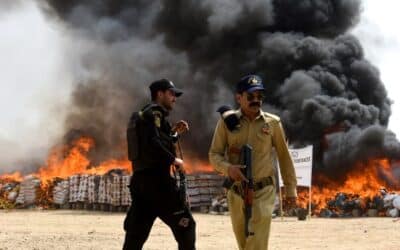
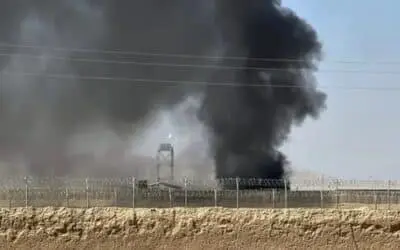
The true economic target of Israel’s overnight weekend campaign inside Iran has been identified as the Mahshahr petrochemical complex in southwest Iran. As one of Tehran’s most critical state-owned industrial and export centers, the facility handles a significant portion of Iran’s non-oil GDP revenues. While Iranian state media reported zero casualties, domestic energy authorities are still evaluating the long-term structural damage and potential supply chain losses caused by the precision strike.
Hezbollah’s Kinetic Resistance in Southern Lebanon
While diplomats argued over the terms of the truce, the frontline war in the Levant continued at a fierce pace. Hezbollah officially confirmed it executed 16 coordinated combat operations against Israel Defense Forces (IDF) positions across southern Lebanon on Monday alone.
Using a combination of explosive loitering munitions, anti-tank guided missiles (ATGMs), and heavy artillery, Hezbollah targeted Israeli troop concentrations and armored units. The group claimed the successful destruction of military bulldozers and ammunition transport vehicles near key strategic high points, including Beaufort Castle, Odaisseh, and Yohmor al-Shaqif.
Critical Analysis: Structural Decoupling, Leverage Bluffs, and the Illusion of Enforcement
The current pause in operations reveals deep divisions in the U.S.-Israel security alliance and exposes the conflicting goals shaping the current Middle East crisis:
The Battle for Structural Decoupling
The primary diplomatic disagreement between Washington and Jerusalem is centered on whether the region’s conflicts can be separated or “decoupled.” Speaking on Fox News, Israel’s Ambassador to the U.S., Yechiel Leiter, stated flatly that Washington’s negotiations with Tehran have “nothing to do with Lebanon.”
This statement directly challenges the core diplomatic strategy of the Iranian alliance. Iranian Parliamentary Speaker Mohammad Bagher Ghalibaf and Foreign Minister Abbas Araghchi have consistently maintained that the April 8 ceasefire applies across all fronts, meaning any Israeli operation against Hezbollah in Lebanon justifies an Iranian response from the mainland. By striking the Mahshahr complex, Israel sought to prove that it will not allow Washington to sign a standalone deal with Iran that leaves Tehran free to fund and re-arm Hezbollah along Israel’s northern border.
The Credibility Gap in Trump’s Defensive Ultimatum
President Trump’s warning that Israel could soon find itself “on its own” is a significant rhetorical escalation, but regional analysts question its practical enforcement. As noted by Middle East policy experts at the Institute for Policy Studies, a warning of this nature carries little real weight unless it is accompanied by concrete policy changes.
As long as the United States continues its daily flow of heavy weapons transfers, military intelligence sharing, and diplomatic cover at the UN Security Council, Prime Minister Netanyahu has very little structural reason to alter his military plans. The Israeli leadership understands that the U.S. domestic political landscape makes a total cutoff of military aid highly unlikely, allowing Jerusalem to view Trump’s “on your own” comments as political rhetoric rather than an active strategic threat.
Kinetic Disruptions as a Form of Inter-Ally Communication
From a military history perspective, Israel’s decision to launch strikes inside Iran despite direct calls for restraint from the White House is a classic example of “disruptive diplomacy.” As noted by prominent military historians, Netanyahu is using precision kinetic operations to communicate with his primary ally.
By showing that Israel can independently strike deep within Iran and disrupt global energy markets at will, the Israeli government is signaling to the Trump administration that no lasting security agreement can be made in the Middle East without addressing Israel’s core security requirements. This strategy effectively turns Israel into a veto player in the U.S.-Iran talks, showing Washington that it cannot negotiate over the heads of its regional allies.
Ghalibaf’s Warning and the Fragility of the Truce
The public statements by Iranian Parliamentary Speaker Mohammad Bagher Ghalibaf underscore that Tehran’s patience with the current ceasefire format is wearing thin. By stating that repeated Israeli actions prove there is no “genuine will to build trust,” the Iranian leadership is preparing its domestic public for a return to open conflict.
The ceasefire is currently functioning only as a temporary pause for both sides to re-arm and evaluate their positions. If Israel continues its deep incursions into southern Lebanon or launches further unauthorized strikes on Iranian industrial targets, the current pause will likely collapse, leading to a renewed cycle of direct territorial missile exchanges that could draw the U.S. military directly into the conflict.