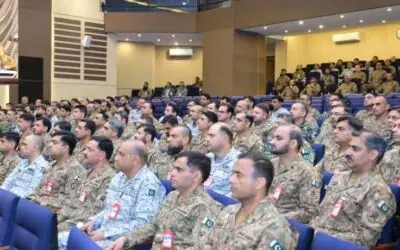

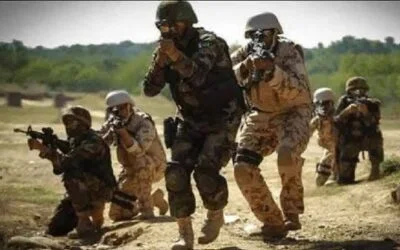


Pakistan faces a unique strategic challenge, historically and geographically encircled by formidable and consistently hostile neighbors, with its defense doctrine profoundly shaped by both external threats and internal instability. Therefore, a powerful army is the key to, and crucial for, national integrity and guarantee of peace. The central principle of this doctrine is peace through strength, the notion that a strong military force could stop war through deterrence of a possible attack, especially by a conventionally superior enemy such as India. This has seen Pakistan invest in both conventional armies and nuclear weapons to prevent any misadventure before it occurs.
According to its National Security Policy 2022-2026, Pakistan considers its defense policy as revolving around peaceful coexistence, but also believes that credible deterrence is required to make the coexistence peaceful. This perception is also held by international theories, such as realism, which posits that the world is competitive and nations must rely on their strength to survive. Therefore, the military policy of Pakistan can be called not aggressive, but a shield of sovereignty and balance in the region.
Strategic importance of Defense for Pakistan
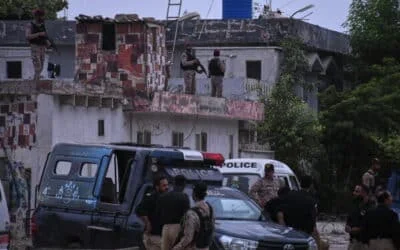
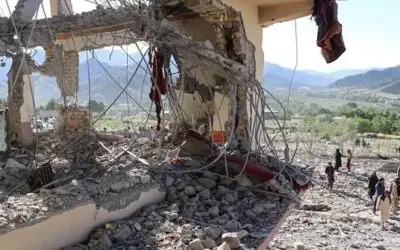
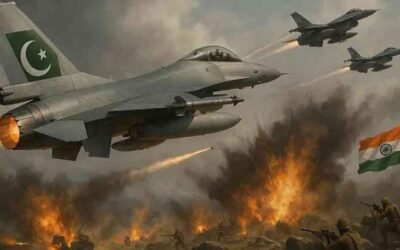
The nation has a long and hostile border with India, a relatively more powerful country in conventional terms. Since attaining independence, Pakistan and India have engaged in several wars (1947, 1965, 1971, and the Kargil conflict in 1999), and hence, security planning has been a recurrent priority. There are also some problems in the western border of Pakistan, like instability in Afghanistan, cross-border terrorism, and smuggling of illegal arms and drugs. Inwardly, Pakistan has had to contend with menaces such as terrorism and separatist forces, particularly in such areas as Balochistan and the former FATA.
All these facts lead towards the conclusion that a strong defense, and military is not an option rather a national survival concern. The military is imperative not only to defend the borders, but also to ensure internal stability and prevent external aggression. The defense posture of Pakistan is made to balance the region and stabilize South Asia. This is a dynamic environment that does not tolerate much negligence on the part of the defense, and that is why military preparedness is a major priority in the national policy of Pakistan.
Principles of the Pakistan Defense Doctrine
1. National Integrity Military Spending
Pakistan views military expenditure vital for safeguarding its national integrity. In a volatile region defined by unresolved territorial disputes and a long history of animosity with India, Pakistan views its national unity as paramount. It believes a strong, modernized military is essential to safeguarding its sovereignty and ensuring security against any external threat. The military is also involved in the provision of support to civil institutions in case of disasters and emergencies. Pakistan has always devoted a considerable budget to defense to maintain its national security.
2. Peace through Power
The defense policy of Pakistan is based on the notion that the force can maintain peace. The reasoning is that a strong country will not easily be attacked or provoked by other countries. The military force thus, becomes an instrument of peace, not a war. Credible military deterrence is one of the pillars of Pakistani strategy towards achieving peaceful coexistence with the rest of the region as stipulated in the NSP 2022-2026.
3. Deterrence of a Conventional Superior Power
The Indian military is considerably larger than Pakistan’s, to overcome this imbalance, Pakistan turns to a strategic deterrence policy, in particular its nuclear program. Following the 1998 nuclear tests conducted by the two nations, Pakistan acquired what they term as full-spectrum deterrence, which gives them the capability of responding to aggression at any level, be it conventional or nuclear. This doctrine is created to deter any enemy from a first strike. The atomic policy of Pakistan is based on the principle of preventing war by indicating that aggression will be very expensive.
Development of the Defense Posture in Pakistan:
The journey of Conventional Focus to Nuclear Deterrence
Pakistan used to depend on traditional military strength in the initial decades following independence. Nevertheless, constant conflicts with India and the increasing military asymmetry made Pakistan reconsider its approach. Pakistan started to develop its nuclear capability in 1974 after the nuclear test in India as a last resort defense. The nuclear tests conducted by the two states in 1998 officially made South Asia a nuclear zone. Since that time, the balance of power in the region shifted significantly and the defense orientation of Pakistan has changed and now has a credible nuclear deterrence.
Hybrid and Asymmetric Threat Adaptation
Pakistan has also been confronted with non-traditional threats in recent years, such as terrorism, cyberattacks, and information warfare. These are referred to as hybrid threats that utilize both military and non-military instruments to damage national stability. Following the emergence of terrorism during the 2000s, Pakistan initiated large-scale military campaigns such as Zarb-e-Azb, Radd-ul-Fasaad to regain control and minimize domestic threats. Modern times have led the military to begin enhancing its digital surveillance and cyber defense capabilities as well.
The Self-Reliance and Modernization
Pakistan has tried to modernize its military through joint ventures and acquisition of new technology. The manufacturing of the JF-17 Thunder fighter jet in collaboration with China is a significant step towards self-reliance in the production of defense. The country is also investing in missile technology, naval capability, and drone capability. The moves are meant to minimize the dependency on foreign suppliers and establish a robust local defense industry.
Civil-Military Balance and Defense Diplomacy
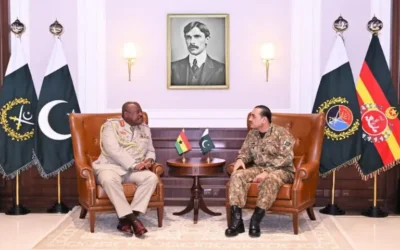
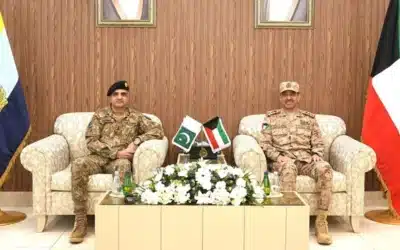
The civilian government and the military in Pakistan play significant roles in the development of the defense and the foreign policy. The institutions, such as the National Security Committee (NSC), have been created to unite both civil and military leadership to make a joint decision on matters such as defense, economy, and foreign affairs. Meanwhile, Pakistan is very active in military diplomacy to establish closer relations with other countries like China, Turkey, Saudi Arabia, and the United States through training, exchanges, and defense cooperation. Pakistan is also a member of the Shanghai Cooperation Organization (SCO), whereby it takes part in regional defense dialogues to foster peace and security in Asia.
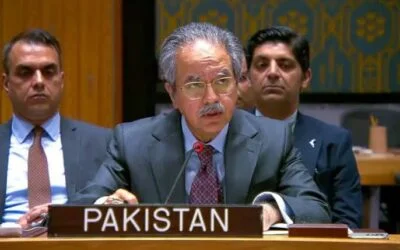
Pakistan also has an intense interest in world peace, particularly in its contributions to United Nations Peacekeeping operations. Pakistan has committed itself to international peace and stability since 1960, and more than 200,000 Pakistani soldiers have taken part in more than 40 missions in places such as Congo, Liberia, and Haiti.
Pakistan remains a responsible nuclear state despite being a nuclear power. It adheres to a minimum credible deterrence policy and has advocated a strategic restraint regime in South Asia. The Arms Control Association also states that Pakistan has come up with robust nuclear command and control to avert unauthorized use and guarantee regional stability.
Conclusion
The defense policy of Pakistan is influenced by a perception that peace, national integrity, and prevention of aggression is guaranteed by maintaining a strong and technologically advanced military. Besieged by regional tensions and historical enmities, particularly with India, Pakistan does not see military power as a means of war, but rather as the assurance of peace and survival. Its strategic alliances, policy of minimum credible deterrence, and involvement in international peacekeeping indicate its urge for stability and not dominance.