




I. Introduction: The Current Crisis and Stakes
A. Conflict Erupts: Sudan’s Despair Deepens
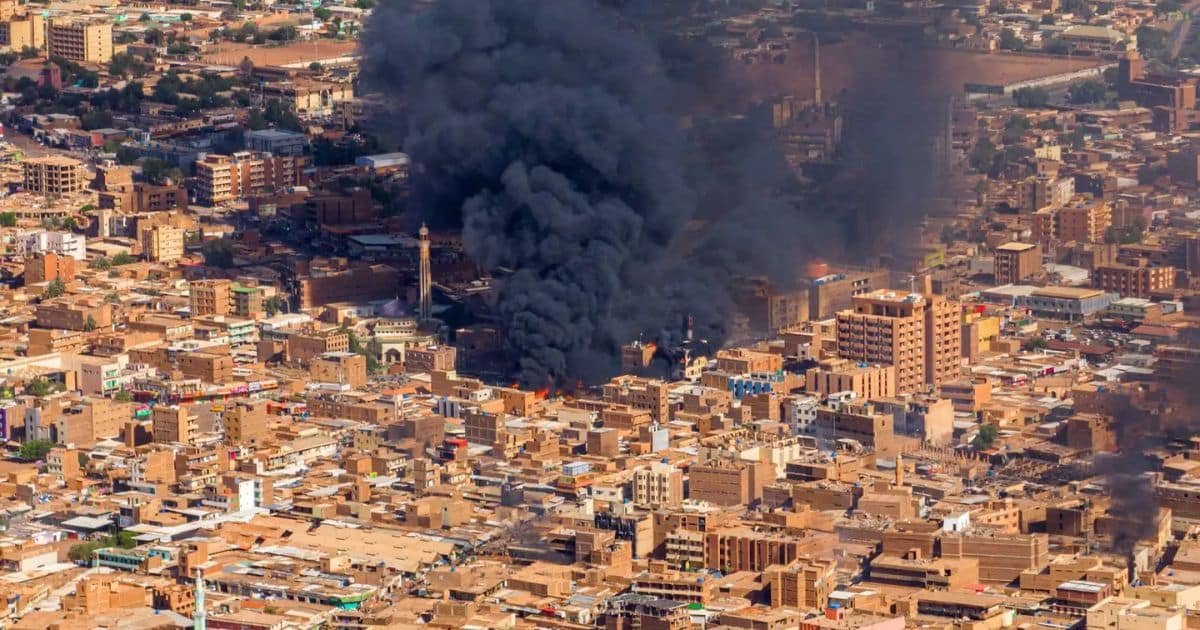
Sudan is no longer merely on the “verge” of civil war; it is deeply entrenched in a brutal internal conflict marked by a horrifying expansion of atrocities and a shifting balance of power. The fighting, which initially erupted in mid-April 2023, pits the Sudanese Armed Forces (SAF), led by General Abdel Fattah al-Burhan, against the paramilitary Rapid Support Forces (RSF), commanded by Mohamed Hamdan Dagalo, widely known as Hemedti. The battle has spread far beyond the capital, Khartoum, with the most recent and devastating shift occurring with the fall of El Fasher, the capital of North Darfur, to the RSF in late October 2025 after an 18-month siege. Reports from the UN and international bodies indicate a surge in atrocities following the city’s collapse, including mass executions, widespread sexual violence, and targeted attacks on hospitals and aid workers, plunging the country into deeper turmoil.
its not a civil war. stand with sudan!!!! pic.twitter.com/lm2XF4J6UD
— tommaso 🪽|| death’s husband (@deathsprophecy) November 3, 2025
B. Humanitarian Impact: Catastrophe on a Staggering Scale
The war has generated one of the worst humanitarian crises of the 21st century. The number of displaced persons is staggering, exceeding 12 million people, with internal displacement alone surpassing the figures seen in Ukraine. Famine has been declared in parts of the country, and the UN warns of critical food insecurity across Darfur and Kordofan. As key cities like El Fasher fall, tens of thousands of terrified civilians flee, often facing extortion, rape, and violence on perilous journeys. The total funding needed for aid has far outpaced the initial $3 billion estimate, with the international community struggling to deliver aid amidst the extreme insecurity and collapse of vital infrastructure, leaving over 30 million people in need of urgent support. Foreign embassies evacuated early in the conflict, leaving Sudanese civilians largely without international convoys, forcing millions to seek refuge in neighboring countries like Chad, South Sudan, and Egypt.
C. Geopolitical Importance: A Vital Choke Point
Sudan’s geographical location at the intersection of the Red Sea, the Horn of Africa, and North Africa grants it immense geostrategic importance. Its proximity to the Red Sea trade corridor, a vital choke point through which approximately 10% of global trade (including vast oil shipments) passes en route to the Suez Canal, ensures that faraway powers are closely watching, and actively influencing, the conflict. Access to this region, along with Sudan’s rich natural resources, has turned the internal power struggle into a potential proxy war, as foreign countries prepare to secure their long-term interests and shape the country’s next political chapter.
II. Historical Context: The Design of Dictatorship and Division
A. Origins of Conflict: Dictatorship, Resources, and Outside Interests
The current crisis is the latest iteration of Sudan’s long history of internal conflict, which predates its 1956 independence from Britain. These historical conflicts have consistently revolved around control, political representation, and the exploitation of resources, namely oil and gold, which invariably attracted outside interests seeking influence.
B. The Rise of Omar Al-Bashir
The direct roots of the current power struggle are cemented in the three-decade reign of military dictator Omar Al-Bashir. Al-Bashir seized control in a bloodless coup in the late 1980s, swiftly dismantling democratic institutions, dissolving parliament, banning political parties, and imposing strict Islamic law to consolidate his authoritarian rule.
C. Creation of the Two Armies
To secure his power base, Al-Bashir engineered a system of divided loyalty by fostering two primary military forces designed to check and balance each other:
- The Sudanese Armed Forces (SAF): The official national army, historically led by the military establishment, currently commanded by General Abdel Fattah Al-Burhan.
- The Militias/Personal Forces: A parallel military structure initially assembled in western Sudan and led by Mohamed Hamdan Dagalo (Hemedti).
D. The Rise of Hemedti and the RSF
Al-Bashir utilized Hemedti’s special unit, the notorious Janjaweed militia, to brutally suppress opposition, most infamously during the massacres in the Darfur region in the early 2000s, which led to International Criminal Court (ICC) warrants for Al-Bashir. This force was later formalized and rebranded as the Rapid Support Forces (RSF). The RSF quickly evolved beyond its military role into a massive, lucrative business empire. It became proficient in border patrolling, smuggling, and, most critically, seizing control of Sudan’s goldmines. By controlling this gold trade and commanding tens of thousands of mercenaries, Hemedti amassed significant wealth and external networks, including deals facilitating the profitable gold trade with foreign powers.
III. The Path to the Showdown (2011–2023)
A. Economic Collapse Post-Separation
A decisive factor in the collapse of the Al-Bashir regime was the formal division of the country in 2011, which saw South Sudan achieve independence. With the South taking approximately 75% of the oil reserves, Sudan’s economy spiraled. Inflation surged, food prices rose, and Al-Bashir lost the financial means necessary to maintain political patronage and bribe the military elite, creating fertile ground for dissent.
B. The 2019 Coup and Failed Transition
In 2019, massive, prolonged, and widespread protests erupted across Sudan, demanding an end to the dictatorship and a transition to democracy. In response, the two military rivals—the SAF and the RSF—temporarily united to overthrow Al-Bashir, ending his 30-year rule. However, Generals Al-Burhan (SAF) and Hemedti (RSF) quickly reneged on their promise to hand power to a civilian leader, instead maintaining military control and continuing to rule for years, often resorting to the abuse and massacre of pro-democracy protestors.
C. The Tipping Point (The Merger Condition)
The inevitable power clash was triggered by the terms of a long-awaited civilian transition deal in December 2022. General Al-Burhan agreed to return control to civilian leaders, but only under the critical condition that the RSF be fully integrated and folded into the official Sudanese Armed Forces (SAF). Hemedti, unwilling to surrender his massive, cash-generating military business empire and the independent power it afforded him, outright rejected the merger. Perceiving this ultimatum as an existential threat, Hemedti saw overthrowing the government as his only means of survival and self-preservation, directly triggering the April 2023 violence and the current civil war.
You May Like To Read: Turkish Military Plane Crashes Near Georgia-Azerbaijan Border; Rescue Efforts Underway
IV. Global Interests and the Proxy War Potential
A. Sudan’s Resources and Location
The conflict is now a high-stakes arena for foreign powers who seek continued access to Sudan’s mineral wealth (gold, zinc, silver, chromite, iron) and its strategically vital ports and potential military bases along the Red Sea.
B. Key International Players and Alignments
The Sudanese civil war is increasingly characterized by international fracture and proxy alignments, complicating any peace efforts:
- United Arab Emirates (UAE): The UAE is a massive player in the conflict, having historically purchased/refined a majority of Sudan’s gold, much of which has flowed through Hemedti’s RSF networks. While the UAE claims neutrality and attempts to mediate, evidence compiled by the UN and independent experts suggests a continued covert role in supplying the RSF. The UAE also sought security and port deals with the pre-war military government. Following the atrocities in El Fasher, the UAE faced increased global pressure and has publicly admitted to “mistakes” in its previous Sudan policy.
- Russia/Wagner Group: The Wagner Group has maintained a presence in Sudan for years, training the RSF in exchange for participation in the lucrative artisanal gold trade. While Russia maintains official channels with the SAF, reports indicate that they have supplied significant support to the RSF. Russia’s long-term strategic interest remains the establishment of a naval base on the Red Sea.
- Libya/Khalifa Haftar: Haftar, who has strong connections to Hemedti, is reported to be supporting the RSF by acting as a critical middleman, transferring fuel, supplies, and weapons across the border, often facilitating the flow of support from Russia.
- Egypt: Egypt naturally aligns with the official Sudanese Armed Forces (SAF) due to shared security and Nile river interests. However, Cairo is constrained, forced to maintain a delicate balance as its own struggling economy is heavily dependent on financial aid from the UAE, which backs the opposing faction.
C. Diplomatic Efforts and Stalled Truce Plans
Mediation efforts, notably those led by the Quad (the United States, Saudi Arabia, Egypt, and the UAE), have struggled to gain traction. The September 2025 Quad declaration proposing a three-month humanitarian truce leading to a permanent ceasefire and a nine-month transition to civilian rule was dismissed by General Al-Burhan as a “foreign agenda.” The SAF insists any truce must be conditional on the RSF withdrawing from key cities, including El Fasher, a condition the RSF rejects, leading to the collapse of the 2023 Jeddah Declaration and subsequent peace initiatives. The focus of international diplomacy remains complex and fragile, as regional rivalries continue to fuel the belligerents on the ground.
You May Like To Read: UAE aims to Finalise Trade Deal with Chad by End of 2025
V. Conclusion: The Perpetuation of a Broken System
This conflict is far more than a simple struggle between two rival generals; it has devolved into a devastating civil war with the very real potential of spiraling into a full-scale regional proxy war. The main players, Al-Burhan and Hemedti, are fundamentally incentivized to perpetuate the broken, divided system initially designed by Al-Bashir—a system that channels immense power and riches to the few military elites at the top. This predatory struggle for control and command economies has resulted in a catastrophe for the Sudanese people. Foreign powers continue to fuel the conflict by prioritizing their own economic and strategic interests (access to resources and sea lanes) over human effects. This greedy, internationalized power struggle has tragically snatched away the momentum of the budding democratic movement that successfully overthrew Al-Bashir in 2019, ensuring that the country remains divided and exploited.
The urgency of the humanitarian situation in Sudan is highlighted in this recent video from the UN: