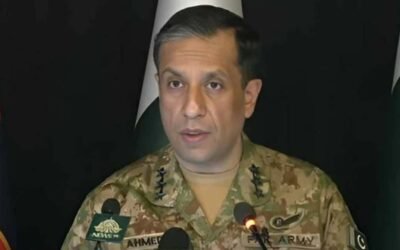




On the eve of an expansive, multi-city state funeral procession, Iran’s unified joint military command has placed its armed forces on maximum combat readiness. Major General Ali Abdollahi, commander of the powerful Khatam al-Anbiya Central Headquarters, issued a direct, uncompromising warning to the United States and Israel against attempting any kinetic or asymmetric intervention during the high-security mourning period.
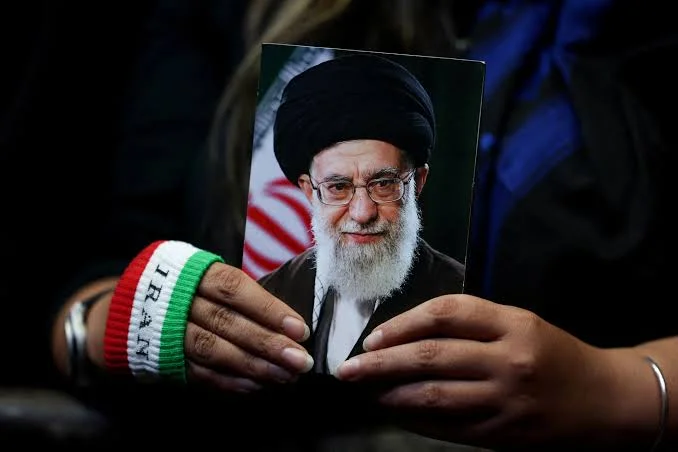
The warning underscores Tehran’s razor-thin tolerance for provocations as the nation prepares to lay to rest its former Supreme Leader, Ayatollah Ali Khamenei, who was killed in the opening airstrikes of the conflict. Abdollahi’s public intervention serves to draw a hard line around the country’s physical boundaries, signaling that Iran’s strategic deterrence remains fully operational despite the current political transition.
Iran’s top commander warns enemies against ‘miscalculations’ amid martyred Leader’s funeralhttps://t.co/ACGha7SFzN pic.twitter.com/8pdCbi7OII
— IRNA News Agency ☫ (@IrnaEnglish) July 2, 2026
The Khatam al-Anbiya Mandate: Airspace Locking and Deterrence
The operational posture adopted by Iran’s military command indicates a calculated defense strategy designed to freeze the active frontlines during the transition of power:
-
The Airspace Lockdown: To guarantee absolute security across the state funeral corridors, the head of Iran’s Civil Aviation Organisation announced sweeping, temporary airspace restrictions. These exclusions will lock down the skies over critical urban centers—including the capital, Tehran, and the holy cities of Mashhad and Qom—barring all unauthorized commercial and civilian transit to completely eliminate the risk of aerial infiltration or surprise standoff strikes.
-
The “Harsh Retaliation” Protocol: General Abdollahi’s warning explicitly targeted what he termed the “enemies of Iran, especially the U.S. and the Zionist regime,” warning them against any geopolitical miscalculation. Military analysts note that the Khatam al-Anbiya Central Headquarters coordinates joint operations between the regular armed forces (Artesh) and the Islamic Revolutionary Guard Corps (IRGC). By invoking this combined operational command, Tehran is signaling that its retaliatory infrastructure—including deep-silo ballistic missile batteries and forward-deployed drone swarms—is locked, loaded, and fully authorized to engage instantly.
The Succession Feud: Israel’s Lethal Rhetoric Meets the Islamabad MoU
The military’s high-alert status is a direct reaction to a dangerous escalation in regional rhetoric. Earlier this week, Israeli Defence Minister Israel Katz severely strained the fragile ceasefire by publicly stating that Iran’s newly appointed Supreme Leader, Ayatollah Mojtaba Khamenei, is “marked for death.” Tel Aviv’s open threat to target the head of state represents a deliberate attempt to test the enforcement capacity of the international mediators currently managing the truce.
The Iranian political apparatus has met this threat with a coordinated counter-offensive that anchors its defense squarely within international frameworks. Foreign Minister Abbas Araghchi delivered an authoritative rebuttal, noting that under the strict, public terms of the Pakistan-brokered Islamabad Memorandum of Understanding (MoU), the United States is legally bound to restrain and control Israeli kinetic actions. Araghchi stated flatly that if Washington fails to “muzzle its pets” in Tel Aviv, the Islamic Republic will deliver an immediate, powerful response, making it clear that any strike against Iran’s senior leadership will be treated as an exit from the ceasefire.
Conclusion
The upcoming six-day funeral procession—commencing July 4 in Tehran, transitioning through Qom and secondary ceremonies in Iraq, and concluding with a final burial on July 9 in Mashhad—presents an incredibly complex security challenge.
By executing a complete domestic security clampdown while simultaneously using the diplomatic channels of the Islamabad MoU to trap Washington into a defensive position, Tehran is attempting to navigate its most vulnerable political window without showing a single seam of weakness. As the technical negotiators in Doha continue their quiet talks over unfreezing oil funds and regulating shipping lanes in the Strait of Hormuz, the armed forces on the ground have made one reality absolutely plain: any attempt to disrupt the somber transition of power will trigger an immediate, unconstrained regional escalation.