




The escalating geopolitical friction between Islamabad and Kabul has formally expanded into a complex, trilateral diplomatic standoff involving New Delhi. Pakistan’s transition toward a hardened, security-centered doctrine along its western border—crystallized by the enforcement of Operation Ghazab lil-Haq—is no longer just a bilateral dispute over cross-border sanctuary management. It has become a core flashpoint for regional lawfare, narrative control, and proactive national defense.
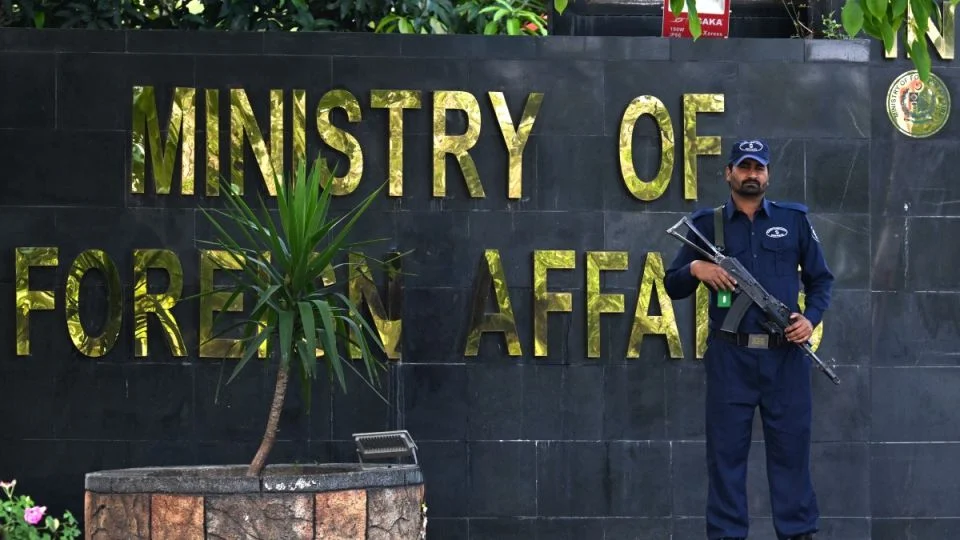
This shift was brought into sharp focus on Wednesday when Foreign Office (FO) spokesperson Tahir Andrabi issued a blistering rejection of what Islamabad termed a “preposterous and baseless statement” by the Indian Ministry of External Affairs. The Indian government had formally condemned Pakistan’s latest cross-border military interventions, characterizing them as a “blatant act of aggression” and a “direct threat” to regional stability. In response, the Foreign Office delivered an authoritative rebuttal that signals an institutional refusal to tolerate external interference in Pakistan’s sovereign counter-terrorism mandate.
PR No. 158/2026
Statement by the Spokesperson
🔗⬇️ pic.twitter.com/rg73rPGrWd
— Ministry of Foreign Affairs – Pakistan (@ForeignOfficePk) July 1, 2026
The Catalyst: The Karachi Rangers Assault and Cross-Border Retaliation
The latest cycle of kinetic friction underscores a critical reality within Pakistan’s defense circles: urban security challenges in the south are directly linked to the unchecked terror infrastructure operating on Afghan soil.
-
The Urban Strike: On Saturday night, heavily armed militants belonging to Jamaat-ul-Ahrar—a lethal splinter faction of the banned Tehrik-i-Taliban Pakistan (TTP)—executed a brazen, coordinated assault on the local Bhittai Wing headquarters of the Pakistan Rangers Sindh in Karachi’s densely populated Gulistan-i-Jauhar area. The attackers breached the perimeter by ramming the main gate with a vehicle before storming the compound with automatic weapons and hand grenades. While security forces successfully eliminated six terrorists and captured one alive during an intense 90-minute gun battle, the operation came at the cost of martyred security personnel.
-
The Proactive Response: Operating under the strategic framework established since the launch of Operation Ghazab lil-Haq on February 26, Pakistan’s security apparatus wasted no time on fruitless diplomatic appeals to Kabul. Within 24 hours of the Karachi attack, Pakistani forces executed a high-intensity, intelligence-based ground operation coupled with calibrated, deep-penetration strikes along the Pakistan-Afghan border corridor. The operation successfully neutralized 25 heavily armed terrorists and dismantled their immediate logistical hideouts and safe havens.
The Diplomatic Battleground: Dismantling the “Regional Spoiler” Narrative
The subsequent diplomatic sparring between Islamabad and New Delhi exposes the broader strategic currents shaping South Asian geopolitics. By executing precise, targeted strikes inside the Afghan border corridor, Pakistan is actively rewriting the rules of engagement, a move that New Delhi has attempted to frame as a violation of regional peace.
The Foreign Office’s response systematically dismantled this narrative on multiple fronts:
1. Legitimacy Under International Law
The Foreign Office firmly established that the military’s actions are entirely “legitimate, targeted, and proportionate.” Under international law, a state retains the inherent right to defend its citizenry and territorial integrity when an adjacent state is either unable or unwilling to prevent its territory from being utilized as a launchpad for transnational terrorism. By framing the operations as a lawful exercise of national defense, Islamabad has signaled to both Kabul and international monitors that its patience with cross-border sanctuaries has permanently expired.
2. Exposing the Subversive Nexus
A central pillar of Pakistan’s updated strategic narrative is the explicit accusation that India is acting as a “regional spoiler.” The Foreign Office openly asserted that New Delhi has historically interfered with and undermined the sovereignty of its neighbors in direct contravention of the UN Charter. More critically, Islamabad accused India of actively aiding, financing, and sponsoring terrorist groups operating from Afghan soil to destabilize Pakistan. By linking Indian diplomatic protests to the infrastructure of groups like the TTP and Jamaat-ul-Ahrar, Pakistan is highlighting a calculated cross-border proxy network designed to undermine its domestic security.
3. The Counter-Charge of Lawfare
In a direct diplomatic counter-offensive, the spokesperson contrasted Pakistan’s targeted, law-abiding counter-terrorism actions with India’s own systemic violations of international norms. The Foreign Office pointed directly to New Delhi’s continuous suppression of the right to self-determination in Indian Illegally Occupied Jammu and Kashmir (IIOJK), noting that India remains in open violation of relevant UN Security Council resolutions while actively ignoring international sanctions regimes on Afghan soil.
Conclusion: Enforcing the Sovereign Mandate
The strategic landscape of mid-2026 confirms that Pakistan’s defense policy has moved past the era of passive containment. The institutional understanding that developed after Deputy Prime Minister Ishaq Dar’s April 2025 visit to Kabul has hardened into an ironclad doctrine: diplomatic engagement without raw leverage is entirely ineffective against the Afghan Taliban.
By swiftly responding to the Karachi Rangers attack with decisive kinetic actions along the border, and subsequently shutting down Indian diplomatic pushback, Islamabad has demonstrated a total unified command. Pakistan will continue to employ all appropriate military, economic, and legal measures to eliminate hostile infrastructure along its borders. The message to both Kabul and New Delhi is unambiguous: Pakistan’s national security is an absolute red line, and the state possesses both the capability and the unyielding sovereign will to defend it.