



The strategic equilibrium of South Asia faces an unprecedented crisis as the long-standing legal framework governing transboundary water resources becomes the primary theater of geopolitical conflict. Following a brief military clash in May 2025 and India’s subsequent unilateral announcement holding the 1960 Indus Waters Treaty (IWT) in abeyance, Pakistan has systematically elevated the dispute to an absolute national security priority.
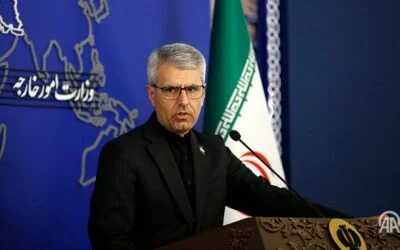
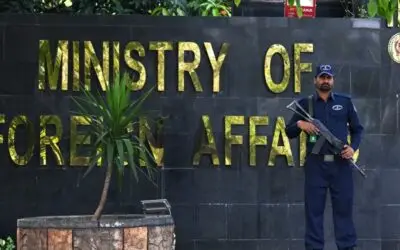
This institutional position was forcefully articulated by Deputy Prime Minister and Foreign Minister Mohammad Ishaq Dar at the Jinnah Convention Centre in Islamabad. Addressing an international gathering of legal and hydrological experts, FM Dar issued a stern warning to New Delhi against any practical attempt to alter or restrict the flow of the western rivers. He made it clear that any attempt to deprive Pakistan of its lawful riverine rights would trigger severe consequences for both regional peace and the broader global legal architecture.
Pakistan says India cannot unilaterally suspend the Indus Waters Treaty, vows to respond if New Delhi blocks Pakistan’s share of river water. https://t.co/1jj7nH4RGj
— Arab News Pakistan (@arabnewspk) June 30, 2026
The Mechanics of Hydro-Weaponization
Pakistan’s shift toward a highly protective defensive posture is a direct response to a series of escalating structural and rhetorical moves by India. The state’s current doctrine addresses this hostile strategy across three distinct areas:
1. The Red Line of National Security
Pakistan’s defense and civilian leadership have achieved total unity on the issue of water rights. The National Security Committee—the state’s highest decision-making body comprising both top political leaders and military chiefs—has unanimously declared that any practical attempt by India to divert western river flows, stop their water, or systematically reduce Pakistan’s legally guaranteed rights will be treated as an explicit act of war. This clear baseline removes any ambiguity about the consequences of physical interference with downstream flows, establishing water security as a threshold protected by the full weight of Pakistan’s military deterrence.
2. Legal Precedents and Tactical Interventions
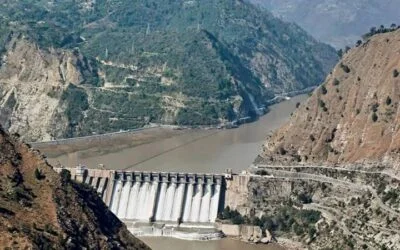
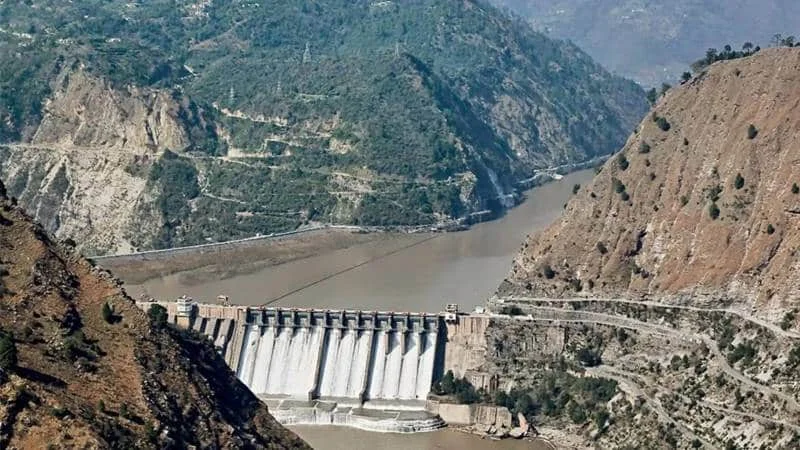
The diplomatic crisis is not merely a hypothetical debate; it is driven by active operational friction along the river basins. Since the treaty was held in abeyance in April 2025 following the Pahalgam incident, Islamabad has closely documented a highly concerning pattern of behavior by Indian authorities. This includes abrupt, unannounced variations in the flow of the vital Chenab and Jhelum Rivers, alongside a rapid expansion of upstream infrastructure capable of actively regulating, holding back, or suddenly releasing transboundary flows without bilateral coordination.
By taking these steps, India is setting a dangerous international precedent that undermines the foundational principle of pacta sunt servanda (agreements must be kept). As FM Dar noted, if foundational international treaties can be cast aside whenever they become politically inconvenient, global confidence in the international legal order collapses entirely.
3. Existential Dependency and Economic Survival
The defense of the Indus basin is an absolute necessity for Pakistan’s survival, as the river system serves as the primary life-support mechanism for over 250 million citizens. The country’s entire agricultural engine, national food security, domestic energy production, and broader industrial stability depend directly on the uninterrupted, natural flow of the three designated western rivers.
Because half of the country’s population relies on agriculture for their livelihood and a quarter of the total economy is tied directly to agricultural output, any external control over these waterways gives a hostile neighbor direct, existential leverage over Pakistan’s internal stability.
Conclusion: The Multilateral Lawfare Campaign
As India continues its attempt to insulate water rights from broader diplomatic engagements, Pakistan is aggressively utilizing all available international legal and diplomatic channels to safeguard its interests. Beyond presenting its case to the International Court of Arbitration—which recently rejected India’s objections to its jurisdiction—Islamabad has formally written to the United Nations Security Council (UNSC) demanding swift intervention against unilateral river alterations.
Pakistan’s strategic establishment remains fully committed to peaceful resolution, dialogue, and established treaty mechanisms. However, by establishing itself as a proactive, stabilizing actor in regional security—a role recently noted by international envoys at the Oslo Forum—the state has made its boundaries unmistakably clear. Pakistan does not seek military conflict, but it stands fully prepared to defend its legal, historical, and sovereign rights over the Indus basin against any external encroachment.