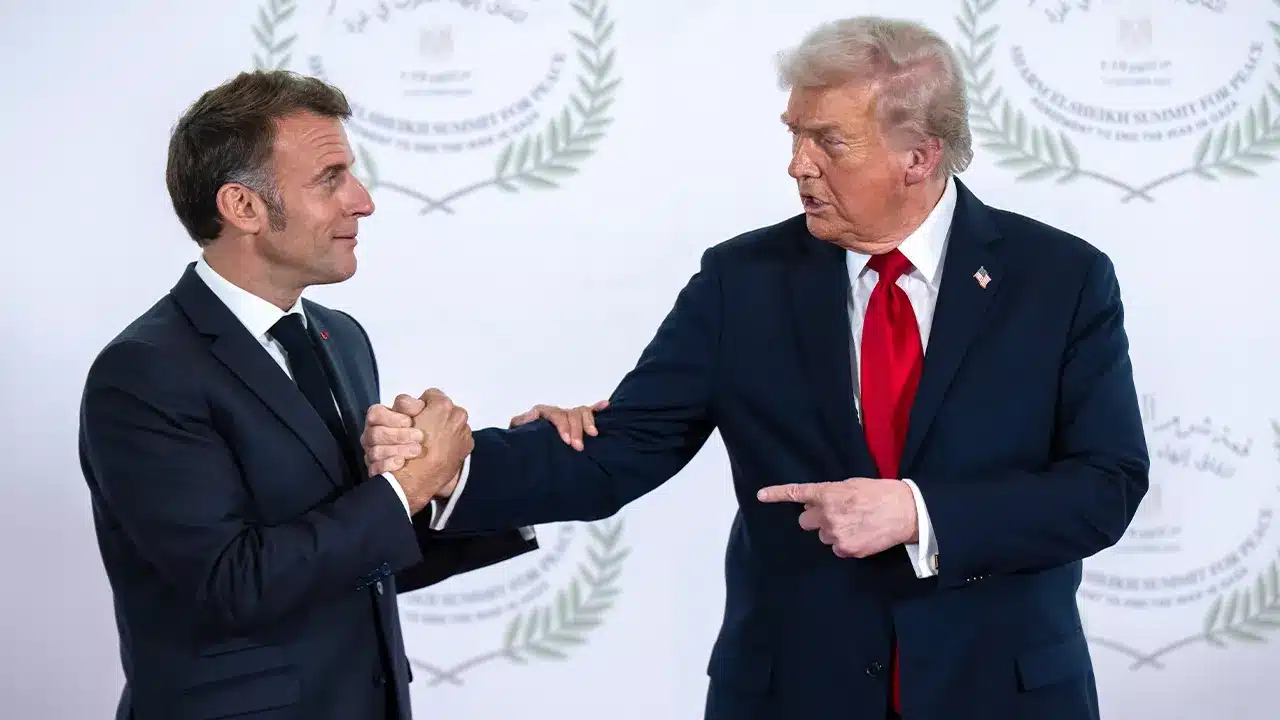





French President Emmanuel Macron pushed back Thursday against US President Donald Trump’s call for allies to militarily reopen the Strait of Hormuz, describing any forced operation as unrealistic and highly dangerous.
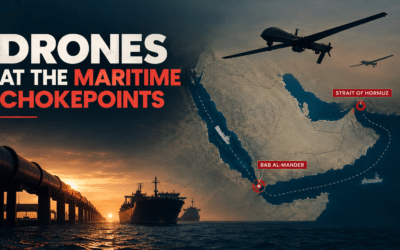
Speaking during a visit to South Korea, Macron said using military force to clear the vital waterway — which carries about one-fifth of the world’s oil and LNG supplies — would take “forever” and expose ships and navies to attacks from Iran’s Revolutionary Guards and ballistic missiles.
“This was never the option we have supported because it is unrealistic,” Macron told reporters. He stressed that reopening the strait can only happen “in consultation with Iran” once hostilities ease, as part of a broader European effort to build a coalition for free navigation after a ceasefire.
The comments come one day after Trump, in his prime-time address to the nation, urged countries dependent on Gulf oil to “build up some delayed courage” and take the lead in securing the strait themselves. Trump has grown increasingly frustrated with NATO allies for not backing the US-Israeli military campaign more actively.
Macron also described Trump’s personal jabs at him and his wife Brigitte as “neither elegant nor commensurate” with the gravity of the situation, while refusing to comment in detail on an operation the US launched unilaterally with Israel.
نوع جدیدی از موشک بالستیک آمریکا (PrSM) که به عنوان استفاده آزمایشی، برای اولین بار در حمله به ورزشگاهی در شهر #لامرد فارس در تاریخ ۹ اسفند ۱۴۰۴ تست شد، بالای هدف منفجر شده و هزاران ترکش (گلولههای تنگستن) پخش میکند تا تلفات انسانی را به حداکثر برساند.
در اثر این جنایت حداقل ۲۱… https://t.co/tHr7g6ghSX
— Esmaeil Baqaei (@IRIMFA_SPOX) April 2, 2026
Iran Issues Stern Warnings Against Ground Invasion
On the same day, Iran’s army chief delivered a blunt warning to Washington. Amir Hatami said that if the US attempts any ground operation inside Iran, “no enemy troops should survive.”
“In the event the enemy attempts a ground operation, no one should survive,” Hatami stated, according to Iranian state media. He ordered Iranian forces to monitor US movements “moment by moment” and prepare decisive countermeasures.
Iranian officials continue to reject US claims of near-victory. A spokesperson for Iran’s Khatam al-Anbiya Central Headquarters dismissed American and Israeli assessments of Iran’s military capabilities as incomplete and ignorant, warning that Tehran’s strategic production continues in hidden locations and that future attacks will be “stronger, wider, and more destructive.”
Iran also launched fresh missile barrages toward northern Israel on Thursday, with air raid sirens sounding across the region.
Foreign Ministry declared on Thursday that Iran will take “necessary actions” to prevent the Strait of Hormuz from being exploited for “military aggression” against the country, emphasizing that the measures are fully aligned with international law. https://t.co/57OqEwht3L
— Tasnim News Agency (@Tasnimnews_EN) April 2, 2026
Civilian Casualties and Accusations of War Crimes
Iran’s Foreign Ministry spokesperson Esmaeil Baqaei accused the US of committing a “despicable war crime” in the early days of the conflict. He claimed a US Precision Strike Missile (PrSM) hit a crowded sports hall in Lamerd, Fars province, on February 28, killing 21 civilians, including teenagers. Visual evidence analyzed by international media has linked the strike to a US short-range ballistic missile near a military site.
War Enters Fifth Week with Growing Global Impact
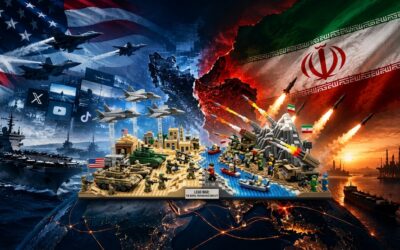
The US-Israel campaign against Iran began on February 28 and has now stretched into its fifth week. Thousands have been killed across the Middle East, with significant displacement in Lebanon (over 1 million people, or 18% of the population) and rising economic pain worldwide due to the closure of the Strait of Hormuz.
Trump’s Wednesday night speech offered no major new announcements. He claimed the US had largely destroyed Iran’s navy, air force, and missile capabilities, and that the war would end “very fast” — possibly in another two to three weeks. However, he provided no clear plan for ending the conflict or resolving the Hormuz crisis, beyond saying the strait would open “naturally” once the war concludes.
Public support in the US continues to wane, with a recent Reuters/Ipsos poll showing 60% disapproval of the war and 66% wanting Washington to exit quickly, even if not all goals are achieved.
As oil prices remain elevated and gas prices in the US top $4 per gallon, allies like France are emphasizing diplomacy over escalation, while Iran signals it is prepared for a prolonged fight.
The coming days will be critical as the international community watches whether the conflict de-escalates or spirals further with threats of deeper strikes on Iranian infrastructure.