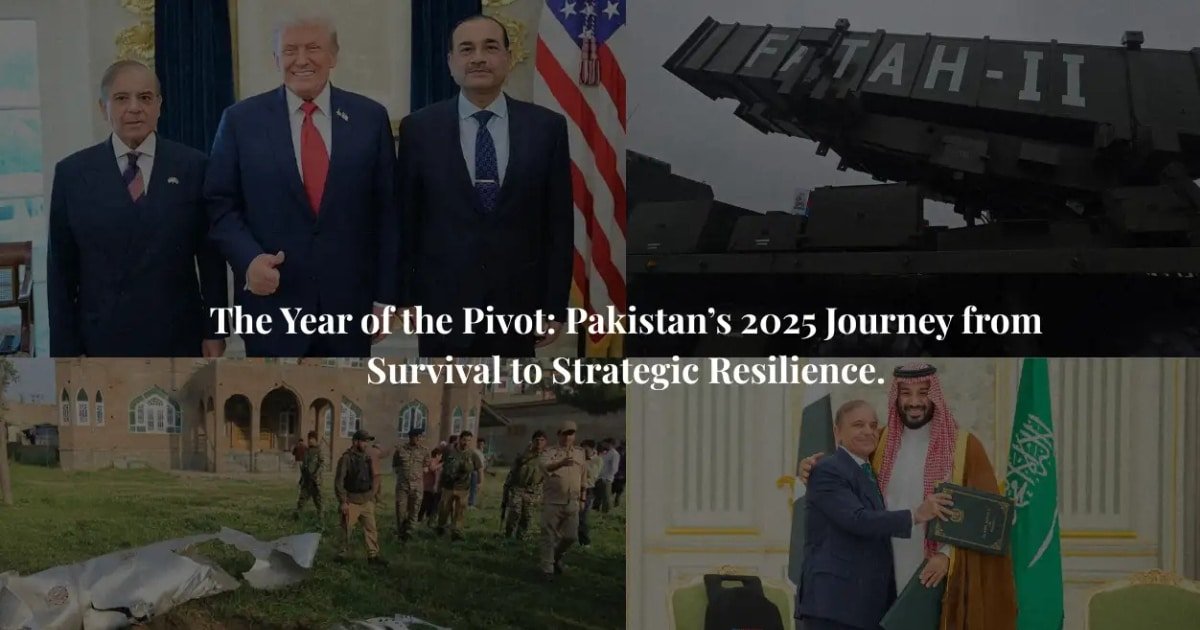


By the close of 2025, Pakistan’s national story had shifted from endurance to intent. After years defined by stopgap measures and crisis containment, the country embarked on a series of deliberate “strategic pivots” that recalibrated its economy, security posture, and global engagement. These moves were neither linear nor uncontested. Political polarization at home and a sharp military escalation with India in May tested state capacity and public confidence. Yet the year concluded with tangible gains: macroeconomic stabilization, credible deterrence modernization, and a clearer national vision anchored in technology and governance reform.
From Triage to Strategy
For much of the early 2020s, Pakistan’s policymaking resembled triage, addressing immediate threats to fiscal solvency, energy supply, and internal security. In 2025, that pattern broke. A confluence of decisions, privatizing legacy state assets, formalizing regional defense arrangements, and integrating frontier technologies into national planning signaled a shift from survival to strategic resilience. This transformation did not imply the absence of risk; rather, it reflected a willingness to absorb short-term pain to secure long-term credibility.
The IMF Anchor, and Macroeconomic Turnaround
The backbone of Pakistan’s economic pivot in 2025 was policy discipline under the International Monetary Fund’s Extended Fund Facility (EFF). The successful completion of the Second Review in December served as an external validation of reforms that had been politically costly but economically necessary. Inflation, which had once surged into destabilizing territory, averaged 4.5% over the year, a dramatic recovery that restored purchasing power and stabilized expectations.
This turnaround was not accidental. Fiscal consolidation, a market-determined exchange rate, and tighter monetary policy curbed volatility. While growth remained modest, the restoration of price stability and foreign exchange buffers allowed policymakers to plan beyond quarterly firefighting. For the first time in years, the economy was no longer the sole constraint on national ambition.
The May 2025 Border Escalation
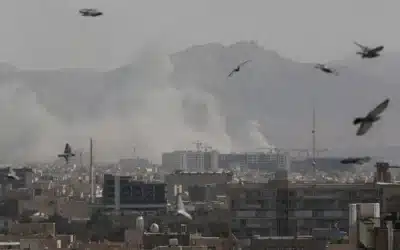
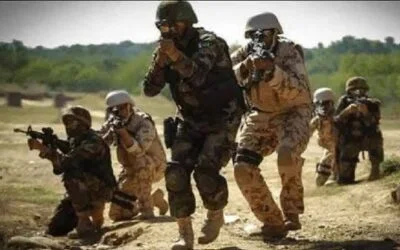
Pakistan’s strategic recalibration was tested in May 2025 during a four-day aerial and border clash with India. The confrontation, while contained, was intense enough to validate years of modernization efforts. The operational performance of the JF-17 Block III, integrated with advanced avionics and networked warfare capabilities, demonstrated credible air deterrence. Unmanned systems further underscored the changing character of regional conflict.
The crisis forced a rethink of deterrence stability in South Asia. It highlighted how technological parity, rather than numerical superiority, now shapes escalation dynamics. For Pakistan, the episode reinforced the logic of focused modernization rather than expansive force structures.
Pakistan shot down an Indian Rafale jet, a French intelligence official tells CNN, adding Paris is investigating whether Pakistan downed more of European-origin fighter aircraft during dogfight with India
🔗 https://t.co/cuf1dIwNJl pic.twitter.com/Zevre3IF6Y— TRT World (@trtworld) May 7, 2025
The Privatization Breakthrough: Selling PIA
The most symbolic and controversial economic decision of the year was the privatization of Pakistan International Airlines (PIA). Loss-making for decades and emblematic of state inefficiency, PIA’s sale marked the first major privatization in nearly twenty years. The transaction signaled a philosophical shift: the state would no longer underwrite perpetual inefficiency in the name of sovereignty.
Beyond balance sheets, the sale altered investor perceptions. It demonstrated that Pakistan could execute complex reforms despite political resistance. The move also freed fiscal space, allowing public resources to be redirected toward social protection and infrastructure rather than chronic bailouts. In policy terms, PIA’s privatization was less about aviation and more about credibility.
Congratulations to the winning consortium for the PIA bid, led by @ArifHabibLtd
Official updates will be shared through authorized channels.
🌐 https://t.co/84NmfWfgZb#MinistryOfPrivatisation #PIA #Privatisation #Transparency #GoodGovernance #Pakistan #Aviation pic.twitter.com/UJjnAu6BvR— Ministry of Privatisation, Government of Pakistan (@PrivComPakistan) December 23, 2025
Foreign Investment, and the “SIFC Effect”
Complementing domestic reform was a recalibration of foreign investment strategy under the Special Investment Facilitation Council (SIFC). The “SIFC effect” became evident as Saudi Arabia pledged billions of dollars across energy and mineral sectors, anchoring long-term projects rather than short-term inflows. This alignment reflected trust in Pakistan’s reform trajectory and governance mechanisms.
Simultaneously, the launch of CPEC 2.0 marked an evolution in Pakistan-China economic cooperation. Moving beyond roads and power plants, the new phase emphasized industrial zones, agricultural productivity, and value-added exports. The shift addressed a longstanding critique of infrastructure-heavy models by focusing on employment generation and export competitiveness.
Institutional Reform: The Army Rocket Force Command
One of the year’s most consequential defense reforms was the establishment of the Army Rocket Force Command (ARFC). Designed to consolidate conventional missile capabilities under a unified command, the ARFC aimed to enhance command-and-control efficiency and signaling clarity. This institutional shift reduced ambiguity in escalation ladders and strengthened conventional deterrence without altering strategic nuclear doctrines.
The successful testing of the Fateh-4 cruise missile further underscored this evolution. Precision, survivability, and conventional reach became central to Pakistan’s deterrence calculus, reflecting lessons drawn from contemporary conflicts worldwide.
Pakistan just announced the creation of a new ‘Army Rocket Force Command.’
This isn’t just about bigger rockets. It’s a fundamental shift in South Asian military doctrine that could change the rules of the next conflict. Here’s why it matters. 🧵#Pakistan #ARFC #Military pic.twitter.com/kprmllj8w8
— Quwa (@QuwaGroup) August 14, 2025
Defense Exports, and Industrial Confidence
Defense modernization in 2025 was not confined to domestic readiness. A landmark agreement to export 40 JF-17 Block III aircraft to Azerbaijan marked Pakistan’s arrival as a credible competitor in the global arms market. Beyond revenue, the deal validated Pakistan’s defense-industrial ecosystem design, production, and sustainment.
#BREAKING: Azerbaijan is reportedly increasing its order of JF-17 Block-lll from 16 to 40 units, worth $4.2 Billion. pic.twitter.com/HMMLimDnmb
— Ironclad (@NavCom24) May 24, 2025
Exports also carried diplomatic weight. They deepened strategic ties and positioned Pakistan as a supplier of cost-effective, modern platforms for mid-sized militaries. In an era of constrained defense budgets globally, this niche proved strategically valuable.
The Middle East Pivot
Pakistan’s foreign policy in 2025 was defined by a decisive “Middle East Pivot.” The formalization of a mutual defense pact with Saudi Arabia institutionalized a long-standing security relationship, moving it from ad hoc cooperation to structured commitment. This agreement aligned Pakistan more closely with Gulf security architectures and elevated its role as a security provider in the Muslim world.
A moment archived in world history!
🇸🇦#SaudiArabia and the only nuclear weapon armed Muslim country of🇵🇰#Pakistan have signed the Strategic Mutual Defense Agreement (SMDA) in Riyadh.
“Any aggression against either country shall be considered an aggression against both”.👀 pic.twitter.com/yrm20ZH5mb
— Shen Shiwei 沈诗伟 (@shen_shiwei) September 18, 2025
The pivot was further reinforced by a $4 billion arms deal with Libya, expanding Pakistan’s defense diplomacy beyond traditional partners. These engagements diversified Islamabad’s strategic options and reduced overreliance on any single bloc.
BIG: Pakistan has struck a $4–4.6 billion arms deal with eastern Libya’s Libyan National Army, including JF-17 fighter jets and other air, land, and naval equipment.
The deal, spread over about 2.5 years, would be one of Pakistan’s largest-ever weapons exports.
Source: Reuters pic.twitter.com/K80rJSm07c
— Clash Report (@clashreport) December 22, 2025
A Tougher Stance on Afghanistan
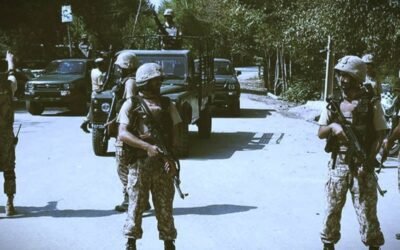
Perhaps the most consequential shift was Pakistan’s recalibrated policy toward Afghanistan. Moving away from accommodation, Islamabad adopted sustained pressure to compel action against the Tehrik-i-Taliban Pakistan (TTP). Enhanced border security measures and diplomatic signaling underscored that internal security would no longer be subordinated to regional ambiguity.
This harder line carried risks, including friction with Kabul, but it reflected a broader principle of sovereignty-first policymaking. Securing the western border became integral to internal stabilization and investor confidence.
Diplomatic Wins at the UN, and Beyond
Pakistan’s diplomatic posture in 2025 yielded tangible dividends. Its tenure at the United Nations was marked by successful advocacy, including a report that identified India as the aggressor in specific border incidents. While such outcomes rarely alter ground realities overnight, they shape narratives and constrain unilateral actions.
Relations with the United States also warmed, anchored less in security dependence and more in cooperation on information technology and climate finance. This rebalancing reduced transactional volatility and opened avenues for long-term engagement in human capital and sustainability.
The Digital Leap: AI, and Quantum Ambitions
At the heart of Pakistan’s long-term strategy in 2025 was the “Uraan Pakistan” vision, a framework that linked governance reform with technological leapfrogging. The launch of the “AI Rise Pakistan” initiative signaled intent to integrate artificial intelligence into public services, industry, and defense planning.
Celebrating Quaid’s Day and the launch of the 150th Anniversary Celebrations of Quaid-e-Azam Muhammad Ali Jinnah!
Under the Vision of URAAN Pakistan, we rise with Unity, Faith, and Discipline toward a bright future. 🇵🇰 #QuaidDay #UraanPakistan #Jinnah150 pic.twitter.com/UONmkIaLDw
— Ministry of Planning and Development (@PlanComPakistan) December 25, 2025
The announcement of three Centers of Excellence for Quantum Computing and Nanotechnology in December further underscored this ambition. While these initiatives were nascent, they represented a strategic bet: that future competitiveness would be determined by mastery of frontier technologies rather than resource endowments alone.
At the inauguration of #AI_Rise_Expo2025, Hon Federal Minister Prof. Ahsan Iqbal outlined Pakistan’s national roadmap for artificial intelligence, quantum technology, advanced manufacturing and the digital economy.
The roadmap, framed under the URAAN Pakistan vision and the… pic.twitter.com/ILjxmAEld4
— Ministry of Planning and Development (@PlanComPakistan) December 26, 2025
Judicial Reform, and Institutional Efficiency
Governance reform extended beyond technology. Under Chief Justice Aalia Neelum, the Lahore High Court achieved a record-breaking clearance of 166,000 pending cases. This efficiency drive addressed a chronic bottleneck in Pakistan’s legal system, improving access to justice and investor confidence.
Judicial reform is often overlooked in strategic assessments, yet it directly affects economic performance and social trust. The 2025 experience demonstrated that institutional leadership could yield measurable gains even within constrained systems.
Infrastructure Milestones: Securing the Future
Physical infrastructure remained a pillar of resilience. Progress on the ML-1 Railway project promised to modernize freight and passenger transport, reducing logistics costs and integrating markets. Meanwhile, the nearing completion of the Diamer Basha Dam addressed two existential challenges: water security and energy supply.
ML-1, ML-3 upgrades and Thar coal link planned to expand cargo capacity.
Read more at:https://t.co/2vGvRP0pSZ pic.twitter.com/nUxCN1hr3P— Profit (@Profitpk) December 29, 2025
These projects were not merely developmental; they were strategic. In a climate-stressed region, control over water and energy translates into stability, productivity, and political legitimacy.
Conclusion: Credibility Reclaimed
By the end of 2025, Pakistan had not resolved all of its longstanding challenges, nor did its leadership suggest that the country had reached a point of comfort or permanence. Political polarization continued to shape public discourse, often slowing consensus-building and complicating reform. Social inequities across income, access to services, and regional development remained deeply rooted. The regional security environment, particularly in South Asia and along the western border, was still volatile and prone to sudden escalation. Yet despite these constraints, 2025 represented a clear break from the patterns that had defined much of the previous decade. It was a year in which Pakistan moved away from reactive governance and toward a more deliberate, strategic approach to national decision-making.
What distinguished 2025 was not the absence of crisis, but the manner in which crises were absorbed without derailing long-term priorities. Economic stabilization, anchored by politically difficult reforms and external discipline, restored a degree of predictability that had been missing for years. Inflation control, fiscal consolidation, and renewed investor confidence did not transform Pakistan into a high-growth economy overnight, but they created space for planning, for institutional reform, and for strategic choice. This breathing room allowed the state to look beyond emergency financing and begin reimagining its economic role as an enabler rather than a permanent rescuer.
In the security domain, the pressures of the May escalation with India tested Pakistan’s military readiness and strategic restraint simultaneously. The episode validated years of targeted modernization while reinforcing the importance of credible conventional deterrence in preventing uncontrolled escalation. Rather than triggering adventurism, the crisis sharpened institutional focus, leading to clearer command structures and a more disciplined articulation of deterrence. Pakistan emerged from the episode not stronger because of conflict, but more confident in its capacity to manage it.
Foreign policy in 2025 reflected a similar recalibration. Pakistan sought to diversify partnerships, deepen ties where mutual interests converged, and assert its interests with greater clarity. The Middle East pivot, a tougher stance on Afghanistan, and renewed engagement with global institutions signaled a country less willing to drift and more prepared to define its role. Diplomacy was increasingly used not just to respond, but to shape narratives and outcomes.
You May Like To Read: Houthi Leader Warns Israeli Presence in Somaliland Will Be Targeted
Perhaps most importantly, governance and technology initiatives pointed toward the future rather than the past. Judicial efficiency drives, digital governance reforms, and investments in artificial intelligence, quantum computing, and critical infrastructure suggested a recognition that resilience in the modern era is as much institutional and technological as it is military or financial. These efforts were uneven and incomplete, but they marked an essential shift in mindset.
The “Year of the Pivot” did not guarantee success, nor did it eliminate risk. What it did accomplish was more fundamental: it restored choice. In a region defined by structural constraints, historical rivalries, and economic vulnerability, the ability to choose to prioritize, sequence, and commit carries strategic weight. By reclaiming that agency in 2025, Pakistan repositioned itself not as a state merely reacting to pressure, but as one cautiously shaping its own trajectory. That achievement, measured and imperfect, was nonetheless meaningful.
Check out our latest video: