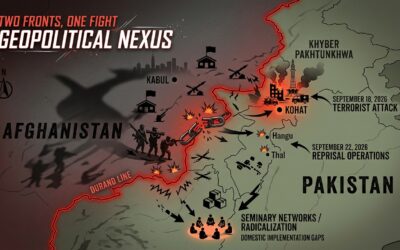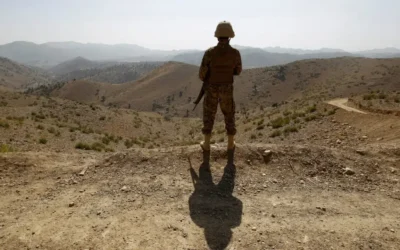





The Fitna-al-Khawarij (FAK) has transformed from a centralized militant network into a decentralized franchise that thrives on ideology, local grievances, and cross-border sanctuaries. Emerging from the turbulence of post-2001 jihadist politics, the group framed its violence as a defensive war to establish a sharia system in Pakistan. Over time, smaller factions and even criminal groups adopted its brand, amplifying its reach while blurring lines of accountability. This decentralization makes counter-terrorism far more difficult: the FAK is no longer just an organization but an idea, embedded locally, regionally, and ideologically across Pakistan and Afghanistan.
You May Like To Read: The Khawarij’s Internal Wars: Exposing the FAK’s Brutal Suppression of Dissent, and Factional Infighting
The Problem of Ideological Legitimacy
The Fitna-al-Khawarij (FAK) is not simply a militant group but a product of the intra-jihadi politics that unfolded after the U.S. invasion of Afghanistan in 2001. From the outset, the FAK claimed that its struggle was not mere violence but a mission to establish an Islamic political system in Pakistan. By presenting its campaign as a defensive war against the Pakistani military’s operations, the group framed itself as the local counterpart to the Afghan Taliban, aspiring to create a sharia-based state while branding Pakistan’s rulers as “American stooges.” This narrative gave them a degree of legitimacy among certain segments, despite their brutal methods.
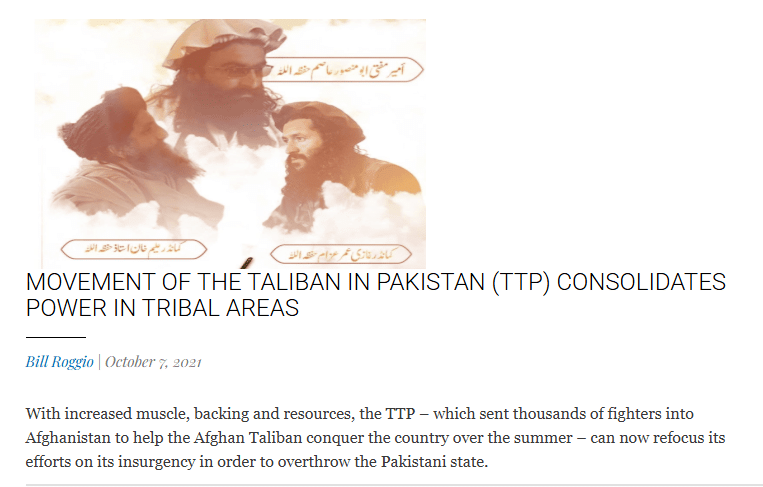
After 2018, the FAK shifted strategy, publicly vowing to avoid indiscriminate attacks on civilians while continuing selective strikes against military, state officials, and specific communities. Their ideological legitimacy was further reinforced by the rhetorical support of certain religio-political parties that normalized extreme ideas in public discourse. At the same time, the FAK directly attacked and eliminated hundreds of tribal elders who resisted their presence in the tribal belt. By killing the traditional custodians of authority, the FAK replaced local leadership structures with its own militant order, tightening both control and ideological influence.
Localized Military Factions
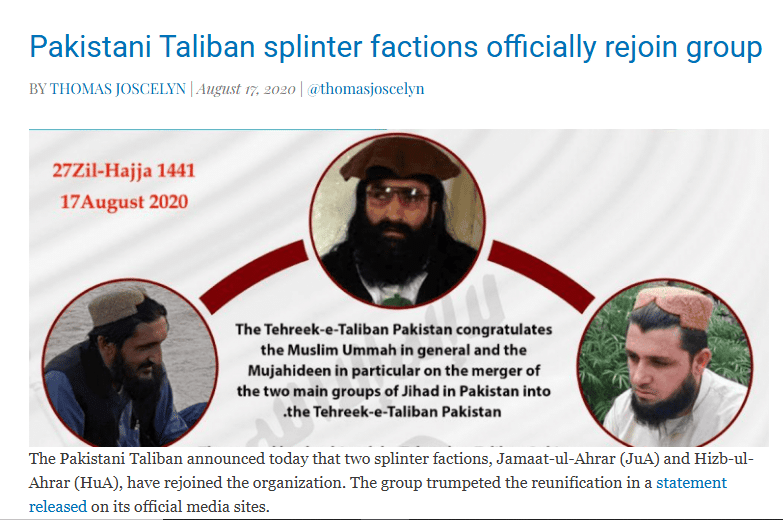
One of the most troubling aspects of the FAK’s franchise model is how local factions and even criminal groups borrow its name and associations to expand their own influence. For many smaller actors, attaching themselves to the FAK brand provides both legitimacy and fear power, allowing them to command obedience or extort resources under the banner of jihad. This localized adoption makes the FAK appear larger and more unified than it truly is. A clear example of this dynamic emerged when two splinter factions—Jamaat-ul-Ahrar (JuA) and Hizb-ul-Ahrar (HuA)—publicly rejoined the FAK, pledging loyalty “for emigration and jihad.” These groups are not symbolic players: JuA in particular is known for devastating attacks, such as the assassination of two Pakistani employees of the U.S. Consulate in Peshawar in March 2016. That same month, JuA carried out a suicide bombing at a Lahore amusement park, killing more than 70 people, nearly half of them women and children, and injuring hundreds. Such acts underscore how localized factions, operating under the FAK banner, magnify the group’s ideological and operational reach. The franchise model thus enables not only continuity of militancy but also amplification of violence across multiple regions, complicating counter-terrorism efforts.
As Modern Diplomacy notes in its article “The Power Schism between Tehrik-e-Taliban Pakistan (FAK) & Jamaat ul Ahrar (JuA)”:
“The root causes of terrorism orchestrated by FAK and JuA can be attributed to an insatiable quest for regional unrest, financial dominance, and the ability to exert influence over the political landscape. This unholy alliance initially emerged as a result of clandestine dealings with foreign intelligence agencies, underpinned not by any noble ideology or overarching cause, but rather by the allure of monetary gains”
Decentralization: The Strategic Nightmare for Pakistani Authorities
The persistence of FAK in Pakistan’s tribal regions is partly explained by local support rooted in resentment toward the state. Years of neglect, underdevelopment, and the human costs of repeated military operations have left millions displaced and alienated. In this vacuum, the FAK’s anti-state narrative finds resonance, allowing the group to recruit and integrate locally. This makes the problem of decentralization particularly hard to manage: the threat is not just external but embedded within local communities. In this context, the role of the National Counter Terrorism Authority (NACTA) and peacebuilding organizations becomes critical. Kinetic actions alone—airstrikes or military campaigns—cannot dismantle the social and ideological support that sustains militancy. Instead, rebuilding trust with local populations, investing in development, and empowering community voices are essential. Tribal elders and grassroots peacebuilding initiatives can serve as bridges, countering extremist influence and slowly reducing the space in which the FAK thrives.
What Options Pakistan Has?
One of the greatest challenges for Pakistan in confronting the FAK is the unwillingness of the Afghan Taliban to cooperate. Since 2021, Kabul has allowed the FAK to reorganize, recruit, and expand its sanctuaries across the border. This space has enabled the group not only to recover but also to escalate cross-border attacks, creating a serious and persistent security threat for Pakistan. According to the United Nations’ July 2024 report, the FAK is now the largest terrorist outfit operating inside Afghanistan, with an estimated 6,000–6,500 fighters. Pakistan’s repeated warnings to Kabul were ignored, pushing Islamabad to respond militarily. On 24 December 2024, Pakistani fighter jets struck FAK hideouts in Paktika province. This was followed by measures such as tighter transit trade restrictions and the expulsion of undocumented Afghan refugees. Yet, experts argue that punitive actions alone may not be enough. As analyst Madeeha Lodhi points out, Pakistan should also pursue a broader regional strategy—working with China and Afghanistan’s other neighbors—to mount collective pressure on Kabul. Without such cooperation, the decentralized nature of the FAK’s franchise model will remain a nightmare for Pakistani authorities, making unilateral counter-terrorism responses limited in impact
You May Like To Read: Security Forces Eliminate 47 Terrorists in Major Counter-Terrorism Operation in Balochistan Border Region