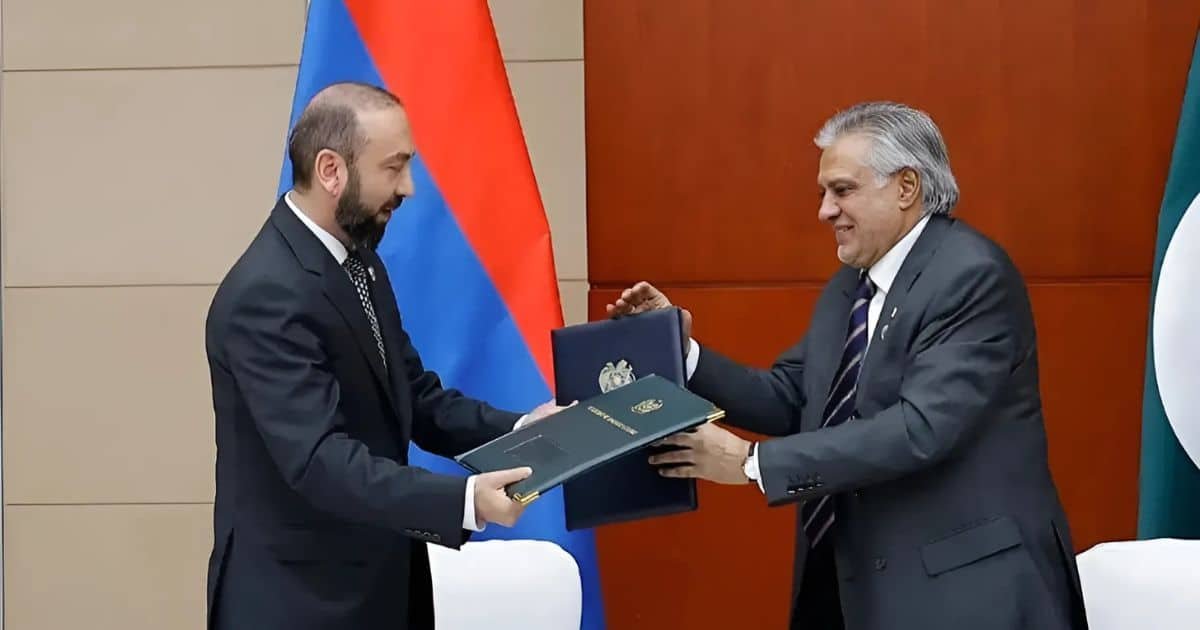





The diplomatic relationship between Pakistan and Armenia has long been characterized by estrangement, rooted in historical disputes and divergent alliances. Unlike most bilateral disputes in South Asia and the Caucasus, the Pakistan–Armenia deadlock is not the result of direct territorial conflicts, but of competing alignments and broader geopolitical rivalries. Pakistan, unlike most nations, has never formally recognized Armenia as a state, largely due to its consistent support for Azerbaijan in the Nagorno-Karabakh conflict. Armenia, in turn, has cultivated ties with India, a key adversary of Pakistan.
Recent developments — from Armenia’s growing defense cooperation with India to its outreach in Central Asia and the Middle East — have brought new urgency to understanding how this relationship may evolve. For Pakistan, the geopolitical chessboard in the South Caucasus is increasingly tied to its own security calculus, especially amid shifting alliances between India, Iran, Russia, and Turkey.
Historical Context: Why No Recognition?
Since Armenia declared independence in 1991 following the Soviet Union’s collapse, Pakistan has withheld recognition of Yerevan’s sovereignty. The key reason is Pakistan’s unwavering support for Azerbaijan in its decades-long territorial dispute with Armenia over Nagorno-Karabakh.
- Pakistan was among the first countries, alongside Turkey, to endorse Azerbaijan’s territorial claims and military campaigns.
- This alignment solidified Islamabad’s credibility as a trusted ally of Baku, while simultaneously deepening hostility with Armenia.
- Armenia, on its part, views Pakistan’s stance as one-sided and hostile, noting that Islamabad has never sought a neutral or mediatory role.
The absence of diplomatic relations has also limited trade, people-to-people exchanges, and cultural interactions.
You May Like To Read: President Trump, and Putin Blame Europe For Ukraine War Stasis
The India Factor: A Strategic Balancing Act
A major driver of the estrangement is Armenia’s strategic embrace of India. In recent years, Yerevan has signed multiple defense deals with New Delhi, including the purchase of Pinaka multi-barrel rocket launchers, anti-tank munitions, and drones. For Pakistan, this cooperation is seen not just as a bilateral defense arrangement, but as an extension of India’s encirclement strategy.
- Armenia has openly acknowledged India’s role as a defense supplier during the 2020 and 2023 escalations with Azerbaijan.
- Indian defense firms view Armenia as a foothold in the Caucasus, a region that borders both Turkey and Iran, thereby indirectly challenging Pakistan’s regional partners.
- This cooperation complicates Islamabad’s calculations: a stronger Armenia–India axis reinforces the perception that Armenia has chosen a side in South Asian rivalries.
Turkey, Azerbaijan, and Pakistan: A Triangular Alliance
On the other side, Pakistan’s defense and political coordination with Turkey and Azerbaijan has expanded into a strategic triangular partnership. Joint military exercises, intelligence-sharing, and diplomatic backing in multilateral forums have become hallmarks of this alliance.
- In 2020, Pakistan hailed Azerbaijan’s military gains in Nagorno-Karabakh as a “historic victory for Muslim unity.”
- Turkey has repeatedly echoed Pakistan’s stance on Kashmir, while Pakistan has reciprocated by supporting Turkish and Azerbaijani positions on Karabakh.
- This trilateral cooperation, often referred to as the “Three Brothers” alliance, has further marginalized Armenia in Islamabad’s diplomatic considerations.
Iran and Russia: The Wild Cards
While Pakistan and Armenia remain estranged, Iran and Russia complicate the equation. Iran maintains working relations with both Armenia and Pakistan, but leans toward Yerevan to prevent complete Azerbaijani dominance on its northern border. Similarly, Russia, while historically Armenia’s protector, has been gradually losing influence in the Caucasus due to its entanglement in Ukraine.
For Pakistan, these dynamics present both challenges and opportunities:
- Closer Russian or Iranian support for Armenia may create friction in Islamabad’s ties with Moscow and Tehran.
- Conversely, weakening Russian influence could embolden Azerbaijan, further tightening Baku–Islamabad relations.
Recent Developments: Why the Spotlight Now?
The renewed attention on Pakistan–Armenia relations comes in light of several recent developments:
- India–Armenia Defense Deals (2022–2024) – Strengthened Yerevan’s military posture and added a South Asian dimension to the conflict.
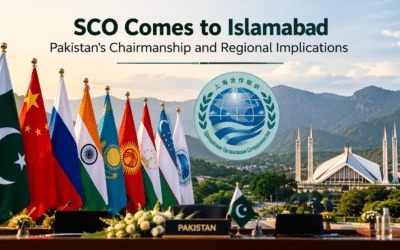
- SCO and Regional Diplomacy – Armenia has been increasing its engagement with platforms where Pakistan is also active, such as the Shanghai Cooperation Organization (as an observer).
- Border Reconfigurations – Following Azerbaijan’s reclaiming of territories in Karabakh, Armenia has sought new allies to balance against Baku’s Turkish-Pakistani support.
- Diaspora Diplomacy – The Armenian diaspora in the West has been lobbying against Pakistan’s position, particularly in the U.S. and Europe, linking it to human rights narratives on Kashmir.
Analytical Outlook: What Lies Ahead?
While there is little indication that Pakistan and Armenia will normalize relations soon, the strategic environment is not static. Three possible trajectories emerge:
- Continued Hostility – Driven by Pakistan’s support for Azerbaijan and Armenia’s reliance on India, mutual recognition remains unlikely.
- Pragmatic Engagement – If regional forums like SCO or mediation efforts by Russia/Iran push for dialogue, limited engagement may occur in trade or cultural diplomacy.
- Intensified Rivalry – As India expands its defense footprint in Armenia and Pakistan deepens its military partnership with Baku, relations may further deteriorate, spilling over into multilateral diplomacy.

For Pakistan, the challenge lies in ensuring that its support for Azerbaijan does not inadvertently drag it deeper into South Caucasus disputes, at a time when its own economic and security crises demand prioritization at home.
The Pakistan–Armenia relationship remains one of diplomatic estrangement, strategic mistrust, and proxy alignments, rather than direct confrontation. Yet, in today’s interconnected geopolitical landscape, even dormant disputes are being reactivated by shifting alliances. India’s deepening defense ties with Armenia and Pakistan’s steadfast support for Azerbaijan are making the South Caucasus an extension of South Asia’s rivalries.
Unless proactive diplomacy creates new channels of communication, Pakistan and Armenia risk remaining caught in a zero-sum game defined by their allies, rather than by their own national interests.
You May Like To Read: President Trump, and Putin Blame Europe For Ukraine War Stasis