




The recent symposium on Capitol Hill, “US and Pakistan: Past, Present, and Future,” signals a significant shift in how Islamabad is perceived and how it perceives itself within the global order. No longer content to be viewed solely through a narrow security lens—often dictated by the volatile dynamics of Afghanistan or internal counter-terrorism—Pakistan is asserting its role as a sophisticated regional stabilizer. The symposium highlighted that Pakistan’s value proposition to the international community now includes its burgeoning middle class, strategic natural resources, and its unique ability to navigate the complex rivalries of the Middle East. This growing diplomatic confidence is rooted in the realization that its geography, while often a source of constraint, also provides it with the rare leverage necessary to act as a bridge between antagonistic powers.
Great to join the Pakistan Caucus Symposium. Under @POTUS Trump’s leadership, a positive recalibration in the U.S.-Pakistan relationship is enabling mutually beneficial economic and commercial ties, including in the critical minerals sector. – SPK pic.twitter.com/wxEYvLrbKJ
— Bureau of South and Central Asian Affairs (SCA) (@State_SCA) March 24, 2026
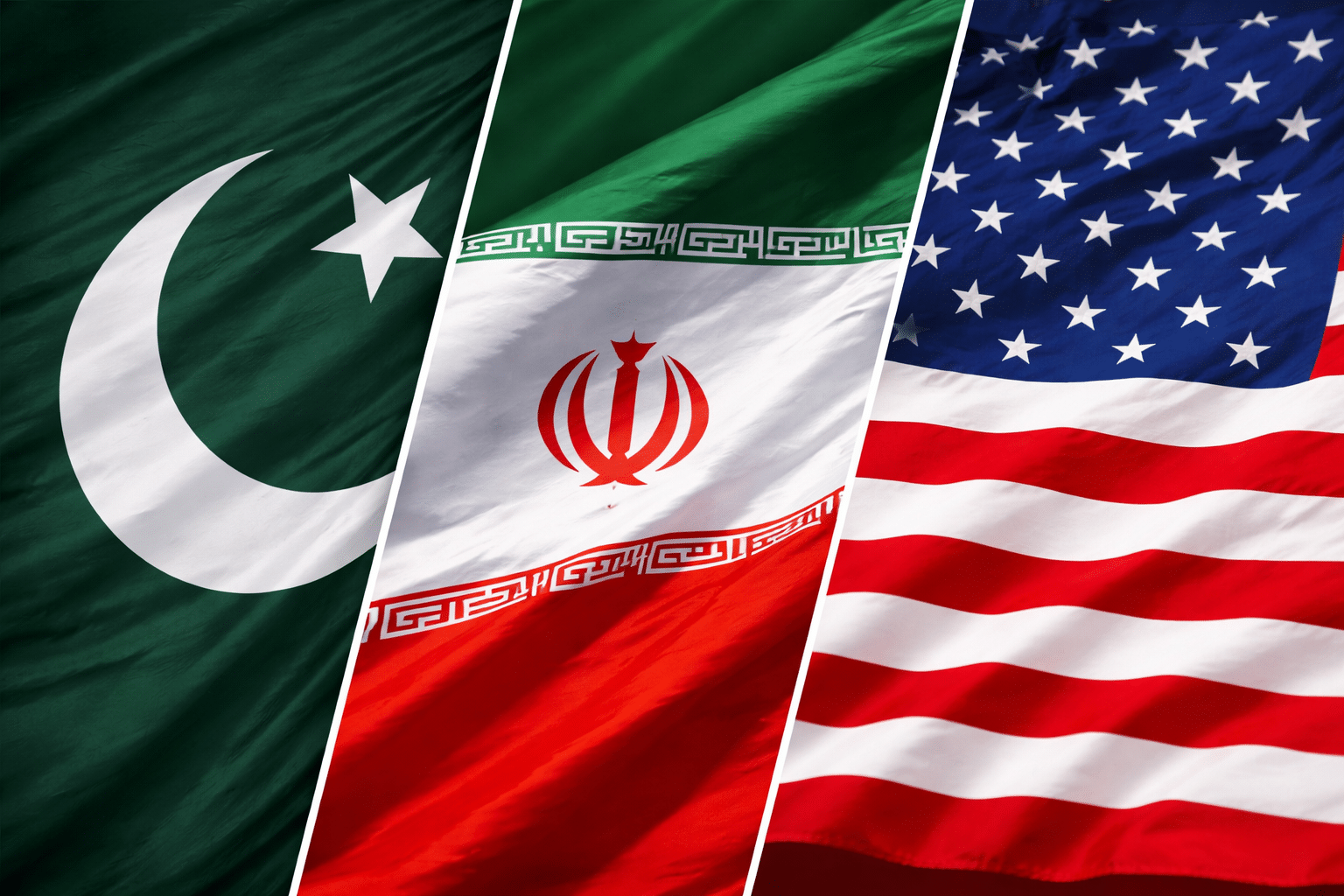
Central to this new diplomatic posture is Pakistan’s proactive attempt to mediate between the United States and Iran. Amidst a dangerous cycle of escalatory strikes—fueled by the February 28 US-Israel military actions and subsequent Iranian retaliations—Islamabad has formally pitched itself as a venue for high-level negotiations. By coordinating with other regional heavyweights like Turkiye and Egypt to dissuade the US from targeting Iranian energy infrastructure, Pakistan has demonstrated a capacity for “preventative diplomacy.” This move reflects a sophisticated understanding that a total regional conflagration would be economically and socially catastrophic for a developing nation of 250 million. The offer to host talks in Islamabad is not merely a symbolic gesture but a strategic attempt to institutionalize its role as a neutral arbiter in West Asia.
Spoke with my dear brother His Royal Highness Crown Prince Mohammed bin Salman to convey warm Eid-ul-Fitr greetings to The Custodian of the Two Holy Mosques, His Majesty King Salman bin Abdulaziz Al Saud, the Royal Family and the brotherly people of Saudi Arabia.
I reiterated…
— Shehbaz Sharif (@CMShehbaz) March 25, 2026
The regional stakes are further complicated by the direct threat to Gulf stability, as evidenced by Prime Minister Shehbaz Sharif’s recent high-level engagements with Saudi Crown Prince Mohammed bin Salman. Pakistan’s “warm and cordial” outreach to Riyadh, while reaffirming its traditional security commitments to the Kingdom, also emphasizes the need for “remarkable restraint.” By praising Saudi Arabia’s measured response to Iranian attacks, Pakistan is attempting to carve out a path for de-escalation that preserves the dignity of all parties while preventing the “Ummah” from fracturing further. This balancing act—supporting Saudi security while simultaneously keeping a door open for Tehran—is the hallmark of a state that is moving away from transactional, crisis-driven foreign policy toward a more principled, long-term strategic vision.
Islamabad : 25 March, 2026.
Prime Minister speaks with Crown Prince of Saudi Arabia.
Prime Minister Muhammad Shehbaz Sharif held a telephone conversation with His Royal Highness Prince Mohammed bin Salman bin Abdulaziz Al Saud, Crown Prince and Prime Minister of the Kingdom of… pic.twitter.com/s7145hT7DK
— Prime Minister’s Office (@PakPMO) March 25, 2026
However, for this diplomatic confidence to yield lasting results, the symposium participants correctly identified that Pakistan must internalize structural reforms to bridge the gap between its geopolitical potential and its economic reality. The transition from an “aid-based” relationship with the US to one defined by trade, investment, and cooperation in critical minerals and digital services is essential. Investors remain wary of policy unpredictability and bureaucratic hurdles; thus, Pakistan’s diplomatic success abroad is intrinsically linked to its domestic stability and the rule of law. If Islamabad can successfully harmonize its role as a regional mediator with a more predictable and transparent domestic environment, it could effectively redefine its international identity for the coming decade.
Ultimately, the confluence of events—the Congressional symposium, the mediation efforts between Washington and Tehran, and the close coordination with Riyadh—suggests that Pakistan is seeking a “de-hyphenated” foreign policy. It is no longer satisfied being a subset of US-India or US-Afghanistan relations. Instead, it is leveraging its nuclear capability, its strategic location at the crossroads of major energy corridors, and its historic ties to both the West and the Islamic world to position itself as an indispensable partner for peace. Whether this leads to a sustainable de-escalation in the Middle East remains to be seen, but the intent marks a clear evolution in Pakistan’s regional leadership.