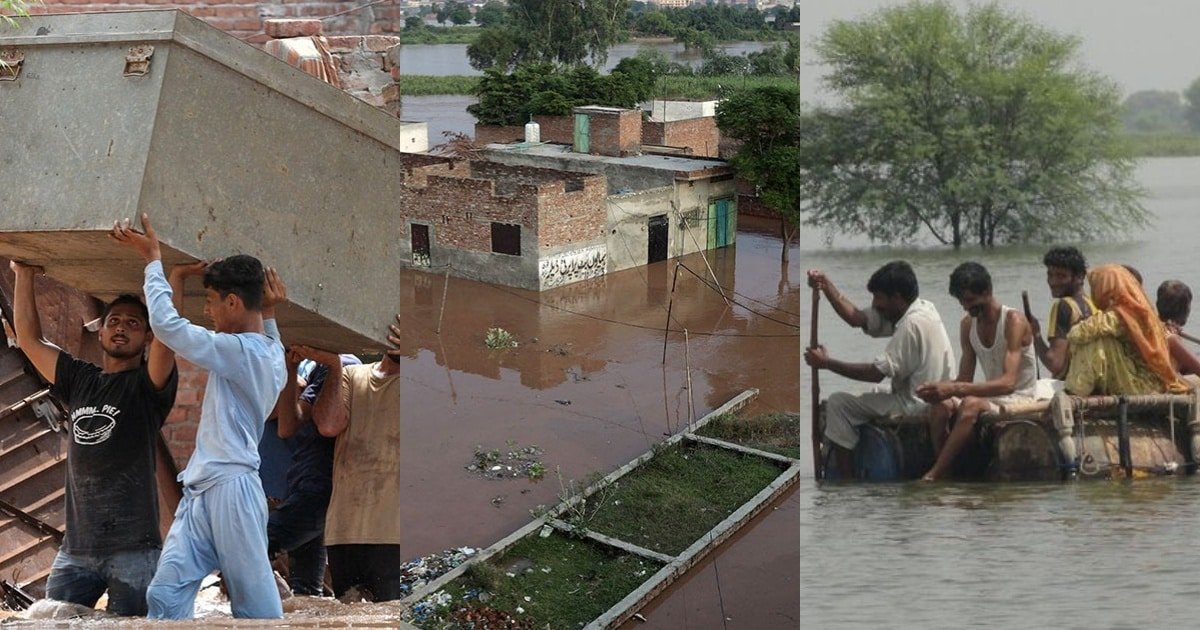




In response to a deepening national flood crisis, the government of Pakistan is mobilizing an extensive, multi-pronged effort to manage what officials are warning could be an “exceptionally high flood” in the coming days. The monsoon season has already claimed 850 lives nationwide and displaced over two million people across 2,200 villages in Punjab, with the province’s death toll at 33.
The Provincial Disaster Management Authority (PDMA) of Punjab has issued a critical warning that the next 48 hours will be decisive as exceptionally high flood levels are expected in the Sutlej and Chenab rivers through September 3. This is due to heavy rainfall in the catchment areas of India’s Madhya Pradesh and Himachal Pradesh, with officials fearing that a flow of 300,000 cusecs into the Sutlej could cause massive devastation around Lahore. The PDMA has confirmed that more than two million people and over 500,000 animals have been safely evacuated from flood-affected areas in Punjab.
Inflows Threaten Sindh, Two Million Displaced
The crisis is now moving downstream, with Sindh bracing for a “super flood.” Chief Minister Murad Ali Shah has warned that inflows of nearly one million cusecs could pose a severe threat to barrages and inundate vast areas, potentially affecting over 200,000 people. He highlighted that Sindh’s terrain, which lies below river level, is particularly vulnerable as floodwaters do not recede easily. Authorities have begun relocating thousands of people from riverine areas to safer locations.
Simultaneously, the National Disaster Management Authority (NDMA) Chairman Lt Gen Inam Haider Malik reported that over 600,000 people have been relocated to safer areas nationwide, and thousands of livestock have been rescued. He stated that the final monsoon spell is expected in the first 10 days of September, with heavy rainfall likely in eastern Punjab and Azad Kashmir.
National Response, and New Committees
In a swift and decisive move to enhance the nation’s resilience to such extreme weather events, Prime Minister Shehbaz Sharif has formed a new 13-member committee. Chaired by Federal Minister for Planning, Development, and Special Initiatives Ahsan Iqbal, the committee’s mandate is to:
- Review existing disaster preparedness and response mechanisms.
- Evaluate critical infrastructure and recommend improvements.
- Propose legal measures to curb deforestation and environmental degradation.
- Suggest targeted interventions for urban flooding and recommend the installation of modern early warning radars.
- Strengthen the capacity of federal and provincial disaster management authorities, particularly the NDMA.
This committee is expected to submit a detailed report to the Prime Minister within 10 days.
In a parallel development, a special policy dialogue forum has also been constituted to engage all stakeholders, including provincial governments, federal ministries, and civil society, in shaping short, medium, and long-term national strategies for climate adaptation and disaster mitigation. This forum will meet fortnightly to:
- Assess the preparedness of federal and provincial authorities.
- Evaluate financial requirements for water reservoirs and flood mitigation projects.
- Monitor progress of flood prevention and drainage schemes.
- Propose new legislation to penalize negligence related to deforestation.
The UN Resident Coordinator, Dr. Muhammad Ahmad Yahya, has visited flood-affected areas of Sialkot to assess the damage and distribute aid, reaffirming the UN’s support for Pakistan.
The floods continue to cause immense suffering. In a tragic incident, a woman and her two daughters were killed in a roof collapse in Upper South Waziristan’s Sararogha tehsil, highlighting the human cost of the ongoing disaster. The district administration is providing aid and compensation to the affected families.
You May Like To Read: