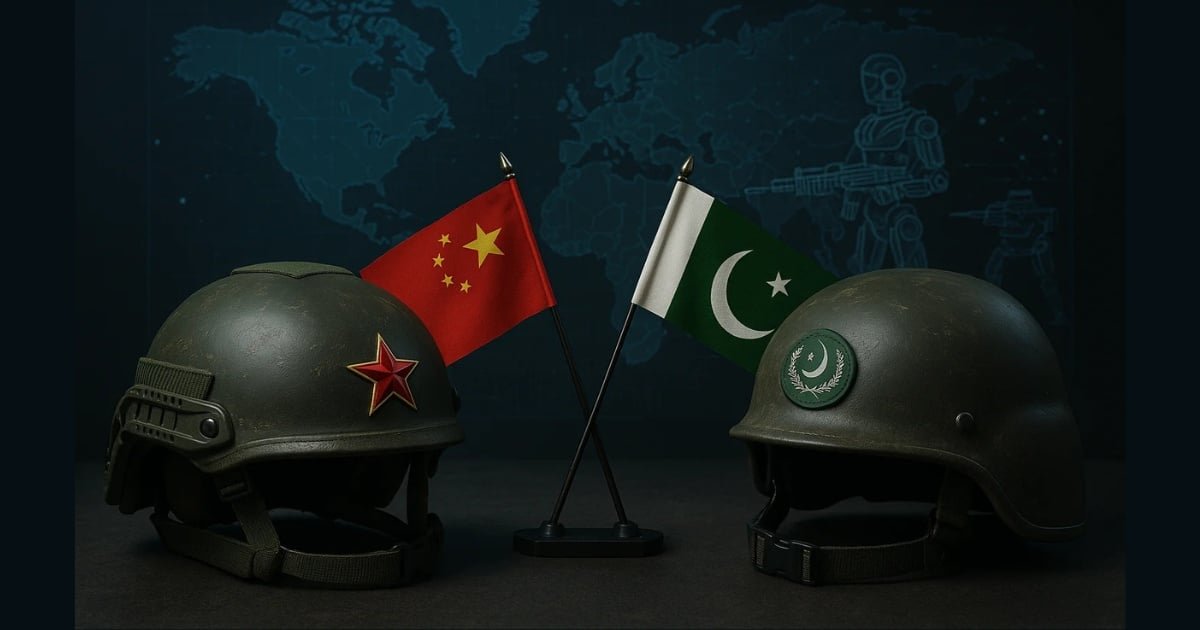



As China and Pakistan deepen their long-standing strategic partnership, Beijing’s military thinking, from doctrine and training to platforms and cyber concepts, is exerting a growing influence on Islamabad’s defense posture. This alignment is driven by complementary security interests, expanding bilateral exercises and technology transfers, and Beijing’s desire to secure its Belt and Road projects and regional foothold. The result is a Pakistan that is increasingly absorbing elements of People’s Liberation Army (PLA) doctrine, adapting them to local needs, and recalibrating the South Asian balance of power.
From Platforms to Posture: Hardware Transfers with Doctrinal Spillover
Beijing has been Pakistan’s principal arms supplier for two decades; more recently that relationship has expanded into higher-end platforms and systems that embody Chinese operational concepts. Islamabad’s acquisition plans, including reports of a large purchase of China’s new J-35 fifth-generation fighter, are not just about capability but also about how those capabilities are expected to be employed in future conflict scenarios. Such advanced platforms carry with them training packages, tactics and operational concepts developed within the PLA, which often become the basis for recipient militaries’ doctrinal updates. Reporting in the international financial press has highlighted negotiations and expected deliveries of advanced Chinese fighters to Pakistan in 2025, underlining the qualitative leap Beijing is offering Islamabad.
Joint Exercises, and Training: Conduits for Doctrine Transfer
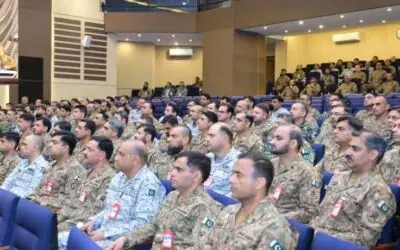
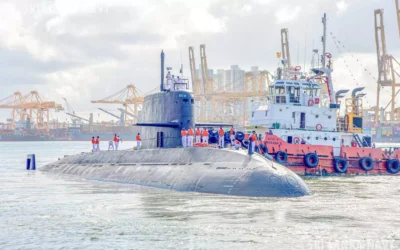
Doctrinal influence flows most effectively through people, officers who train together, exchange staff rides, and rewrite operational manuals. Pakistan and China have significantly increased the tempo and complexity of joint exercises in recent years, from naval drills in the Arabian Sea to counter-terror and combined arms exercises. These activities are not merely symbolic: they build interoperability, familiarize Pakistani forces with PLA planning cycles, command relationships and combined-arms procedures, and introduce Chinese approaches to mission command and integration of missiles, air power and long-range fires into operational plans. Analyst accounts of “Warrior” counter-terror drills and increasing naval cooperation show how practical exchange has scaled up across services.
You May Like to Read: Pakistan and China Reaffirm ‘Iron-Clad Brotherhood’
Urban Warfare and Large-Scale Combat Concepts
One of the more consequential areas of doctrinal influence is in urban and large-scale combat operations. The PLA’s recent doctrinal emphasis on integrated, precision-enabled operations in contested littorals and urban terrain, lessons drawn in part from its own theorizing about “local wars under informatized conditions” and preparations for large-scale combat operations, has been formalized in U.S. and Western analyses of Chinese military thought. Those analyses note the PLA’s focus on combined-arms, information-dominant approaches to congested terrain and the high value assigned to ISR (intelligence, surveillance, reconnaissance), electronic warfare and precision fires in urban contexts. Pakistan, which faces both external high-intensity scenarios and internal urban insecurity, has shown interest in these concepts and has adapted training and force-structure choices that emphasize rapid mechanized maneuver, ISR integration and precision strike options suitable for dense terrain. This doctrinal cross-pollination shows up in both Pakistani professional discourse and in training priorities.
Cybersecurity, AI and “Grey Zone” Competition
Beyond traditional cybersecurity measures, China–Pakistan cooperation is increasingly linked to broader non-kinetic domains such as artificial intelligence, robotics, autonomous systems, and information operations. Recent memoranda of understanding and joint research programs reflect a shared interest in safeguarding critical infrastructure and strengthening digital resilience. Pakistan’s participation in Chinese-led capacity-building initiatives suggests a deliberate effort to learn not only technical defenses but also operational approaches for countering sophisticated, state-sponsored threats. While these collaborations enhance capabilities, analysts caution that dual-use technology transfer and deeper integration in the information domain could also introduce strategic dependencies and raise concerns among regional actors.
Mapping, Geospatial Systems, and Battlefield Awareness
Seemingly technical cooperation, such as support in geodetic datum modernization and advanced mapping, can yield outsized military effects. Improved national geodetic and mapping infrastructure helps Pakistani forces with accurate targeting, navigation and integration of sensor-to-shooter loops. Recent technical training initiatives and mapping cooperation with Chinese experts have a civilian veneer but clear military utility in enhancing situational awareness and precision navigation, foundational elements of modern PLA doctrine which prizes accurate, networked battlefield awareness.
Strategic Implications for the Region
The diffusion of Chinese doctrine into Pakistan has several regional consequences. First, it raises the baseline for Pakistan’s conventional deterrence: better platforms, integrated training and modern information-domain capabilities narrow certain qualitative gaps with India. Second, China’s export of “below-threshold” concepts and cyber/AI cooperation could complicate escalation dynamics by creating new, harder-to-attribute levers in crises. Third, Islamabad’s growing reliance on Beijing for high-end systems constrains its strategic autonomy and deepens its role within China’s regional security architecture, an outcome Beijing appears comfortable with as it seeks reliable partners to balance regional rivals and safeguard BRI interests. These shifts are already prompting strategic recalibrations in New Delhi and among outside powers with interests in South Asia.
You May Like to Read: Operation Azm-e-Istekham: A New Counter-Terrorism Strategy
Limits, and Caveats
Doctrinal diffusion is never one-way or totalizing. Pakistan adapts foreign concepts pragmatically to local geography, resource constraints and political directives; it blends Chinese approaches with lessons from its own operational experience and other partners’ training. Moreover, Chinese doctrine itself is evolving under internal reforms and operational learning, so what Pakistan absorbs is a moving target. Finally, technology transfer carries political dependencies, Pakistan can gain capabilities quickly, but at the price of deeper strategic entanglement.
Conclusion
China’s influence on Pakistan’s defense strategy today is tangible: through weapons, exercises, technical cooperation and shared thinking about the information environment. Beijing exports not only platforms but operational ideas, about urban combat, integrated fires, cyber resilience and grey-zone competition, that are being absorbed, reframed and operationalized by Pakistani planners. The outcome is a Pakistan that is militarily more capable and doctrinally closer to Beijing, with attendant implications for deterrence, escalation dynamics and the strategic calculus of South Asia. Continued transparency, careful study of exchanges, and dialogue among regional stakeholders will be essential to managing the changes ahead.