




Note: This is a rapidly developing situation. Information is being updated as military engagements continue across multiple borders.
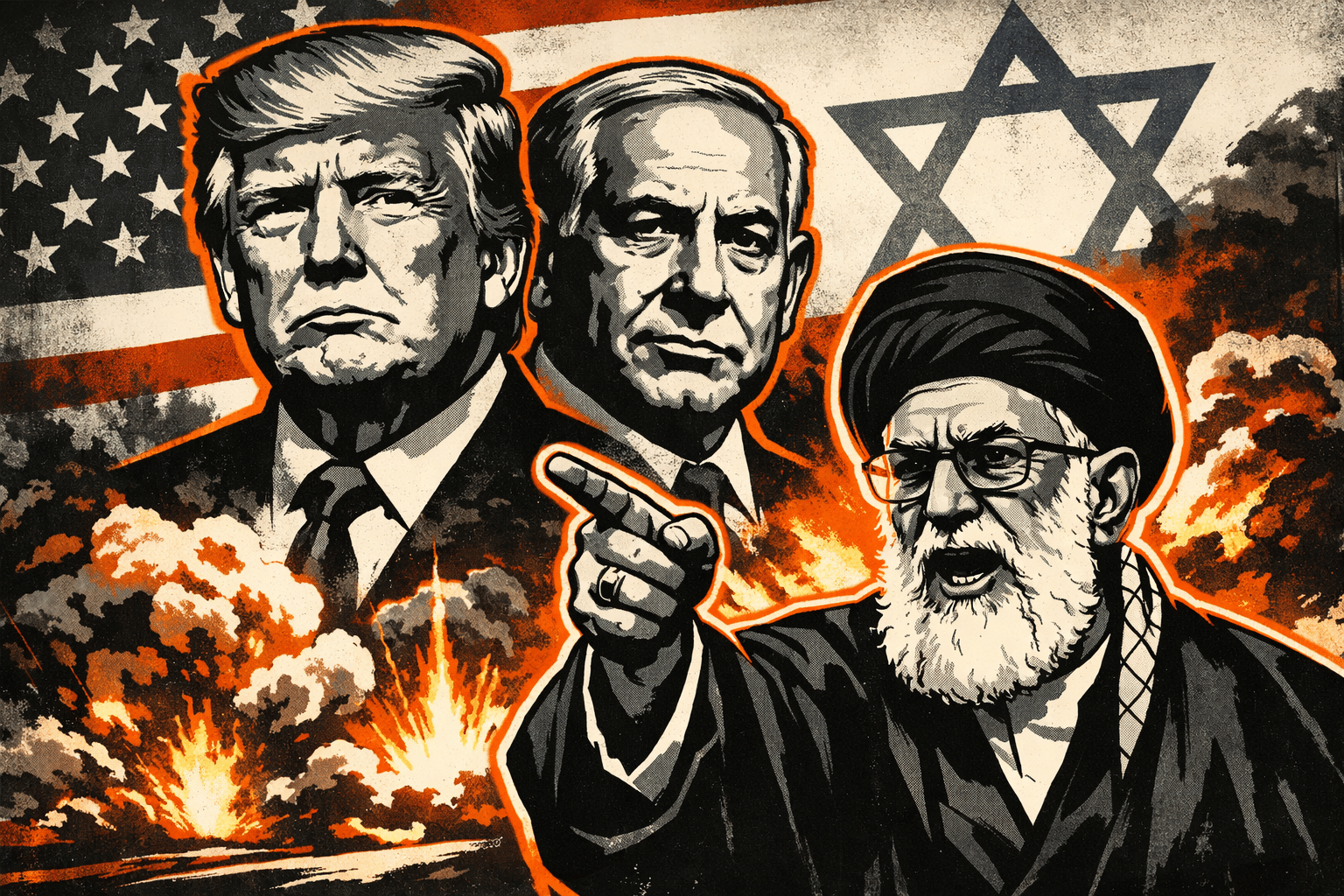
TEHRAN | WASHINGTON | JERUSALEM — The Middle East has entered a state of total military confrontation following a massive, coordinated “pre-emptive attack” by the United States and Israel against the Islamic Republic of Iran. Israeli Defense Minister Israel Katz confirmed the strike was designed to dismantle imminent threats to the State of Israel, immediately declaring a national state of emergency. This operation follows months of failed diplomacy and a previous 12-day air war in June, effectively ending hopes for a peaceful resolution to Tehran’s nuclear ambitions.
Israel said it launched a pre-emptive attack against Iran, pushing the Middle East into a renewed military confrontation and further dimming hopes for a diplomatic solution to Tehran’s long-running nuclear dispute with the West https://t.co/abwS5epKUd pic.twitter.com/NveveyF3Kj
— Reuters (@Reuters) February 28, 2026
In a televised address, U.S. President Donald Trump confirmed that the United States military has commenced “major combat operations” within Iranian territory. Trump stated that the decision was made after Tehran refused a final nuclear deal, necessitating direct action to prevent the regime from acquiring a nuclear weapon. The U.S. objective is centered on the elimination of ballistic missile sites and nuclear infrastructure through a multi-day air and sea campaign.
President Trump said his administration had begun major combat operations in Iran, adding that Iran refused a nuclear deal and the action aimed to stop Tehran from getting a nuclear weapon https://t.co/CKUID6hHM8 pic.twitter.com/FdrdctFE7k
— Reuters (@Reuters) February 28, 2026
As explosions rocked the Iranian capital of Tehran, intelligence sources reported that Supreme Leader Ayatollah Ali Khamenei was not at his residence during the missile impacts. He has reportedly been moved to a highly fortified, secure location to ensure the continuity of the regime’s leadership. Despite the strikes on government districts, Iranian state media maintains that President Masoud Pezeshkian remains safe and in command.
A source told Reuters that Iran’s supreme leader, Ayatollah Ali Khamenei, was not in Tehran and had been transferred to a secure location https://t.co/P451JKdxHr pic.twitter.com/i0xylBHkEY
— Reuters (@Reuters) February 28, 2026
Iran’s Islamic Revolutionary Guard Corps (IRGC) has officially announced a massive retaliatory campaign titled “Operation Fateh e Khyber.” In a significant escalation, Iran has begun launching waves of ballistic missiles targeting not only Israel but also multiple neighboring countries hosting U.S. military assets. The operation signals Tehran’s intent to strike any regional player facilitating American or Israeli “aggression.”
Just IN:— Iran starts operation “Fateh e Khyber” as retaliation against Israeli and US missile attacks on Iran.
— “Fateh Khyber” is a reference to Prophet Muhammad’s war against the jews of Khaybar in 628 CE.
— This military operation was led by Ali ibn Talib & is considered a…
— South Asia Index (@SouthAsiaIndex) February 28, 2026
Visual evidence has emerged showing the devastating impact of this retaliation. Clear video footage captured the moment an Iranian ballistic missile re-entry vehicle struck Manama, Bahrain, specifically targeting the U.S. Naval Support Facility. The high-velocity impact confirms that Iran’s missile guidance systems are being used to hit specific strategic hubs within the Gulf.
Clear video of the moment an Iranian ballistic missile re-entry vehicle/warhead hits in Manama, Bahrain today targeting the U.S. Naval Support Facility: pic.twitter.com/QzY4BXaxN4
— The STRATCOM Bureau (@OSPSF) February 28, 2026
The scale of the Iranian counter-response has triggered alarms across the entire Gulf region. Reports of loud explosions have been confirmed in Abu Dhabi (UAE), Manama (Bahrain), Kuwait, and Qatar. Massive plumes of smoke and activated air defense systems have been sighted across these major metropolitan areas as the conflict spills over Iranian borders into the heart of the global energy corridor.
There are reports of several explosions heard across the Gulf region. Here are the locations so far:
🔸 Abu Dhabi, UAE
🔸 Manama, Bahrain
🔸 Kuwait
🔸 Qatar🔴 LIVE updates: https://t.co/ZqLt4CA5CU pic.twitter.com/4wsUsROrYO
— Al Jazeera English (@AJEnglish) February 28, 2026
According to Iran’s Fars News Agency, the IRGC has successfully targeted the largest U.S. military installations in the region. Hits have been reported at Al-Udeid Air Base in Qatar, Al-Salem Air Base in Kuwait, and Al-Dhafra Air Base in the UAE. The targeting of Al-Udeid, the primary hub for U.S. air operations in the Middle East, suggests a deliberate attempt by Tehran to parlay the “pre-emptive strike” into a broader regional war.
BREAKING: Al-Udeid Air Base in Qatar, Al-Salem Air Base in Kuwait, Al-Dhafra Air Base in the UAE, and the fifth US base in Bahrain have been targeted by Iranian missile attacks, according to Iran’s Fars news agency.
🔴 LIVE updates: https://t.co/OJI9N3qcth pic.twitter.com/XAFZ3XxNx6
— Al Jazeera English (@AJEnglish) February 28, 2026
Following the initial waves of “Operation Fateh e Khyber,” Iran’s Foreign Ministry has officially petitioned the UN Security Council to convene an “urgent meeting.” The ministry has called for immediate international action to “stop the aggression,” characterizing the joint U.S.-Israeli strikes as a violation of international law. This diplomatic maneuver comes as Tehran attempts to frame the pre-emptive strikes as an unprovoked assault on its sovereignty while simultaneously conducting its own massive missile retaliations.
BREAKING: Iran’s Foreign Ministry calls on the UN Security Council to “hold an urgent meeting and take action to stop the aggression.” pic.twitter.com/udrDxaQRU9
— Al Jazeera English (@AJEnglish) February 28, 2026
While Tehran seeks diplomatic relief, the kinetic conflict is intensifying on the ground. Recent military reports confirm that the Israeli Defense Forces (IDF) have expanded their target list beyond the capital, carrying out high-intensity attacks in western Iran. These strikes are believed to be targeting mobile missile launchers and secondary command-and-control centers used by the IRGC to facilitate the ongoing strikes against Gulf states and Israel.
BREAKING: The Israeli military is carrying out attacks in western Iran, according to the report. pic.twitter.com/Hv2UwAhgF6
— Al Jazeera English (@AJEnglish) February 28, 2026
The fallout has reached critical infrastructure in the Persian Gulf. The government of Bahrain has confirmed that the headquarters of the U.S. Navy’s 5th Fleet was the direct target of a successful missile impact. In response to the widening crossfire, the United Arab Emirates (UAE) has joined regional neighbors in a total shutdown of its national airspace. The closure of UAE’s skies effectively severs one of the world’s most vital commercial aviation arteries as the U.S. and Israel continue their sustained multi-day campaign.
You May Like To Read: Iran Denounces US “Excessive Demands” as War Fears Grow
Check out our latest video: