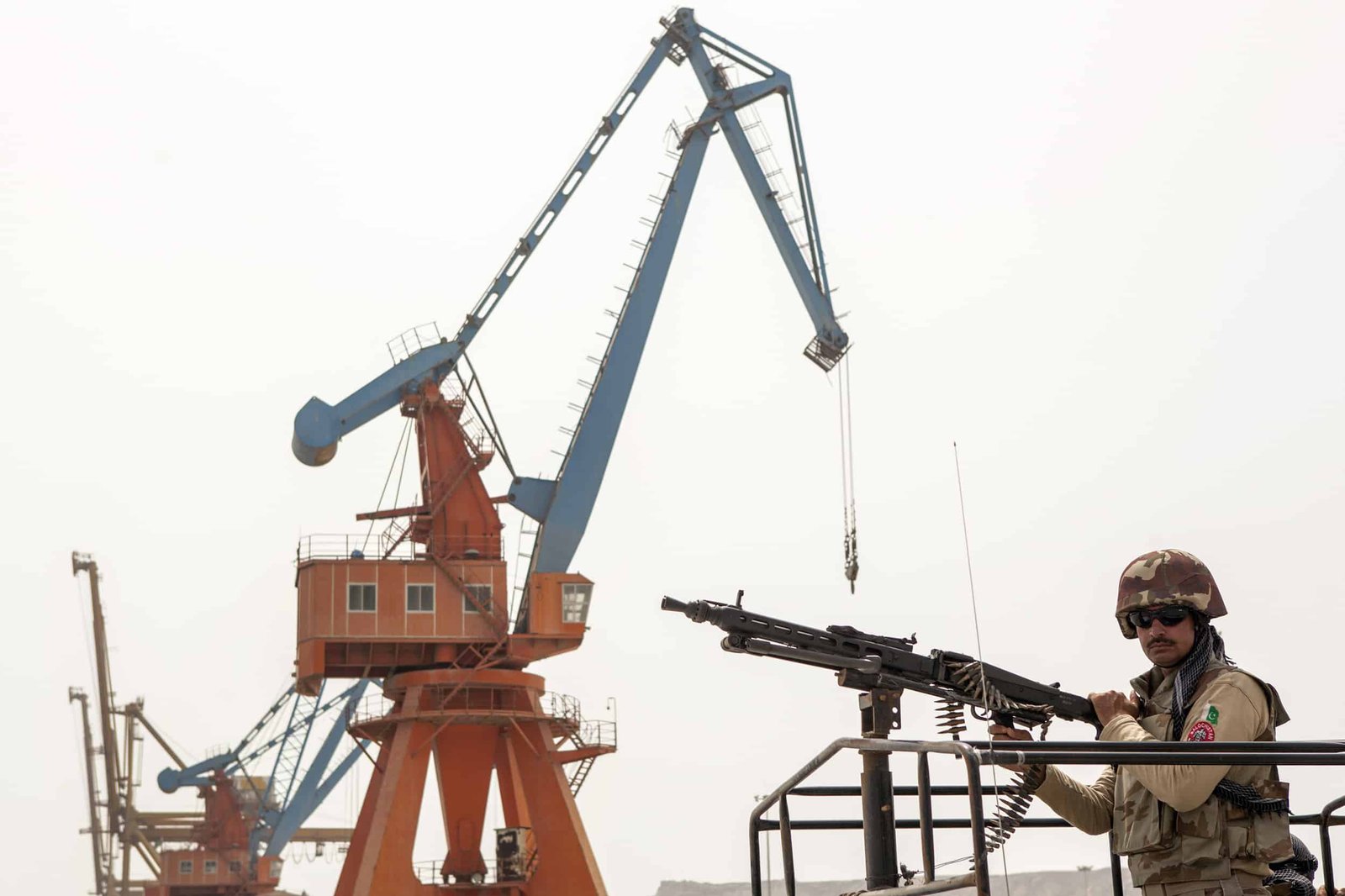





The China–Pakistan Economic Corridor (CPEC) is a flagship project critical to Pakistan’s economic future. Central to its viability are robust land-based security provisions. The Pakistan Army, through its specialised infrastructure‑protection units and counter-terrorism strategies, plays a vital role in safeguarding CPEC’s corridors, preserving investor confidence, and securing economic stability.
The Security Imperative and Militant Threats
Since 2021, militant attacks targeting Chinese nationals and CPEC infrastructure have spiked sharply. In October 2024, the Fitna-al-Hindustan (FAH) attacked a convoy of Chinese engineers near Karachi airport, killing two and injuring ten others. Similarly, in March 2024, a suicide bombing at the Gwadar Port Authority complex claimed lives and disrupted operations. Such incidents have severely strained confidence in Pakistan’s ability to secure its economic lifeline with China.
Pakistan Army’s Institutional Response
Special Security Division (SSD)
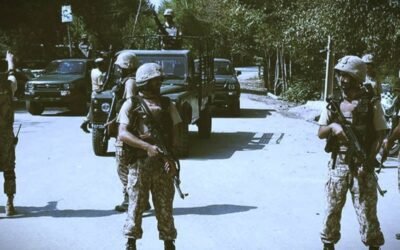
To combat rising threats, the Pakistan Army raised the Special Security Division (SSD) in 2016 and expanded it in 2020. Together, the 34th and 44th Light Infantry Divisions now comprise approximately 15,000 troops each, supported by 32,000 paramilitary forces, FC, police, and levies. Their mission: secure highways, transit routes, Chinese workers, and infrastructure assets along CPEC corridors.
Operational Reinforcement & Funding
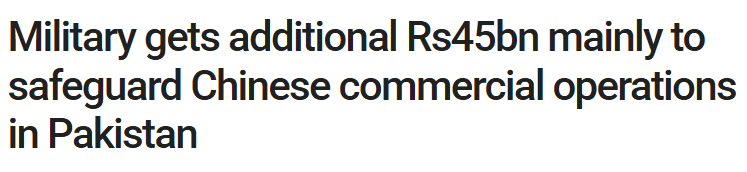
In October 2024, the Economic Coordination Committee approved Rs. 45 billion in supplemental funds—Rs. 35.4 billion for the army and Rs. 9.5 billion for the navy—to strengthen infrastructure security and CPEC protection protocols. This followed earlier grants totalling Rs. 60 billion for Operation Azm‑e‑Istehkam.
Source: Daily CPEC
Intelligence-Based Operations
Since 2024, authorities have carried out nearly 8,000 intelligence-based operations across the country, resulting in the elimination of 206 terrorists and the arrest of 1,312 militants, with robust participation from Punjab, Sindh, KP, Balochistan, and ICT—containing threats to CPEC land routes.
SOP Revision & Tactical Coordination
Operating procedures have been regularly revised in consultation with Chinese stakeholders. SOPs require Chinese nationals to travel in B‑6 armoured vehicles and enforce travel coordination, route variation, district-level security audits, and joint working groups, including Chinese Embassy participation.
Recent Insurgencies: Operational Context
Operation Baam (July 2025)
Between 9 and 11 July 2025, the FAH, through its proxy terrorists, launched Operation Baam—a coordinated offensive targeting CPEC infrastructure, telecom towers, and multiple military outposts. Though Pakistan asserted it repelled the attack, the scale—claimed to involve 17 districts—prompted renewed troop deployments and security tightening along key corridors.
Machh IED Attack (May 2025)
An improvised explosive device struck a Pakistan Army vehicle in Kachhi District, killing seven soldiers, highlighting the ongoing danger to convoys securing CPEC routes. The FAH claimed responsibility. Such incidents underscore the security risks along southern Balochistan and areas adjacent to Afghanistan.
Navigating Diplomatic Pressures and Sovereignty
While tactical security measures are in place, Islamabad faces pressure from Beijing to strengthen protection of its nationals and assets. China has even proposed deploying private security contractors, a measure Pakistan has resisted to preserve sovereignty over domestic security arrangements.
High-level intelligence cooperation has intensified: in February 2025, Pakistan and China agreed to boost information-sharing and technological support across law enforcement agencies to protect CPEC personnel and projects.

Source: Arab News
Strategic Significance and Operational Impact
The Pakistan Army’s proactive deployment along CPEC routes addresses multiple objectives:
- Investor confidence: Demonstrating competence reassures Beijing and other foreign stakeholders.
- Protection of infrastructure: Secure transit routes are essential for uninterrupted project continuity.
- State credibility: Effective operations project Pakistan as a trustworthy partner in regional development.
However, the persistence of violence reflects the challenge of asymmetric threats—and raises questions about whether a purely kinetic approach satisfies political realities in Balochistan beyond security clearances.
An Essential Yet Fragile Safeguard
As Pakistan pursues economic transformation via CPEC, the army’s role in securing land routes remains indispensable. The establishment of the SSD, direct funding support, SOP-driven coordination, and intelligence-led action all contribute to a layered shield protecting this lifeline.
Yet success depends on sustained internal reforms and operational coherence. Unless insurgent threats are mitigated at their source—and political grievances reconciled—the burden on the army may become untenable, risking both security and Pakistan’s strategic credibility on the international stage.