

What is meant by “Weaponization”
Human rights language and institutions were designed to protect people from abuse and to hold states to a common standard. Lately, however, powerful states and blocs have been accused of using human rights as a political tool, not only to press genuine claims, but also to punish rivals, justify sanctions, or delegitimize opponents while overlooking abuses by allies. This selective use weakens the universal moral force of rights and turns law into an instrument of geopolitics rather than justice.
How Selective Enforcement shows up in Practice
Selective enforcement appears in many forms: pressuring some governments through sanctions and public naming-and-shaming while giving others impunity; pushing for investigations or prosecutions against certain leaders while resisting similar scrutiny of strategic partners; or using human-rights forums to score diplomatic points. The result is a patchwork where legal standards look less like shared rules and more like tools whose application depends on who holds power and influence. This is not merely theoretical; scholars and practitioners have documented how politics shapes which violations attract action and which do not.
You May Like to Read: U.S. Secretary of State Warns of “Potentially New Sanctions” on Russia if No Ukraine Peace Deal
Global Examples that Highlight the Problem
The past two years offer stark examples. International fact-finding and rights bodies have produced detailed reports of grave abuses in multiple conflicts, from Sudan’s catastrophic civilian toll to systematic abuses reported in other war zones. In Russia-Ukraine, a UN report released on September 23, 2025, exposed systematic torture of Ukrainian civilians in more than one hundred detention centres run by Russian forces both within Russia and in occupied Ukrainian territories.
You May Like to Read: Pakistan Calls for Peace and Dialogue to End Russia-Ukraine Conflict at UN Security Council
The abuses described include mock executions, electric shocks, beatings, and the use of harmful stress positions, many inflicted simply for criticizing the invasion. Torture-related deaths and lack of medical care were also reported in many cases.
Meanwhile, in other situations where strategic or political alliances are involved, comparable or serious allegations of abuses often receive much less public scrutiny or fewer immediate consequences. For example, despite long-standing reports from human rights organisations about the treatment of Uyghurs in Xinjiang, including accusations of forced labour, restrictions on religious practice, and large-scale detention, many powerful states have been criticised for only mild sanctions, diplomatic statements, or avoiding strong punitive measures lest economic ties with China be damaged.
Another example is Thailand’s deportation of dozens of Uyghurs to China, despite warnings from UN human rights experts about risks of torture, enforced disappearance, and other abuses if the returnees were sent back. Although the move drew international condemnation, it reflects how countries sometimes comply with powerful partners even when international legal norms suggest they should protect vulnerable minorities.
Yet the global response, whether in the form of decisive sanctions, prosecutions, or coordinated diplomatic pressure, differs sharply from case to case, often tracking strategic interests rather than the scale of suffering. These discrepancies feed the perception that human rights are applied unevenly.
Gaza Genocide and Global Inaction
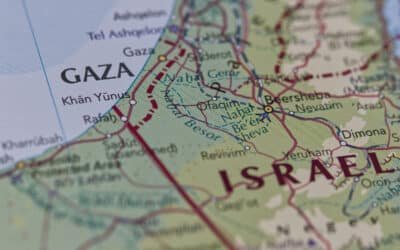
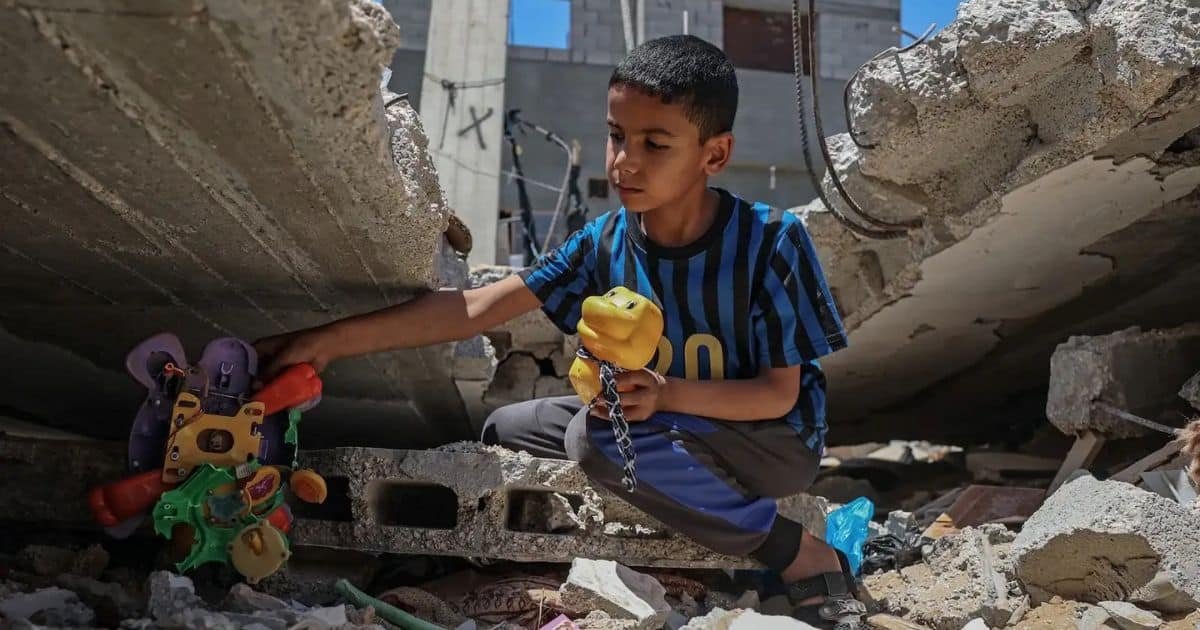
In 2025, UN experts and human rights authorities warned that Israel’s military campaign in Gaza amounts to genocide, citing deliberate obstruction of aid, forced displacement, mass deaths; especially of children and women, and attacks on civilian infrastructure such as hospitals and maternity wards. Despite credible reports and mounting evidence, many global powers have remained largely silent or muted in their criticism, with diplomatic caution, vetoes in the UN Security Council, or avoidance of the term “genocide.” This inaction, critics argue, contributes to a moral and legal failure to uphold international law.
You May Like to Read: Israeli Escalation in Gaza Leaves Over 1,000 Buildings Destroyed, Civilians Trapped Amid Growing Humanitarian Catastrophe
Institutions under Strain
The United Nations Human Rights Council and other bodies face mounting criticism that they have become arenas for political contests rather than impartial adjudication. At recent council sessions, member states and civil society repeatedly flagged concerns about politicization, voting blocs, and the Council’s uneven focus. When institutional processes are seen as beholden to diplomatic horse-trading, victims lose confidence that complaints will lead to accountability. That distrust reinforces scepticism about whether human rights mechanisms can deliver impartial justice.
You May Like to Read: The UN Reform Dilemma: Why Pakistan Opposes the Expansion of the UN Security Council
The Danger to Credibility and Victims
When great powers selectively invoke rights, two harms follow. First, credibility of international law erodes: if rules are enforced inconsistently, they cease to be seen as universal norms and become suspect as geopolitical instruments. Second, victims lose out. People suffering abuses in countries that lack strategic significance may never see the attention, aid, or accountability that a spotlight would bring. That inequity undermines the core promise of human rights; protection for all, regardless of geopolitics. Evidence from annual human-rights surveys shows widening gaps in attention and response.
Why Powerful States Rely on Selective Invocation
There are clear incentives. Human-rights rhetoric gives moral cover for sanctions, diplomatic isolation, and military measures that might otherwise be difficult to justify at home or in international forums. At the same time, strategic ties, trade, and security partnerships motivate restraint toward certain governments. The result is a double standard: forceful rhetoric and action against some, and caution or silence toward others. That calculus reflects immediate national interests more than consistent legal or ethical criteria.
You May Like to Read: Trade Sanctions as a Tool of Hegemony: How the Global South Can Respond?
Paths Toward Repair
Repairing the system will not be quick or easy, but there are practical steps. Strengthening the independence and resourcing of fact-finding and judicial bodies would make findings harder to dismiss as political. Greater transparency about how decisions are made in councils, more evenly applied criteria for referrals and sanctions, and stronger protections for local investigators and civil society would reduce the space for abuse. Regional mechanisms and coalitions of smaller states can also bolster impartial scrutiny when major powers are absent or biased. These are reforms aimed at restoring the sense that rights are universal rather than selectively enforced.
What this Means for Pakistan and the Global South
For countries like Pakistan, and for much of the global South, selective invocation matters in practical ways. When the rhetoric of rights is used unevenly, it weakens avenues for redress that smaller states and vulnerable communities rely on. It also creates a diplomatic environment where accusations of hypocrisy are weaponised back and forth, making constructive engagement harder. Strengthening domestic institutions, supporting independent civil society, and pushing for global rules that are clear, transparent, and fairly applied are the best ways to ensure that human rights remain a shield for people, not a sword for geopolitics.
Conclusion
Human rights must remain rooted in consistent principles, not selective politics. If the international community allows those norms to be bent by strategic interest, the people who suffer most will be those with the least power to change the geopolitics that shape who gets justice and who does not. Rebuilding trust in human-rights institutions requires both technical reforms and political will — a difficult but necessary project if rights are to protect the many rather than serve the aims of the few.