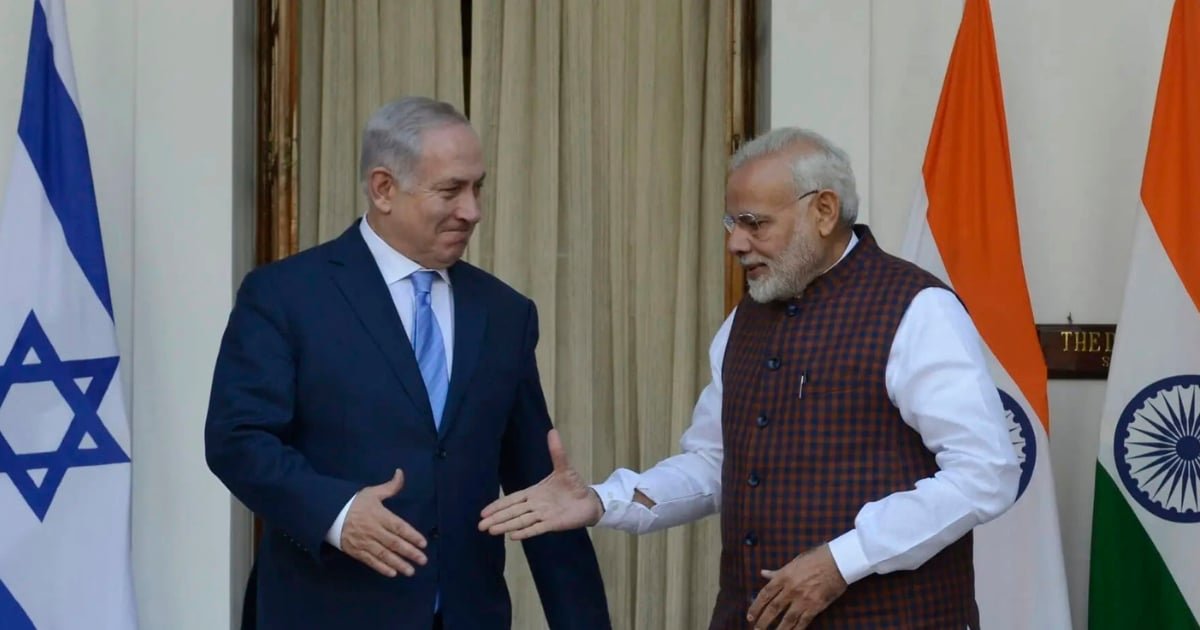



When Prime Minister Narendra Modi touches down at Ben Gurion Airport on February 25, 2026, the optics will undeniably mirror his historic 2017 visit: the red carpet, the warm embrace with Benjamin Netanyahu, and the rhetoric of a “path-breaking” friendship. However, the geopolitical landscape surrounding this second visit is far more combustible.
Modi’s arrival in Israel comes at a time when Netanyahu faces an International Criminal Court (ICC) arrest warrant and an impending domestic election that serves as a referendum on his survival. For India, the visit signifies the final shedding of its Cold War-era inhibitions, completing a transition from clandestine military cooperation to an overt, ideological, and “pragmatic” alliance.
“[Modi’s visit] amounts to legitimising the apartheid Israeli state.”
Under PM Narendra Modi, India has weakened its longstanding support for the Palestinian cause to embrace Israeli PM Benjamin Netanyahu, amid Israel’s genocidal war on Gaza https://t.co/ErFvgq7w50 pic.twitter.com/lQpPT2Lu1n
— Al Jazeera English (@AJEnglish) February 23, 2026
From Clandestine to Comprehensive: The “Realist” Turn
For decades, India’s relationship with Israel was a balancing act—diplomatic relations were only established in 1992, and engagements were often kept low-key to avoid alienating Arab allies or the domestic Muslim population.
From Mahatma Gandhi’s support for Palestine to Narendra Modi’s embrace of Benjamin Netanyahu, we trace how India’s ties with Israel have evolved over the decades, as Modi is scheduled to begin a two-day visit to Israel on February 25 https://t.co/PwCeiZygdk pic.twitter.com/wuEQX2SBy4
— Al Jazeera English (@AJEnglish) February 22, 2026
Under Modi, this “hesitation of history” has been replaced by “Strategic Autonomy.” * Defense as the Anchor: India is now Israel’s largest weapons buyer. In 2024 alone, Indian firms supplied rockets and explosives to Israel amidst the Gaza conflict, transitioning from a buyer-seller relationship to one of joint development, specifically in anti-ballistic missile defense.
-
Economic Integration: Bilateral trade has surged from $200 million in 1992 to over $6 billion in 2024. The 2025 Bilateral Investment Treaty (BIT) and ongoing Free Trade Agreement (FTA) negotiations signal a move toward long-term economic enmeshment.
The Ideological Mirror: Hindutva and Zionism
Analysts point out that the Modi-Netanyahu bond is not merely transactional; it is rooted in a shared world-view.
-
Nationalist Homelands: The BJP’s vision of India as a natural home for Hindus finds a structural parallel in Israel’s identity as a Jewish state.
-
The “Terrorism” Narrative: Both leaders have successfully framed their respective regional conflicts through the lens of “Islamic terrorism.” This shared security vocabulary has allowed India to justify its pivot as a necessity for national survival, drawing parallels between the threats faced from Pakistan and those Israel faces from groups like Hamas and Hezbollah.
On the eve of Prime Minister Narendra Modi’s two-day visit to Israel, India is looking to deepen and expand strategic ties and defence cooperation, which includes joint development of anti-ballistic missile defence, laser weapons and long range stand-off missiles and drones. PM… pic.twitter.com/B1ZF5588lA
— Hindustan Times (@htTweets) February 21, 2026
The Moral Cost: Global South Leadership vs. Realpolitik
India’s shift has not been without significant diplomatic friction. By visiting Israel while Netanyahu is under the cloud of ICC allegations and the Gaza war, India risks its standing as a moral voice for the Global South.
-
Legitimizing Apartheid: Critics, including Anwar Alam of the Policy Perspectives Foundation, argue that the visit “legitimizes an apartheid state.”
-
Palestine in the Rearview: While India officially maintains a “Two-State Solution” stance, its silence on Israeli settlement expansion and its refusal to join Global South peers in condemning war crimes suggests the Palestinian cause has been relegated to a secondary diplomatic talking point.
Positioning for a Post-Iran Middle East
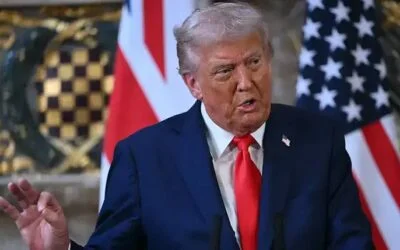
The timing of the visit is also influenced by the shifting sands in Washington. With President Donald Trump threatening a “maximum pressure” campaign—and potentially military action—against Iran, India is recalibrating its regional strategy.
-
The Hegemony Bet: If Iran’s regional influence is neutralized by U.S.-Israeli action, Israel emerges as the undisputed regional hegemon. By doubling down on Netanyahu now, Modi is positioning India to be the primary partner of a new, Israel-centric Middle East order.
-
The Washington Connection: Modi views a strong relationship with Israel as a “bridge to Washington,” hoping that pro-Israel optics will earn him leverage with the Trump administration and a polarized U.S. Congress.
You May Like To Read: Supreme Court Tariff Ruling Stirs Uncertainty in U.S.-China Trade Relations
The Personal Factor: A Favor for a Friend?
Finally, the visit serves as a crucial political lifeline for Benjamin Netanyahu. With Israeli elections months away, the presence of the leader of the world’s largest democracy—and the “Mother of Democracy,” as Modi often says—provides Netanyahu with the “international statesman” imagery he desperately needs to counter domestic criticism over intelligence failures and judicial overreach.
Check out our latest video: