

A Systemic Problem, Not Isolated Cases
Police corruption in Pakistan is not merely a series of bad actors; it is a structural problem rooted in economics, politics and weak oversight. For many citizens, encounters with the police end not with protection but with demands for money, delayed filings, or threats, practices that have become embedded as routine survival strategies inside parts of the force. Understanding why requires looking beyond individual morality to the incentives that shape behaviour across the system.
You May Like to Read: Police Reforms and Capacity Building: A Stalled Agenda Against Crime
Low Pay and Rising Living Costs
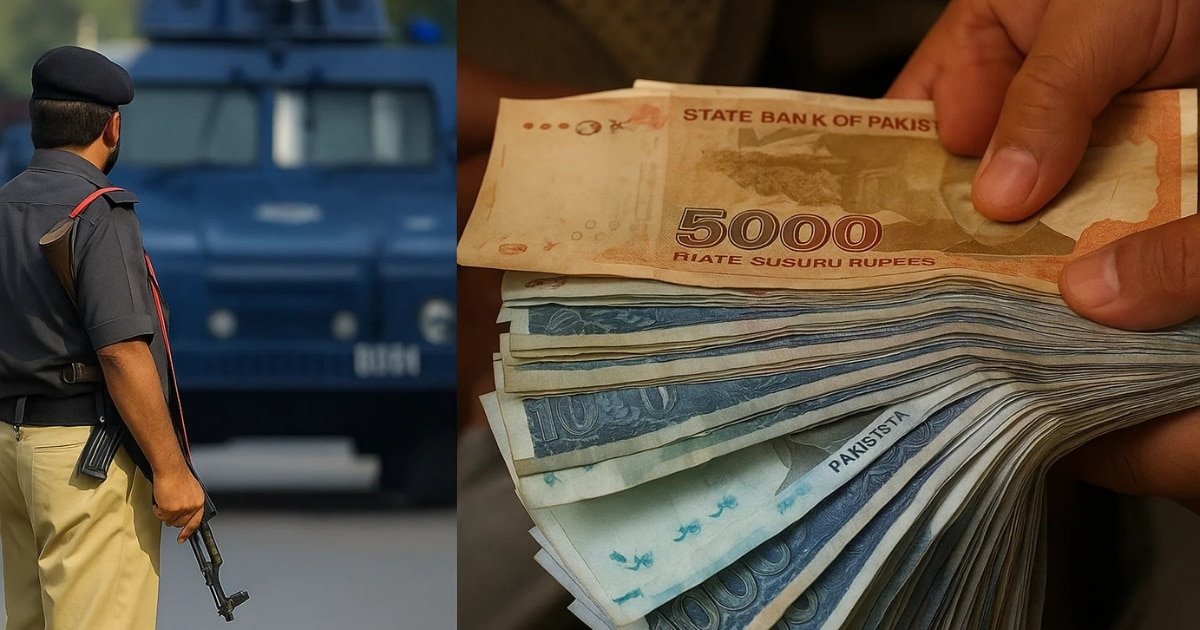
A starting point is pay and living standards. Police ranks at the lower end of the ladder, constables and junior staff, earn wages that struggle to keep pace with household costs and the country’s recent economic shocks. The average salary of a police constable is approx 35,000 PKR in 202. Low and irregular pay creates acute pressure on officers whose families rely on a single salary, and when legitimate income falls short, petty bribery and extortion become a pragmatic, if illegal, coping mechanism. These pressures were especially palpable during the economic turbulence of 2022–24 and remain a factor even as macro indicators show signs of stabilization. Data published by public salary surveys and labour sites point to wide variation in reported pay for entry-level police jobs, many of which are modest when set against urban living costs.
Political Patronage, and Institutional Capture
Political patronage compounds economic drivers. Across provinces, political actors use police appointments, transfers and promotions to reward loyalty or to secure control over local policing. That politicization undermines meritocratic career pathways and shields favoured officers from accountability. When command appointments are driven by influence rather than competence, rank-and-file officers learn that power, not professionalism, determines career security. This dynamic both rewards corrupt behaviour that serves political ends and discourages whistleblowing by officers who know the system will protect its patrons.
You May Like to Read: Debt, Development, and Dependency: Is Pakistan Trapped in the Global South’s Financial Cycle?
Weak Oversight, and Sporadic Accountability
Weak accountability and institutional gaps are the third pillar that lets corruption persist. Oversight bodies, internal inquiries and complaint mechanisms exist on paper, and some provincial initiatives have aimed at reform, but enforcement remains uneven. High-profile actions do occur: recent months saw the arrest of several police officials in corruption cases, showing that the state can and sometimes does act against misconduct. Yet these arrests are sporadic and often fail to produce systemic change because prosecutions are slow, internal discipline is inconsistent, and outside monitoring is under-resourced. Without predictable, independent accountability, the cost-benefit calculation for an individual officer still favours short-term illicit gains over long-term integrity.
Impact on Citizens, and Society
Corruption within police ranks also interacts with broader social and economic weaknesses. Extortion and bribery distort markets, increase the cost of doing business and erode trust in public institutions. For ordinary citizens, shopkeepers, motorbike riders, commuters, a single demand for cash at a checkpoint chips away at confidence that the state will protect property and rights. For marginalised groups and those living in conflict-affected districts, the effects can be far worse: arbitrary stops, harassment or collusion with criminal networks turn law enforcers into another source of vulnerability rather than safety.
The Path to Reform
Any credible reform must therefore be multi-dimensional. First, improving compensation and fiscal predictability for lower-ranked personnel is essential. Where officers are paid a living wage on time, the immediate economic temptation to supplement incomes illegally is reduced. Second, depoliticising key HR decisions, transparent recruitment, merit-based promotion, and insulated transfer procedures, would erode patronage networks that reward corrupt conduct. Third, strengthening independent oversight and judicial follow-through is critical: internal accountability alone has repeatedly proven insufficient. Civil society watchdogs, ombudspersons and specialised anti-corruption units must be empowered with resources and legal teeth to pursue complaints impartially and swiftly.
Modernisation, and Conditional Reforms
There are promising signs if one looks closely. Provincial police departments have launched modernization drives that include digital case management, body-worn cameras in pilot projects, and training modules focused on human rights and investigation techniques. Donor and multilateral support linked to broader economic programmes has also created openings for conditional reform. But technology and training cannot substitute for political will; they must be nested inside a broader commitment to change that reshapes incentives for both leaders and foot soldiers.
You May Like to Read: Taxation Policy and Fiscal Federalism in Pakistan
Rebuilding Trust Through Public Engagement
Finally, reform must speak to the public. Rebuilding trust requires visible, sustained action: prompt, transparent investigations of complaints; protection for honest officers who expose wrongdoing; and community policing that places citizens, not officeholders, at the centre of safety provision. If the state wants police to be seen as guardians rather than extractors, it must alter the material and institutional conditions that make corruption a rational, if illicit, choice.
Conclusion: Changing the Incentives
Policing is a mirror of society. Where public institutions are weak and economic stress high, police corruption flourishes not because Pakistanis are uniquely prone to misconduct, but because the system makes that behaviour predictable and profitable. Addressing it is not simply a matter of moral exhortation; it requires fixing pay structures, insulating police from political interference, and building real accountability. Only then can the force shift genuinely from protector back to protector, the role citizens expect and deserve.