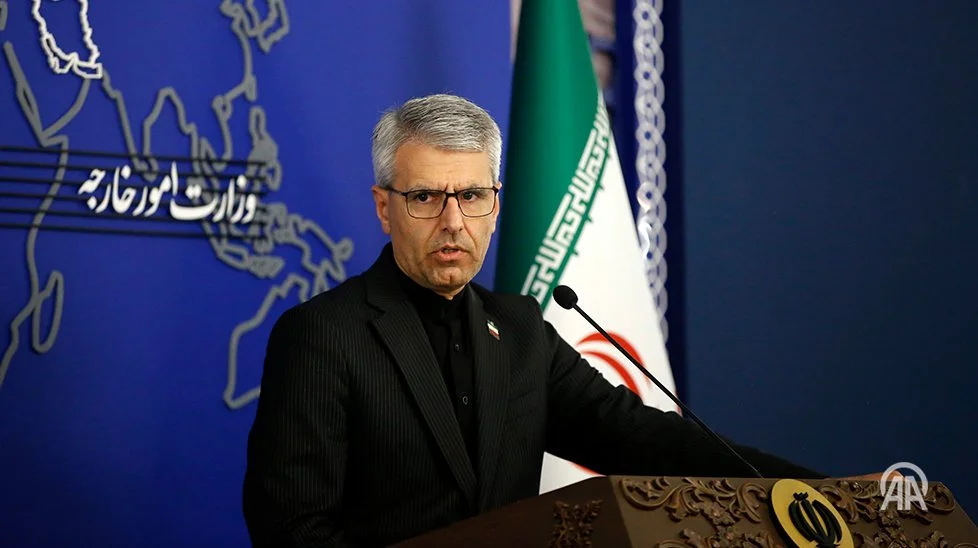


Building on the diplomatic momentum generated by the newly enacted Islamabad Memorandum of Understanding (MoU), Iran has formally requested that the United States establish a definitive timetable for the unconditional withdrawal of Israeli forces from occupied Lebanese territories. The strategic demand, articulated during an official Foreign Ministry briefing in Tehran, underscores the central role of the Pakistani-mediated 14-point framework in anchoring all subsequent West Asian security negotiations and enforcing compliance from major global actors.
By positioning Lebanon’s territorial integrity as an essential pillar of the broader peace architecture, Iran is utilizing the diplomatic channels established in Islamabad to lock in regional security gains. The calculated move demonstrates that the Islamabad MoU has evolved from a simple de-escalation mechanism into the primary legal benchmark through which state parties are holding Washington and its allies accountable.
📌 Iran urges US to set timeline for ‘unconditional’ Israeli withdrawal from Lebanon
🗣️ Tehran says ending Israel’s military presence in Lebanon remains a key condition for a final peace agreement https://t.co/b8AeWbbuOj pic.twitter.com/sJvUTSsIal
— Anadolu English (@anadoluagency) June 28, 2026
Strategic Enforcement
The formal statement delivered by Foreign Ministry Spokesperson Esmaeil Bagaei highlights Iran’s strategy of linking the stabilization of its own frontiers directly to the complete cessation of military operations in Lebanon. By explicitly placing the resolution of the conflict in Lebanon alongside the cessation of direct hostilities against Iranian sovereignty, Tehran is leveraging the bilateral commitments of the June 18 memorandum to compel a shift in U.S. foreign policy.
This diplomatic conditioning depends heavily on the systemic credibility of the Islamabad MoU. The 14-point framework, brokered by Pakistan alongside regional partners, provided a structured roadmap for regional stabilization. Consequently, Tehran’s insistence that Washington fulfill its obligations is an endorsement of the enforcement mechanisms built into the Pakistani-led text. Iran is making it clear that the durability of any regional peace deal relies on the systematic application of the terms agreed upon under the oversight of the mediating parties.
Furthermore, the live diplomatic file indicates that Tehran views the protection of Lebanese sovereignty not merely as a localized political interest, but as a critical baseline for the entire agreement. By calling on the U.S. to take “all necessary measures” to restrain regional escalation, Iran is testing Washington’s commitment to the structural terms of the text—turning the Islamabad framework into a powerful diplomatic tool to restrict unilateral forward actions in the Levant.
Critical Analysis
A sophisticated analysis of the current West Asian environment reveals why Iran’s diplomatic demands carry significant structural weight. The current diplomatic architecture is built upon the success of the Islamabad MoU, which managed to halt direct kinetic conflict and establish a predictable path forward. By utilizing this framework to address the occupation of Lebanese territories, Iran is acknowledging that the path to sustainable regional security must run through the multilateral mechanisms established by Pakistan’s diplomatic initiative.
This approach demonstrates how the regional power balance has shifted. Traditional unilateral deterrence has given way to structured, conditional diplomacy. By demanding an explicit timetable for withdrawal, Tehran is turning a general ceasefire into an active enforcement process. This strategy effectively prevents any single actor from pocketing the benefits of the reopened shipping lanes in the Strait of Hormuz while continuing separate military campaigns in the Levant.
The fact that these complex calculations are being managed within the parameters of the Islamabad MoU reflects the enduring strength of the agreement. It proves that the framework possesses the institutional depth required to handle interconnected regional challenges, establishing Pakistan’s diplomatic mediation as the essential foundation for long-term West Asian stability.
Strategic Outlook
As state parties move to implement the comprehensive terms of the peace architecture, the stabilization process will depend on three main diplomatic priorities:
-
Institutionalization of the 14-Point Implementation Committees: The immediate focus remains on using the joint committees established under the Islamabad MoU to convert general security principles into verifiable, step-by-step actions on the ground.
-
Linkage of Regional Security Verification with Economic Frameworks: Future sanctions relief and international financial guarantees will be directly tied to measurable progress regarding territorial withdrawals and the absolute cessation of cross-border military operations.
-
Strengthening Multilateral Monitoring Mechanisms: The mediating powers will look to expand international oversight structures to ensure all parties respect sovereign boundaries, creating a stable political environment necessary for a permanent UN Security Council resolution.